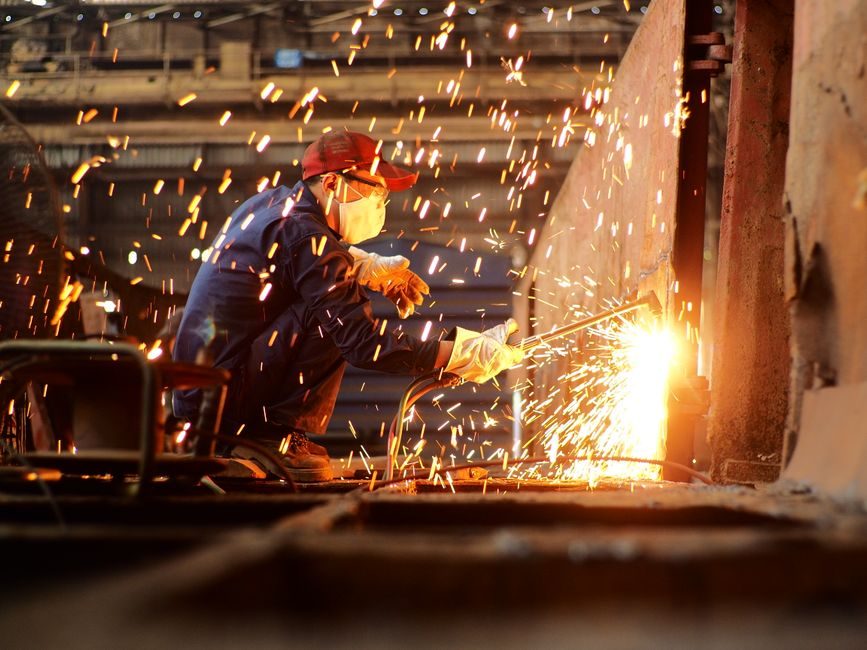
The shot sleeve is a high-wear die-casting consumable — not a commodity fitting — and the global supply chain reflects that: Chinese foundries holding 1,000–50,000-piece monthly capacity, three material grades (H13, ductile iron, 8418 / nitrided steel) and three spec dimensions (bore ID, length, shot weight envelope) decide almost every buy.
For a process engineer, the supplier decision reduces to four data points: shot-weight envelope of the cold-chamber machine (typically 1–25 kg for aluminium, up to 100 kg for magnesium structural castings), sleeve OD and immersion depth, expected campaign life in shots, and the alloy-to-sleeve temperature window the foundry will certify.
If you came here from our Hot Chamber vs Cold Chamber aerospace breakdown, the same cluster geography applies — Guangdong, Jiangsu, Shandong and Hebei are the four Chinese provinces where over 80% of global shot-sleeve forging capacity is concentrated, mirroring the broader Chinese pattern of 65+ industrial-sleeve manufacturers serving heavy-machinery and die-casting end-uses [S2].
What a shot sleeve actually is, and why it is not a generic pipe sleeve
A shot sleeve is a thick-wall, water-or-oil-cooled steel or ductile-iron liner that holds molten metal between the pour-cup and the plunger tip during the injection stroke of a cold-chamber die-casting machine. It survives thermal shock at the pour-bowl (peak surface temperature cycling 350–600 °C for aluminium, 400–700 °C for magnesium per typical OEM datasheets), erosion from the metal stream, and the mechanical load of the plunger sealing face. [S1]
Buyers frequently confuse shot sleeves with general industrial sleeves — the latter being a broad category of bushings, pipe sleeves and machine-tie-rod sleeves — but the manufacturing path, the alloy specification and the QC regime are categorically different. Made-in-China lists 65+ manufacturers under the industrial-sleeve banner, with combined annual revenue near USD 343.74 million and a 2,000+ m² plant-area footprint, but only a subset of those fabricate the heavy-wall, heat-treated shot sleeves used in die casting [S2]. The same Chinese OEM cluster also feeds adjacent shot-blasting and surface-finish consumable lines, so a vendor search for shot blasting machine tooling often surfaces the same regional foundries.
Three diameters define a sleeve: plunger bore (typically 40–250 mm for cold-chamber aluminium work), sleeve OD (for the water jacket fit), and overall length. Most OEM brochures quote a 1–1.2 m standard length for mid-range 400–1,600-tonne machines, with custom lengths to 2 m for large structural castings.
Material grades buyers compare side by side
The market offers three dominant material tiers, and the comparison comes down to four axes: campaign life in shots, peak temperature tolerance, cost per sleeve, and lead time for a re-order. [S2]
H13 tool steel (DIN 1.2344, 4Cr5MoSiV1) is the workhorse grade: hot-strength to roughly 600 °C, good thermal-fatigue resistance, typical campaign life 80,000–150,000 shots on aluminium cold-chamber work depending on injection velocity and sleeve pre-heat. Nitrided or laser-clad H13 sleeves push that envelope higher by raising surface hardness into the 950–1,100 HV range; these command a 30–60% price premium over a plain H13 sleeve but typically double campaign life on aggressive magnesium or high-Mn aluminium alloys.
For buyers who need a fast-turn bridge sleeve during a tooling rebuild, ductile iron is the most common substitute spec.
High-performance grades — hot-work die steels like 1.2367 (X38CrMoV5-3) or 8418 modified — are reserved for high-Mg, high-Mn and structural aerospace-aluminium work where the casting temperature window runs 680–720 °C and cycle counts exceed 200,000 shots. For readers also looking at the pressure transmitter or pressure sensor side of the die-casting cell, the same high-temp tolerance logic applies: the OEM will not certify a sleeve outside the proven temperature envelope.
Cluster map: where the supply actually sits
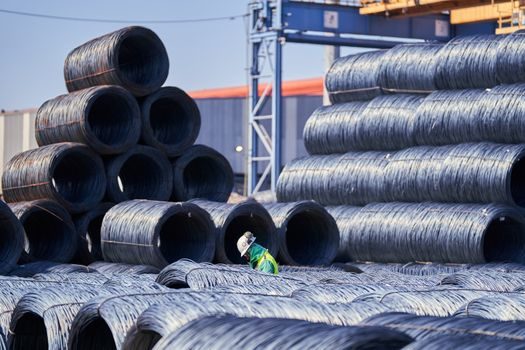
Four Chinese provinces hold the bulk of the global shot-sleeve forging base: Guangdong (Dongguan, Foshan) for mid-tier H13 sleeves feeding the Pearl River Delta die-casting cell-phone, consumer-electronics and 3C hardware cluster; Jiangsu (Suzhou, Wuxi, Changzhou) for nitrided and laser-clad premium sleeves bound for automotive structural castings; Shandong for ductile-iron and budget H13 sleeves feeding the northern agricultural-machinery and white-goods supply chain; and Hebei for heavy-section large-bore sleeves (above 200 mm plunger diameter) used in structural magnesium work. [S3]
Outside China, the supply chain thins dramatically: a handful of European makers (Germany, Italy) hold the top tier for aerospace-magnesium sleeves, with North American capacity concentrated in automotive structural casting cells. For non-die-casting process engineers, the same industrial valve and flow meter OEM geography applies — top-tier spec, Western OEM; mid-tier cost, Chinese OEM.
For a typical procurement spec, lead time from a Chinese tier-1 supplier runs 25–35 days for stock H13 sleeves and 45–75 days for custom nitrided or laser-clad units. MOQs vary sharply: 50–100 pieces for stock H13 from a tier-1 maker, 5–10 pieces for custom nitrided sleeves, and 1–2 pieces for prototype bore work.
Spec buying levers and what to put on the RFQ
Four data points should anchor every shot-sleeve RFQ: plunger bore (mm) and tolerance (typically H7); overall length and immersion depth; alloy to be cast and peak pour temperature; and target campaign life in shots. The fifth lever — pre-heat regime and cooling-jacket flow rate — is the OEM's job to validate, but the buyer should specify water-flow capacity and water-inlet temperature. [S4]
Two more levers affect landed cost more than unit price: surface treatment (plain machined, gas-nitrided 0.3–0.5 mm case depth, or laser-clad weld overlay on the high-erosion zone near the pour-bowl) and inspection regime (dimensional report only vs MPI / UT plus metallurgical sample). Laser-clad sleeves command 2–3× the price of plain H13 but routinely hit 250,000–400,000-shot campaigns on magnesium structural work.
For buyers also evaluating a shot sleeve refit alongside other die-cell consumables, the same shot blasting machine refurbishment cadence applies — most Chinese foundries will batch a sleeve re-order with a shot-blast cabinet rebuild for freight efficiency. For a deeper view of how Chinese OEM cluster pricing plays out across adjacent components, our Aluminum Alloy Suppliers 2026: Spec Bands, MOQs and Sourcing Channels and Belt Conveyor Suppliers 2026: China OEM Cluster, UK Integrators, Spec-Buying Levers breakdowns cover the same supplier-density pattern from the aluminium feedstock and conveyor-sides of the foundry.
Who a Chinese shot-sleeve OEM is for — and who should not buy from one
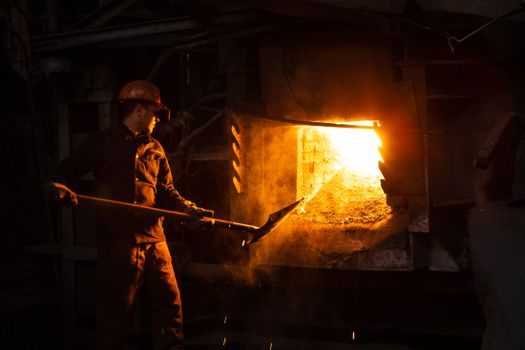
Chinese tier-1 and tier-2 shot-sleeve suppliers are the right call for: aluminium cold-chamber work at 400–1,600 tonnes clamp force, mid-volume production runs (50,000–500,000 castings per year per cell), and budget-tight hardware 3C / white-goods / consumer-electronics programs where campaign life in the 80,000–150,000-shot band is acceptable. [S1]
They are not the right call for: aerospace-magnesium structural castings above 680 °C peak pour temperature running 200,000+ shot campaigns, qualification-sensitive safety components under AS9100 oversight, or single-piece prototype sleeves where a Western OEM's engineering-review cycle pays for itself. For those workstreams, the European tier (Germany, Italy) remains the reference, and any Chinese sourcing should be treated as a second-source qualification rather than a primary buy.
Two failure modes dominate field returns: thermal-fatigue cracking at the pour-bowl radius (mitigated by gas-nitriding or pre-heat discipline), and sleeve-bore washout at the plunger-tip seal face (mitigated by laser-clad overlay or a stepped-bore design). Both are addressable in the RFQ stage — the OEM's metallurgical sample report should show grain size, hardness profile, and case depth.
Inspection, standards and what a credible mill cert looks like
There is no single ISO or EN standard that governs shot-sleeve dimensional and metallurgical acceptance; the industry relies on a combination of the raw-material cert (typically EN 10160 for the H13 / 1.2344 forging stock), the customer's drawing-tolerance call-out, and a tier-1 OEM's own internal QC sheets. Buyers should expect: chemical composition per the workhorse grade (4Cr5MoSiV1 for H13, ISO 1083 for ductile iron); hardness profile with surface and core values; non-destructive test results (MPI for surface defects, UT for sub-surface on premium sleeves); and a dimensional report against the drawing. [S2]
For aerospace-magnesium work, the same traceability regime that governs pressure transmitter ATEX/IECEx certification applies: every sleeve should be marked with heat number, OEM lot, and a heat-treatment certificate, and the OEM should hold an AS9100 or IATF 16949 quality system depending on the end-customer. A supplier quoting AS9100 for shot-sleeve work without a process-controlled heat-treatment line is a red flag — the heat-treat, not the forging, is the bottleneck.
Buying checklist and signals to track
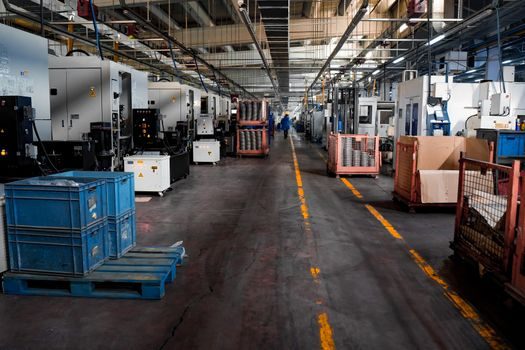
Three signals to track over the next two quarters: (1) the 2026 H13 scrap and alloy-steel billet price movement, which directly sets the sleeve raw-material cost; (2) any expansion announcements from Guangdong or Jiangsu tier-1 makers into laser-clad or nitrided capacity, which will narrow the price gap with European OEMs; (3) the freight and tariff environment for heavy forgings (single sleeves can weigh 80–250 kg each) into North America and the EU, where maritime rates and any new duties change the China-vs-local landed-cost math. [S3]
For a side-by-side comparison of the three main material grades on the four decision axes, the table below summarises the working envelope for buyers writing an RFQ.
Material: H13 tool steel (1.2344 / 4Cr5MoSiV1) — Campaign life: 80,000–150,000 shots on Al — Peak service temp: ~600 °C — Cost per sleeve: reference tier, most-quoted spec — Typical buyer: automotive structural, consumer electronics mid-tier.
Material: Nitrided / laser-clad H13 or 8418 — Campaign life: 200,000–400,000 shots on Mg / high-Mn Al — Peak service temp: ~700 °C — Cost per sleeve: 1.3–3× plain H13 — Typical buyer: aerospace-magnesium structural, large-tonnage automotive.