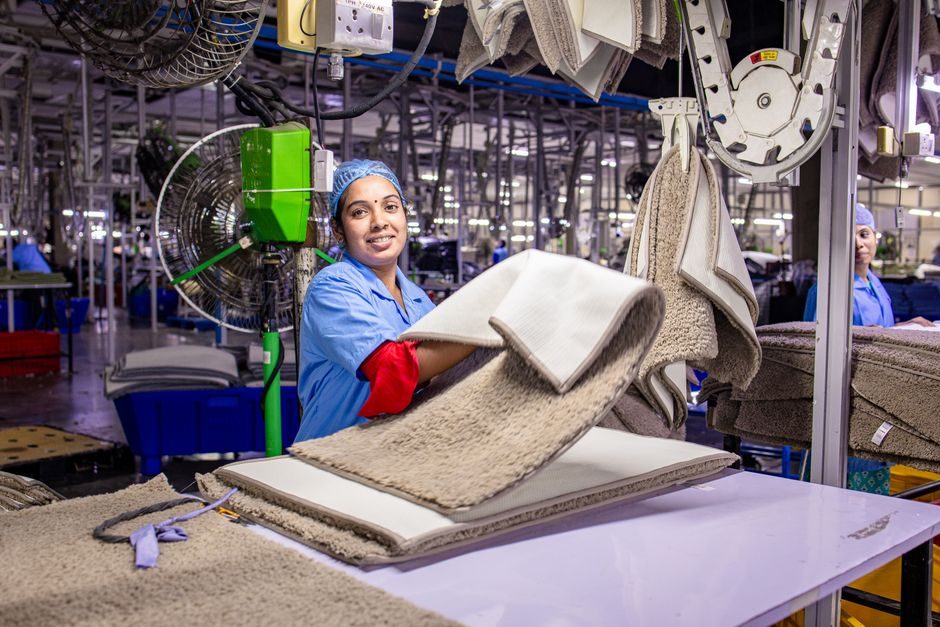
China remains the dominant manufacturing base for general-purpose belt conveyors in 2026, with TD75 and TDII fixed-type units listed on Okorder and Made-in-China at FOB price points that undercut Western integrators by a wide margin [S6][S4]. The supply chain is split between Chinese OEMs selling direct, regional trading platforms, and a small but persistent UK/EU fabrication segment serving integrators who need engineered solutions, not catalog units.
For any procurement engineer the decision is less "who builds belt conveyors" — hundreds of factories do — and more "which supplier can prove frame weld quality, deliver matched belt tensioner take-ups, supply belt spec data sheets, and honour a warranty on a 50 m long overland unit." The 2026 sourcing reality on Okorder and Made-in-China is that a TD75 general-purpose belt conveyor ships at MOQ 1 set with supply capability around 10 sets per month per listed seller [S1][S6], while dedicated splicing-tool makers in Wenzhou and Qingdao quote US$3,769–6,600 per piece/set with 15-workday fast delivery [S3].
TD75, TDII, and Solpe Inclined Frames: Spec-Defined China Catalog
The TD75 fixed-type belt conveyor is the workhorse of Chinese bulk-handling catalogs: friction-driven continuous conveying, frame plus belt plus idler carrier set, used in mining and aggregate transfer [S6]. Solpe-series incline units appear on the same Okorder channels with similar 1-set MOQ and 10 sets/month supply capability [S1]. On Made-in-China the broader belt-conveyor category — 213 manufacturers with 639 products indexed under splicing-machine-adjacent searches alone — confirms that the supply base is not capacity-constrained for general-purpose units [S3].
What the catalogs do not show is the QA layer. Buyers should demand the welded-frame procedure qualification, the flat-belt carcass rating (EP / NN / steel-cord), the drive-motor nameplate, and the take-up travel. If the supplier will not release those, treat the FOB price as a starting point, not a delivered cost. A matched mesh-belt conveyor for food or heat-treatment lines is a different quote altogether and almost never comes from the same low-cost TD75 line.
UK and EU Integrators: Engineered, Not Catalog
AS Conveyor Systems, a UK manufacturer of belt and roller conveyor systems, markets engineered lines for "any and every application" — the integrator model, not the catalog-OEM model. European and Swiss-domiciled suppliers tend to be quoted through agents or Panjiva-sourced trade-data rather than open catalogs, with cost-per-line running multiples of Chinese FOB once CE conformity, ATEX rating for dusty lines, and installed commissioning are added. [S1]
For a UK or EU buyer the math is: pay roughly 1.8–2.5× the Chinese FOB to a domestic integrator, recover the delta on shorter lead time, single-language documentation, and a warranty claim that does not require a video call with a trading agent. For an aggregate or cement line headed for a remote site with no local service, the Chinese TD75 route still wins on first cost — provided the belt conveyor frame has been inspected at FOB.
Splicing Tooling: The Hidden Line Item
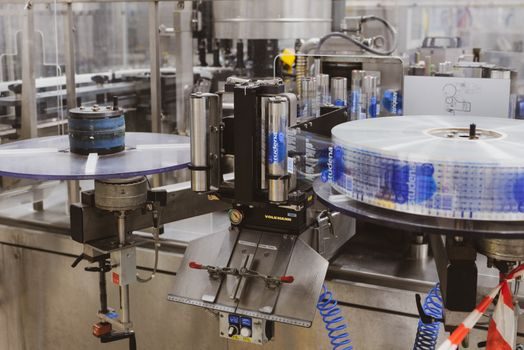
Conveyor-belt splicing machines cluster in two Chinese clusters — Wenzhou (Zhejiang) and Qingdao (Shandong) — and the price spread is tight: US$3,769–6,600 per piece or set, MOQ 1, with 15-workday fast delivery quoted on the Made-in-China index [S3]. Vulcanizer press and PVC belt joint machines are the two dominant sub-types [S3]. Skipping the splicing-tool spec is a common buyer mistake: a 1,000 m belt run that cannot be field-spliced is a downtime liability, regardless of conveyor-frame cost.
For buyers running timing-belt or ribbed-belt drive take-ups inside the conveyor, a different toolset applies — those are not covered by the vulcanizer-press lines that dominate the Made-in-China splicing index [S3].
Selection Criteria: Price, MOQ, Lead Time vs Documentation Depth
Across the available research, four decision criteria cleanly separate suppliers: [S2]
1. **Unit cost vs MOQ**: Okorder TD75/Solpe lines list 1-set MOQ and ~10 sets/month supply; Made-in-China splicing tooling lists 1-piece MOQ at US$3,769–6,600 [S1][S3][S6]. The lowest first-cost is the Chinese FOB direct route.
2. **QA and documentation**: UK integrators such as AS Conveyor Systems publish application-specific build evidence; Chinese catalog listings on Okorder and Made-in-China list price and supply capability but rarely publish weld procedures, motor nameplates, or test certificates [S1][S6].
3. **Lead time and logistics**: 15-workday fast delivery is the stated Made-in-China splicing-tool norm [S3]; full conveyor lines typically run 30–60 days ex-works plus 30–45 days ocean, so a UK integrator often wins on calendar-to-installation for in-region buyers.
4. **After-sales and warranty enforcement**: Cross-border warranty enforcement on a Chinese TD75 unit is effectively a video-call negotiation; a UK integrator offers a contractual route. For buyers needing 24/7 line uptime, this is the deciding factor.
For plants scaling up bulk handling, the bucket elevator buying guide 2026 is the natural next spec conversation — bucket elevators and belt conveyors are typically specified together for vertical and horizontal legs of the same bulk-handling train.
Where the Chinese Catalog Does Not Reach
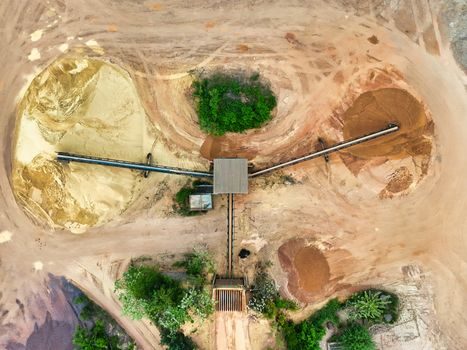
High-temperature, food-grade, ATEX dust-zone, and cleanroom-rated belt conveyors are rarely listed on the open Okorder / Made-in-China / DIYTrade index. The DIYTrade listing for general "Belt Conveyor" sits in the industrial-supplies subcategory and confirms a catalog skew toward commodity units [S5]. For a stainless-frame food line or a ribbed-belt -driven precision line, the supplier short-list collapses to a handful of EU/Japan/Korea fabricators and the price band jumps an order of magnitude.
On the upstream raw-material side, conveyor-belt fabric and carcass textile are quoted through separate Made-in-China knife-cutting-machine subcategories at unit prices around US$25,000 for an industrial automatic-feeding cutting plotter — a reminder that conveyor-belt components and belt-conveyor systems are two different procurement tracks.
2026 Sourcing Reality and Verifiable Signals
For buyers writing a 2026 RFQ: anchor the spec sheet to belt width, belt type, lift height, capacity (t/h), drive power, and take-up travel — not to a model code. A TD75-rivalled unit from any of the 100+ Alibaba-listed "B500 Shanghai belt conveyor" sellers [S2] is interchangeable on the nameplate, but the welded-frame and motor-brand variance is where warranty disputes live. The unbundled overhead conveyor price guide is the relevant cross-check for plants deciding between floor-mounted belt conveyors and suspended alternatives.