The first fork in any auto-parts shuttle spec is the part envelope: small SKU totes under 50 kg favour compact racking shuttles with battery hot-swap, while full engines and gearbox housings push the design toward 1,500 kg+ pallet shuttles on reinforced rails [S1].
Auto-parts logistics is a high-mix environment, so the shuttle layer is usually picked first, then the WMS and conveyor interfaces are built around it, not the reverse. A second, separate decision line runs in parallel: dealership-side parts delivery, where software shuttles replace physical ones. iDealer markets an AI-dispatched driver management platform for dealerships, advertising over 100,000 customers served and 1,000,000+ optimised kilometres driven on its system [S1].
Physical shuttle sizing: payload, battery, and aisle
For tier-1 automotive suppliers, a 1-tonne-class racking shuttle typically operates at 1.5 to 2.0 m/s empty and 1.0 to 1.5 m/s loaded, with lift heights that anchor at 8 m and stretch past 15 m in tall racking blocks. A 1,500 kg payload unit on 50 mm steel-rail section is a common mid-range spec; heavier 2,000 to 3,000 kg units need reinforced sleepers and longer wheelbases, which is why physical ABM articles on shuttle systems flag wheel diameter and rail gauge as binding constraints before throughput. [S1]
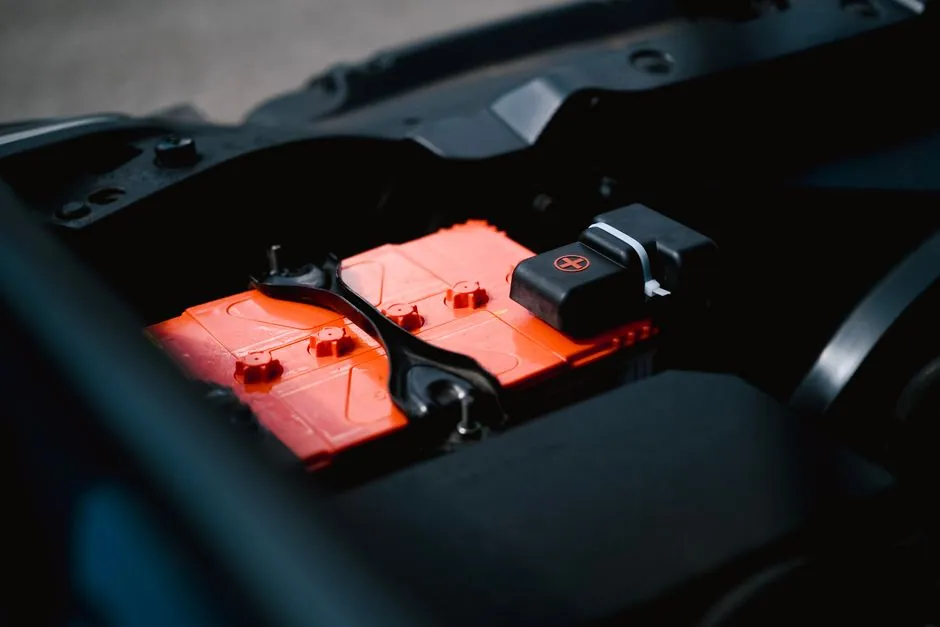
For small-parts bins, the design point is dwell time. A compact battery-powered shuttle (commonly 24V or 48V Li-ion, 30 to 60 Ah) typically runs 8 to 12 hours per shift with regenerative braking on descent, and swaps take 15 to 30 seconds rather than a full charge cycle. Parts logistics with frequent SKU rotation punishes slow charge cycles, so hot-swap is a hard gate.
Battery spec matters in cold cells: lithium chemistries drop about 20 to 30% of nameplate capacity near 0 deg C, which is why outdoor staging yards in northern plants often specify heated battery compartments or NMC packs with built-in thermal management.
Throughput math: 200 cycles/h is a realistic single-shuttle ceiling
A single shuttle on a fixed loop rarely exceeds 200 to 250 storage/retrieval cycles per hour, because cycle time is dominated by 4 to 6 seconds of lift, 2 to 3 seconds of shuttle entry, and the FIFO/FIFO queuing on shared rails. Multiplying shuttles on a single aisle lifts the throughput almost linearly up to 4 to 6 units, after which cross-traffic and lane-change events dominate the loss budget. [S1]
For deeper analysis of throughput ceiling logic, the wider context in an ASRS overview is useful: shuttles sit below unit-load stacker cranes on the throughput scale and above static carton flow, which is why they win in auto-parts bin flow but lose in finished-vehicle buffer lanes.
Decision rule of thumb: if the SKU count is above 5,000 with order lines under 10 items, shuttle-based deep lane storage is competitive against miniload ASRS up to about 1,000 cycles per aisle-hour. Above that, a stacker crane starts to win on energy per move and on maintenance reach per cycle.
Software shuttle layer: dealer parts delivery
Dealer parts runs are a different problem with the same name. iDealer sells a courtesy and parts-delivery management platform aimed at dealerships, with a stated customer base above 100,000 and a logged 1,000,000+ kilometres of optimised driving on the platform, claiming a minimum 9x ROI for participating dealerships [S1]. The feature list reads like a fleet software spec: AI dispatching, optimal multi-point routing, live driver tracking, real-time ETA to the minute, branded customer messaging, and an exclusive Uber partnership for overflow capacity [S1].
The operational spec the page surfaces is worth reading carefully: live driver tracking, real-time ETA, dispatch to Uber during demand spikes, dealer-branded interfaces, and custom delivery notifications. There is no public hardware BOM, because the deliverable is a SaaS dispatch layer plus a managed Uber integration, not a vehicle fleet.
For an engineer cross-shopping this against in-house dispatch, the practical decision is whether the dealer runs enough daily parts runs to clear the integration overhead. A useful analogy is the picking logic in sortation systems: the software's value is in slotting the right driver to the right stop, not in the physical conveyance itself.
MMOG/LE and supplier logistics audits
On the supply side, automotive logistics is still gated by MMOG/LE (Materials Management Operations Guideline / Logistics Evaluation), a supplier logistics assessment framework originally developed by automotive OEMs and now applied outside the auto sector [S2]. Ford and Chrysler have required their suppliers to obtain MMOG/LE Class A certification within two years, which is a meaningful gate because most shuttle procurement decisions flow through a tier-1 whose audit status is in scope [S3].
What MMOG/LE actually changes in a shuttle spec is the documentation side: traceable lot tracking, on-time shipment metrics, and label conformity to AIAG / Odette standards. Shuttle systems in this environment must expose cycle counts, error rates, and battery health to a higher-level MES, not just to a local WMS.
For B2B buyers, the audit implication is practical: a shuttle vendor without an Odette-label, AIAG B-10, or comparable traceability hook in its WMS API will be hard to qualify for tier-1 automotive contracts, regardless of how fast the hardware moves.
Selection criteria: a four-axis comparison

The clearest way to line up the choices is across four decision axes. Compact racking shuttles (under 100 kg) win on flexibility and aisle depth down to about 1.6 m but lose on cycle time. Mid-range 1,000 to 1,500 kg pallet shuttles win on payload and rail-mounted reliability but tie up capital and require reinforced floors. Heavy 2,000 kg+ units handle engines and gearbox housings but raise the maintenance budget sharply. Software shuttles, the iDealer-style platform, win on parts-delivery cost per run but do not move a physical tote [S1].
A typical spec sheet for the heavy class carries 3-phase 400V or 480V supply, 1.5 to 2.0 kW drive motors per axle, IP54 enclosure, and operating temperature -10 deg C to +40 deg C. Compact units typically run 24V/48V DC, IP44, and 0 to +40 deg C. Outside the auto-parts plant, a related parts-logistics case shows how the same shuttle hardware gets re-qualified for pharma with tighter cleanroom and audit gates.
Integration risks and failure modes
The three failure modes that hit auto-parts shuttle installs most often are: rail alignment drift after 12 to 18 months in service, WMS hand-off latency during peak shift change, and battery degradation on units that never see a full charge cycle. The first is mechanical, the second is software, the third is operational. [S1]
Rail alignment drift is mitigated by specifying clamped rail joints rather than welded, and by including laser alignment checks every 10,000 cycles. WMS hand-off latency is mitigated by edge buffering at the shuttle controller, not by faster backhaul. Battery degradation is mitigated by the hot-swap pattern already discussed and by avoiding opportunity charging below 20% state of charge.
For wider context on condition-based monitoring on shuttle fleets, the page on condition monitoring systems explains how vibration and current signature monitoring extend the maintenance interval from calendar-based to condition-based, which materially changes the lifecycle cost.
The MMOG/LE lens keeps this honest: a shuttle that scores well on throughput but fails on label conformance or lot traceability will still lose its tier-1 audit, because the audit weights reliability and accuracy over raw speed.
Trackable signals for the next quarter: tier-1 OEM RFP activity around deep-lane shuttle retrofits, and software-shuttle vendors exposing direct SAP and Oracle WMS connectors for parts-run data. The first shows where physical capacity is constrained, the second shows where dealer-side delivery is moving up the stack.