
Food and beverage shuttle systems must be specified to hygienic-cleanable carriers, IP65+ shuttle electronics, and segregated temperature zones, because a single corroded rail or unsealed servo can fail ISO 22000 and HACCP audits in cold-storage and dairy facilities [S2][S5].
Unlike general dry-goods shuttle projects, F&B DCs layer temperature, washdown, and contaminant-control requirements onto the same shuttle system platform, so the spec gate for a 5,000 to 20,000 position ASRS starts with surface finish and seal rating, not throughput per hour [S5].
Hygienic Design: Stainless, Polymer, and the Open-Rail Question
Stainless steel (AISI 304 or 316) shuttle carriers and polymer-roller guide rails are the baseline for F&B shuttle aisles, because standard zinc-plated or powder-coated steel surfaces corrode inside 12 to 18 months under routine washdown, releasing rust particulate into ambient and chilled zones [S5].
EHEDG-style cleanable geometry, with sloped tops, no horizontal ledges, and exposed fasteners limited to sanitary sealed dome heads, is the practical envelope used by filter and air-handling OEMs serving dairy, bakery, and prepared-food lines [S5]. Shuttle systems inherit the same cleanability rule: any horizontal rail face, cable duct, or shuttle top becomes a condensate and dust trap in a chilled DC. RMS Marine Service operates a 7,000 m³ freezer block plus 10,000+ m² dry provisions store under ISO 22000 and HACCP, demonstrating the temperature-band and traceability scale at which F&B cold chains are routinely run [S2].
The open-rail versus enclosed-rail choice is the first hard fork. Enclosed rails (cable carrier inside the rail profile, drive components sealed inside the shuttle body) survive high-pressure foam cleaning and chlorinated sanitizers; open-rail configurations expose drive belts and power pickup to splash and are typically restricted to ambient 10 to 25 °C dry-goods zones with no washdown regime [S5].
Temperature Zones: -25 °C Freezer, 0 to 4 °C Chill, and Ambient Dry
A typical F&B shuttle DC runs three discrete temperature bands: ambient dry (15 to 25 °C), chilled (0 to 4 °C), and frozen (-18 to -25 °C), and shuttle electronics, lubricants, and battery chemistries must be de-rated per band rather than specified once for the whole building [S2].
Battery selection is the most common failure point. Standard Li-ion cells lose 20 to 30 % capacity at -20 °C and require heated enclosures or super-capacitor hybrids for freezer aisles; chilled aisles (0 to 4 °C) are typically fine with standard Li-ion plus condensation-rated IP65 shrouds, and ambient aisles can use off-the-shelf LFP packs without thermal management [S2].
Lubricant grade is the second cold-chain gate. NSF H1 food-grade grease is the default for any shuttle that operates in or transits a chilled or frozen zone, even if the shuttle body never directly contacts packaged product, because drip contamination is an ISO 22000 non-conformance [S2].
Washdown, IP Rating, and Floor Interface
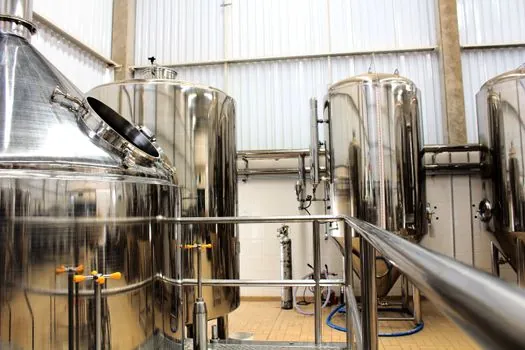
IP65 is the minimum shuttle ingress rating for any zone subject to daily washdown, with IP66 or IP67 specified for direct-spray freezer entry vestibules and any chilled zone with overhead ammonia or CO₂ refrigerant line condensate risk [S5].
Floor interface is the second washdown variable. Shuttle rails are typically floor-mounted with a 50 to 80 mm raised plinth or, more commonly, a flush-mounted rail set into a resin floor with a 2 to 3 mm radius coving at the rail-to-floor joint; this matches EHEDG hygienic flooring practice and lets floor scrubbing machines pass without snagging the rail [S5]. Drainage falls must run perpendicular to the rail, not along it, so wash water does not pool inside the rail profile.
For ambient dry zones (UHT beverage cases, dry pasta, canned goods), the washdown rule relaxes to dry sweeping and occasional damp mop, so shuttle cost can be reduced by stepping back to IP54 shrouds and standard conveyor-grade grease.
Controls, WMS Integration, and Traceability
F&B shuttle WMS layers must support lot, batch, and expiry-date tracking at the tote or case level, with FIFO and FEFO pick algorithms running natively on the shuttle fleet manager rather than as a post-pass reconciliation in the host WMS [S2].
RMS's provisions operation demonstrates the audit depth required: ISO 22000 plus HACCP-compliant temperature control, QC, labeling, and traceability records on every dry, fresh, and frozen SKU shipped to international cruise clients [S2]. A shuttle system that cannot export per-tote temperature and dwell-time logs in real time will fail this traceability gate.
For F&B DCs, redundant temperature telemetry (one sensor on the tote, one ambient zone sensor, one shuttle deck sensor) is a common spec, because single-point failure on a chilled or frozen audit log can trigger a full lot hold.
Who Shuttle Systems Fit, and Where They Do Not
Shuttle systems are a strong fit for F&B DCs with 5,000+ storage positions, mixed temperature zones, and a SKU profile of 200 to 2,000 active items with high pick density per cubic meter; this includes dairy, beverage, prepared frozen meals, and specialty/gourmet retail [S1][S2].
Shuttle systems are a poor fit for very small F&B operations under 2,000 positions, single-SKU pallet flow (e.g. bulk grain or liquid tank farms), and any operation where the host WMS cannot enforce lot and expiry rules at the storage-bin level. In those cases, conventional pallet racking or ASRS crane systems paired with manual or AMR tote handling is the lower-TCO choice.
Selection Criteria Comparison
The four primary shuttle variants for F&B are: ambient dry-goods shuttle, chilled-zone shuttle, freezer-zone shuttle, and multi-temperature shuttle. Key comparison dimensions are surface material, IP rating, operating temperature, and lubricant grade.
Ambient dry-goods shuttle typically uses zinc-plated or powder-coated steel, IP54, 10 to 25 °C operating range, and standard grease; this is the lowest cost option and suits canned, dry, and UHT operations [S5]. Chilled-zone shuttle steps up to 304 stainless rails, IP65, 0 to 4 °C operating range, and NSF H1 grease, suiting dairy, fresh juice, and prepared chilled meals [S2][S5]. Freezer-zone shuttle uses 316 stainless, IP66 or IP67, -25 to -18 °C operating range, low-temperature Li-ion or super-cap hybrid, and low-temp NSF H1 grease, suiting frozen seafood, frozen prepared meals, and ice cream [S2]. Multi-temperature shuttle supports all three bands in a single carrier by combining heated battery enclosures, 316 stainless contact surfaces, and IP67 shrouds, but at 30 to 50 % higher unit shuttle cost than single-zone units [S2].
Failure Modes and Constraint Mapping

Condensation-induced electrical failure inside shuttle bodies is the single most common F&B shuttle failure mode, typically appearing 6 to 18 months after commissioning when door-opening cycles in the chilled zone drive humid air into unsealed cable entries; spec mitigation is IP65 cable glands plus sealed drive enclosures, with annual gland re-torque in the maintenance plan [S5].
Floor-rail gap and coving failure is the second top failure mode: when resin floor coving at the rail base cracks, wash water and sugar or salt solution penetrate under the rail, corrode anchors, and lift the rail by 2 to 5 mm, which in turn causes shuttle derailment; mitigation is a 316 stainless anchor plate set in epoxy with a continuous 3 mm radius cove, inspected semi-annually [S5].
NSF H1 grease intervals must be shortened to 50 % of the OEM's standard dry-goods interval in chilled zones, because condensate washes grease out of bearing housings faster than airborne dust does in a dry warehouse; this is a documented operating-cost line item, not a warranty exclusion.
Sourcing, Standards, and Audit Trail
The governing standards stack for an F&B shuttle DC is: ISO 22000 (food safety management system), HACCP (hazard analysis critical control points) for temperature and contamination control, EHEDG guidelines for hygienic equipment design and cleanability, and IEC 60529 for IP rating definitions, with NSF H1 registration on any food-contact or food-zone lubricant [S2][S5].
Vendor evaluation should be anchored in three auditable references per shortlisted supplier: a working F&B DC reference with the same temperature band, a documented NSF H1 lubricant bill of materials, and an IP test certificate (not just a marketing claim) at the actual shuttle rating, not at a component rating. The same due-diligence depth that audits a UFFB-grade commercial food equipment service program (installation, preventive maintenance, reactive service, parts inventory) should apply to the shuttle integrator's field service network [S3].
Trackable next signals for F&B shuttle spec writers to watch: NSF H1 grease price and supply stability, IP67 shuttle pricing trend as the F&B market matures, and any new EHEDG update covering shuttle-specific rail and carrier geometry. For a peer take on shuttle selection in a non-F&B context, see the shuttle system spec gate map for e-commerce fulfillment.
The underlying component specifications are covered under lighting equipment and electric lamps.