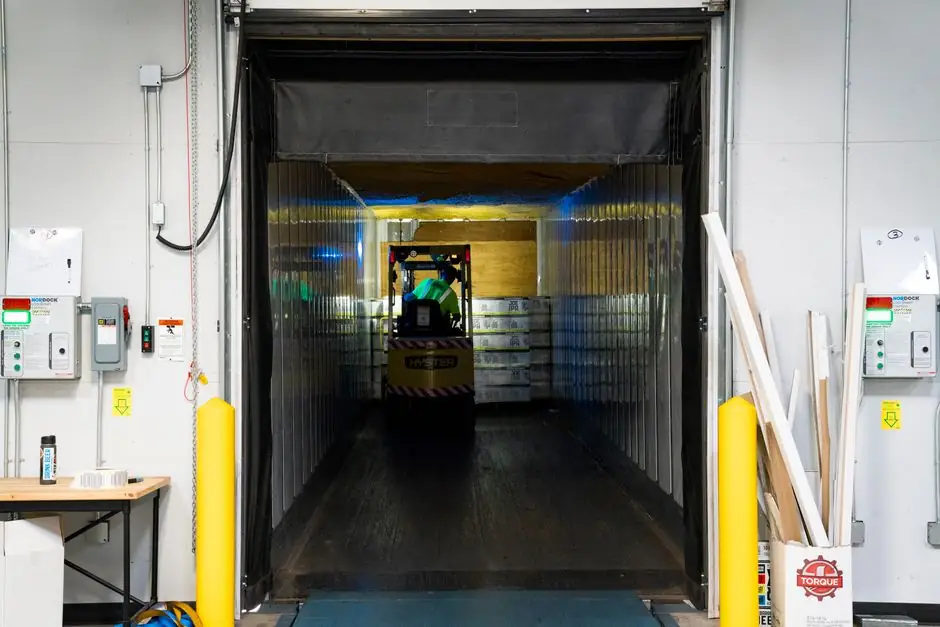
Pallet shuttle systems for cold-chain logistics in 2026 are specified primarily by temperature rating, storage depth, payload, and redundancy architecture, with sub-zero operation down to -40°C (-40°F) now treated as a baseline rather than a special option on heavy-duty two-way and four-way pallet shuttle designs [S4].
Cold-chain operators evaluating shuttle systems in 2026 must reconcile three competing pressures: pharmaceutical-grade temperature stability (down to -60°C or below for mRNA and advanced biologics, and -150°C or below for cell and gene therapies using liquid nitrogen), SKU proliferation in grocery and 3PL operations, and the capital cost of redundancy at the lift, conveyor, and software layers [S3][S5].
What a shuttle system actually is in a cold-chain context
A shuttle system is a low-profile robotic carrier that moves horizontally inside a racking lane, transporting totes, cartons, or pallets between storage positions and the lane face, where a forklift, reach truck, AGV, or stacker crane handles the aisle transfer. The system eliminates the drive aisles that conventional selective or drive-in racking requires, raising storage density and freeing the building envelope for pick-and-pack operations downstream [S4].
For cold-chain sites the architecture matters because the shuttle is the only moving part inside the insulated envelope. Cold storage and deep-freeze facilities commonly reach roof heights of 30-40 m in clad-rack builds, and a shuttle failure at depth means technicians enter a -25°C or colder chamber for extraction, which is why maintenance access design and one-level isolation are now procurement gates rather than afterthoughts [S3][S2].
Two-way shuttles travel along a single lane and suit deep-lane, single-direction operations such as frozen food buffering. Four-way shuttles traverse both lanes and cross-travel lanes and integrate with elevators to reach any level of multi-story racking, which is the configuration most grocery and e-commerce fulfillment sites specify when they need mixed-SKU density without rebuilding the rack profile [S4].
Temperature ratings and product band alignment
Product temperature bands in pharmaceutical and food cold chains are tightly defined: chilled at +2°C to +8°C for vaccines, insulin, and monoclonal antibodies; frozen at -18°C to -30°C for plasma derivatives; deep frozen at -60°C or below for mRNA active pharmaceutical ingredients; and cryogenic at -150°C or below for cell and gene therapies and CAR-T products stored under liquid nitrogen [S5].
Most heavy-duty pallet shuttles advertise an operating envelope of -40°C to +50°C, which covers the chilled and standard frozen bands but stops short of deep-frozen pharmaceutical storage and cryogenic storage. Cryogenic CGT storage is handled by liquid-nitrogen tanks and automated cryogenic storage systems rather than mechanical shuttle racks, so a shuttle specification only needs to chase the band the site actually operates in [S4][S5].
Battery chemistry is the binding constraint below -25°C. Lithium-ion cells lose usable capacity rapidly below that threshold, so deep-freeze shuttle fleets typically spec lead-acid or low-temperature LiFePO4 packs with heated battery compartments, and confirm sustained operation through a documented cold-soak test rather than a spec sheet number [S3][S4].
Throughput, storage depth, and SKU profile
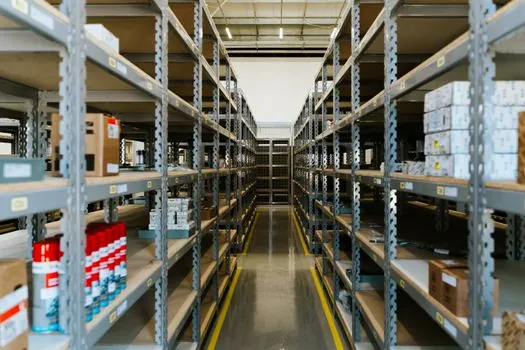
Published throughput figures are a starting point, not a decision. The Stingray shuttle system sustains more than 1,500 load carriers per hour per aisle under defined conditions, including a specific tote size, aisle configuration, and sustained operational window, and that figure should be requested with its conditioning assumptions before it enters a budget model [S3]. Spacemaker two-way and four-way shuttles run at a peak travel speed of 235 ft/min (1.25 m/s) with a 1,500 kg (3,162 lb) per-pallet payload and a controller ceiling above 230 shuttles per controller, which together define the upper bound on fleet size one site can run before a second controller is required [S4].
Storage depth is where most density decisions are made. Single-deep racking gives every load carrier direct access and the highest retrieval speed, while double-deep and multi-deep configurations store carriers behind one another to raise density, trading some direct-access speed for cubic efficiency. Operations with mixed carton or item sizes, which describes most grocery logistics and consumer goods environments, gain the most from multi-deep storage because it absorbs size variety without sacrificing density [S3].
SKU profile alignment is the second hidden variable. Low-SKU, high-volume pallets (frozen meat, dairy, beverage) suit radio shuttle semi-automated systems paired with forklifts, which is why those systems are widely recommended for fast-moving consumer goods, food, beverage, and cold-chain operations handling a narrow SKU base. Mixed-SKU grocery, pharma distribution, and 3PL shared-user DCs need four-way or mother-baby shuttle configurations to avoid the throughput collapse that comes from re-palletizing mixed orders in deep-lane storage [S2][S3].
Selection criteria that actually drive a cold-chain shuttle buy
Procurement teams in 2026 are converging on five spec gates: (1) operating temperature envelope with documented cold-soak test data, (2) per-pallet payload and travel speed under that envelope, (3) shuttle count per controller, (4) storage depth and lane geometry match to the SKU profile, and (5) redundancy at the lift, conveyor, and software layers specified separately and priced in. Skipping any one of these and retrofitting later is the single most expensive mistake a cold-chain build can make [S3].
Maintenance access design is the gate that gets cut under budget pressure and then becomes the dominant operational pain point. A shuttle that fails at the back of a 30-pallet-deep lane at -30°C is not the same service event as a conveyor fault at room temperature, so cold-chain sites must specify one-level isolation, hot-swap shuttle extraction from the lane face, and software that lets a single failed shuttle be quarantined without stopping the aisle [S3].
Vendor selection also turns on whether the shuttle drops into standard selective and drive-in rack profiles (CHEP, EUR, GMA pallet standards) and integrates with the existing WMS and ERP through a documented API or the vendor's warehouse execution system. A shuttle fleet that requires a proprietary WMS or a parallel inventory database is a long-term liability, not a feature [S4].
Use case fit: which shuttle type goes where
Two-way pallet shuttles (Spacemaker DualAxis Pro, Pallet Mole, and similar heavy-duty units) fit single-direction deep-lane operations where the aisle face is served by reach trucks or forklifts: bulk frozen-food buffering, dairy and protein staging, and pallet-level frozen storage replacing drive-in racking. Cold storage and deep-freeze facilities make up roughly half of the installed base for major shuttle vendors, with the rest spanning food and beverage, 3PL, manufacturing, e-commerce, and retail distribution [S4].
Four-way shuttles (QuadAxis Pro and equivalents) suit multi-level mixed-SKU chilled and ambient DCs that need cross-aisle movement and elevator integration, including e-commerce fulfillment buffers, retail regional DCs, and pharmaceutical distribution at +2°C to +8°C where order mix varies daily. Mother-baby (parent-child) shuttle systems with multi-deep dense storage add a vertical lift and suit operations that need to combine high-density pallet storage with case picking, which is a common pattern in food and beverage manufacturing staging [S2][S4].
Radio shuttle semi-automated systems remain the right answer for low-variety, high-volume SKU operations where the shuttle is paired with a forklift, and they are the most common entry point for mid-sized cold-chain operators that do not have the throughput to justify a fully automated four-way fleet. They are not a fit for high-SKU grocery, pharmaceutical distribution, or 3PL shared-user DCs where case-level picking and rapid SKU changeover are the norm [S2].
Standards, compliance, and infrastructure context
Cold-chain shuttle operations sit on top of a regulated transport and storage layer. UPS Healthcare has invested $48 million in 27 temperature-controlled freight cross-dock facilities as part of a global cold-chain network expansion, and the broader 2026 cold-chain market is seeing IoT sensor and GPS tracking adoption accelerate as a quality-assurance and audit requirement rather than a competitive differentiator [S1][S8][S9].
Buyers should anchor shuttle specifications to documented live-deployment data at the target temperature band, not vendor literature, and require the throughput figure to be modeled against real order history before contract signature. Cold-chain shuttle vendors that publish cold-soak test reports, controller scaling limits, and WMS/ERP integration documentation are the ones to shortlist; those that publish only a peak throughput number on a clean test profile should be downgraded regardless of headline performance [S3].
For a related process-engineering view of how throughput numbers get misread on adjacent automation, see TGW's shuttle configuration guide for grocery logistics, and for the upstream conveyor and material handling interfaces that feed shuttle lanes, chain conveyor selection and chain belt drives are the usual mechanical hand-off points. Where shuttle operations run inside a high-bay racking envelope served by stacker cranes, cold-box core machine references may apply if the same site also runs a foundry or bonded-sand process under the same facility.
Track three signals through the rest of 2026 and into 2027: (1) cold-soak test reports becoming a standard RFP attachment for any shuttle bid under -25°C operation, (2) controller-per-shuttle ceilings climbing past 300 as low-temperature LiFePO4 packs mature, and (3) cryogenic shuttle or shuttle-equivalent automation appearing at the -60°C and -150°C bands as cell and gene therapy volumes scale.
See also our earlier report, Linear Bearing Selection for Packaging Lines: 2026 Spec Gates.