
Signal isolator selection hinges on four binding parameters: loop-power topology (input-loop, output-loop, or externally powered), isolation voltage rating, response time class, and channel count. A typical industrial signal isolator withstands 1,000 V or more of common-mode voltage at the input, with the rating expressed as the difference in power applied to the input port versus the portion that appears at the isolated port when properly terminated [S1][S3].
Selection starts with the signal interface itself, the analog front end of any signal isolator is the bottleneck of the whole loop. The four most common input/output pairings on PLC and DCS I/O points are 4-20 mA current loop, 0-10 V voltage, HART-over-4-20 mA, and digital discrete; each pairing demands a different isolator topology and a different isolation barrier rating [S2][S5].
Loop-Power Topologies: Where the Isolator Gets Its Energy
Three power architectures cover roughly all field installations. Output-loop-powered isolators draw their operating current from the downstream 4-20 mA loop, eliminating the need for a separate PSU and making them the correct pick for bucking-power-supply situations where two devices try to feed the same loop [S5].
Input-loop-powered isolators are specified when no AC or DC supply is available at the mounting point; the device harvests operating energy from the input signal source and the load of the output field device, a common requirement on retrofits in older switchgear rooms [S5]. Externally powered (four-wire) isolators accept a dedicated 24 VDC or 100-240 VAC supply and are the dominant configuration in marshalling cabinets, where the four-wire standard-response single-output form factor is described as the most common type of analog signal isolator [S4].
Isolation Voltage, CMRR, and the Three Isolation Methods
Industrial isolator datasheets typically quote an isolation rating of 1,000 V, 1,500 V, 2,500 V, or 3,000 V between input, output, and supply, with 1,000 V being the typical minimum and 2,500 V common on process-side units [S1][S3].
Common-mode rejection ratio (CMRR) at 50/60 Hz typically sits in the 100-160 dB range for transformer-isolated process transmitters, a figure the user must verify against the actual plant noise environment rather than the marketing datasheet. For hazardous-area installations, the isolation barrier must additionally satisfy the relevant intrinsic-safety or non-incendive standard, and a separate reference framework is given in our explosion-proof electrical selection guide, which maps zone, group, and protection-level decisions.
Response Time, Bandwidth, and HART Pass-Through
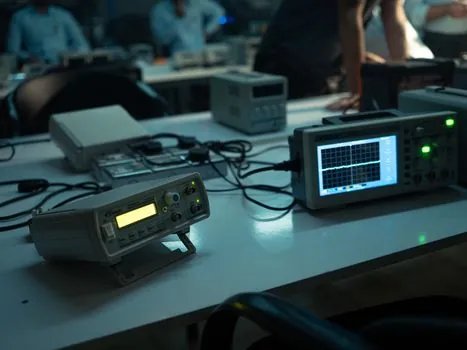
Response time spans three orders of magnitude across the catalog. Normal-speed process isolators land at roughly 500 milliseconds, suitable for temperature and level loops; high-speed variants target 1-10 millisecond control loops; ultra-high-speed isolators reach 30 microseconds, required for turbine vibration, fast-acting valve position feedback, and certain current-loop diagnostic signals [S4].
HART pass-through is a separate specification, the isolator must present low enough loop impedance and shunt capacitance to allow the 1,200 bps FSK HART signal to traverse the barrier without distortion. HART-compatible isolators are explicitly listed in major vendor catalogs alongside loop-powered, dual-output, and active/passive-switchable models, with HART, dual-output, and switchable active/passive input models now representing a meaningful share of new catalog additions [S4]. Cross-reference: a deeper criteria-based decision map for variant selection is published in Signal Isolator Selection: A Spec-First Decision Map.
Channel Count, Mounting, and Form Factor
Channel density shifts the BOM arithmetic fast. A single-channel DIN-rail isolator in plug-in or terminal-block form is the default for skid-builders; 4-way and 8-way rack- or DIN-mount modules are standard for marshalling cabinets, and one catalog example of a universally configurable 4-way signal conditioner is a typical high-density pick for retrofit work where panel space is the constraint [S3].
Mounting styles split into four families: plug-in (socket-mounted, hot-swappable), rack-mounting (19-inch or vendor-specific backplanes), terminal-block (screw-termination on a shared DIN rail), and on-board isolation amplifiers (PCB-mount, OEM-integration only). Field wiring termination is most commonly screw-terminal; spring-cage and push-in terminations are gaining share on high-vibration skids but must be checked against the site wiring practice [S3][S4].
Decision Matrix: Picking the Right Variant in Four Steps
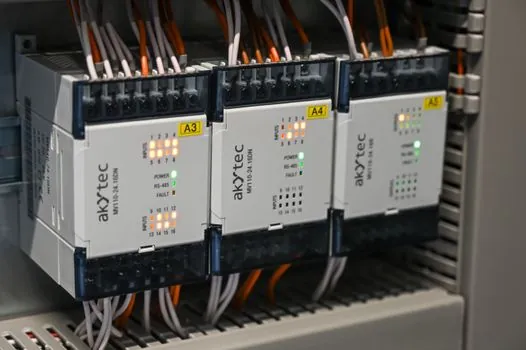
Step one is power source: if the 4-20 mA loop can supply the isolator and the panel has no spare 24 VDC, an input-loop-powered unit is the cheapest fit; if the cabinet has a clean 24 VDC bus, a four-wire externally powered isolator gives the best accuracy and the lowest loop burden. Step two is bandwidth: 500 millisecond for SCADA telemetry, 10 millisecond for servo valves, 30 microsecond for vibration or arc-flash detection, with the threshold set by the loop's Nyquist requirement rather than the marketing headline [S4].
Step three is HART: if the field device uses HART, the isolator must be HART-pass-through listed, not merely 4-20 mA compatible, because HART is a 1,200 bps FSK signal riding on the 4-20 mA analog loop and any high-impedance stage will round off the HART packets. Step four is isolation voltage: 1,000 V is adequate for control-room-only separation, 2,500 V is the process-industry norm for field-to-marshalling, and 3,000 V is reserved for outdoor or high-surge environments [S1][S3][S5].
Failure Modes, Misapplications, and Pulp/Paper Reality Check
The most common specification mistake is picking a 500 millisecond process isolator for a 10 millisecond valve-positioning loop, which produces a 50x latency penalty the control engineer usually discovers as hunting or limit-cycling. The second most common mistake is specifying a non-HART isolator on a HART loop, which silently kills the digital diagnostic and the device-DD data without breaking the 4-20 mA reading, the loop looks healthy on the DCS but the AMS-style tools report the device offline [S2][S4].
For process industries with corrosive atmospheres and high humidity, the variant set is narrower than the control-room catalog implies; a sector-specific shortlist is laid out in Best Signal Isolator for Pulp and Paper Mills: 2026 Selection Logic, where moisture ingress, ground-potential spread across the white-water loop, and chemical vapor attack on the field-side terminals drive the spec.
Two signals are worth tracking: new isolator families that publish explicit HART 7 pass-through test reports with loop-impedance and shunt-capacitance curves, and the gradual migration of process plant I/O marshalling toward multi-channel configurable 4-way modules, which compress panel space at the cost of per-channel replaceability.
Spec-level background on the components involved: linear guide, and crossed roller guide.