
EN 45545-2 is the controlling fire, smoke, and toxicity (FST) standard for rail interior elastomers, and the HL1/HL2/HL3 hazard-level banding is the first filter applied to any silicone gasket or extrusion on a passenger coach, metro car, or locomotive cab [S1].
The practical scope covers sealing profiles, moulded gaskets, anti-vibration mounts, liquid silicone rubber (LSR) parts, and silicone-rubber heating mats used in battery-traction trains. Common deployment zones are door and glazing perimeters, HVAC ducts, electrical enclosures, lighting units, cable penetrations, and traction-battery thermal conditioning [S1][S2][S3][S4][S5].
EN 45545-2 Hazard Levels and Where Silicone Wins
EN 45545-2 was established in 2013 to unify FST testing of rail interior materials and rates compounds into HL1, HL2, and HL3 tiers based on operating environment, with HL3 the most stringent requirement for sleeping cars, underground metro, and tunnels [S1]. On a typical European new-build, the HL3 cell is the default specification for any interior elastomer that can be reached by a passenger or a maintenance technician without a full LOTO procedure.
Silicone (VMQ) and silicone foam grades (for example, the Bisco® silicone-foam family cited in the CB Frost conversion work) are routinely formulated to pass HL3 for low smoke, low toxicity, and low heat release, and silicone's working-temperature envelope of roughly -60 °C to +230 °C is the widest of the common rail elastomers [S1][S2]. FKM and EPDM grades are pulled in for specific chemical-exposure or weathering cases, but VMQ remains the default for FST-critical sealing because it is the only common rail-grade polymer that holds flexibility and tensile strength across the full service range without becoming glassy in Nordic winter operation or embrittling in rooftop equipment-bay temperatures [S2][S3].
Material Comparison: VMQ vs EPDM vs FKM vs NBR on Rail Duty
The decision matrix used by Harltex for rail material selection lists operating temperature, chemical exposure, compression set, environmental conditions, and regulatory compliance obligations as the five primary inputs, and the same logic applies to silicone extrusion specification across the industry [S3]. Silicone covers the broadest temperature band and has the best FST rating per volume, but it is not a universal solution.
EPDM is the cheaper outdoor- and weathering-grade choice for non-HL3 sealing such as door-pedestal boots, glazing wedges, and infrastructure gaskets where UV, ozone, and water exposure dominate the failure mode. FKM (fluoroelastomer) is the correct pick for under-chassis and engine-bay locations exposed to diesel, biodiesel, AdBlue, and hot oil mist, where VMQ would swell and lose compression set. Nitrile rubber (NBR) stays in the spec map for hydraulic hose, valve seals, and AdBlue-line components, and is generally used as a non-VMQ hose alternative when silicone is not specified [S3]. For interior FST-critical sealing, however, VMQ remains the default, and for good reason: non-rated industrial compounds in a tunnel fire act as combustible fuel and emit the dense, dark smoke that blocks evacuation signage, which is the specific failure mode EN 45545-2 was written to prevent [S1][S2].
Silicone Extrusions: Geometry, Cure, and Application Map

Standard rail extrusions include door and glazing profiles, HVAC duct edge seals, cable-penetration grommets, panel-joint P-sections, and the U-channel edge protection used on glazing and interior panels [S3][S6]. The U-channel geometry is a common stock item that fabricators cut to length and either dry-fit or bond into a rebate, with silicone grades giving continuous service across the door/window/RT-panel interface.
For custom sealing solutions, suppliers such as Merefsa have confirmed new rail-profile launches targeting Innotrans 2026, covering frames, gaskets, and profiles aimed at the next European rolling-stock procurement cycle [S7]. Production-side, UK tier-one extruders run 200 mm hot-feed lines and 60-120 mm cold-feed lines to support both high-volume coach programmes and short prototype runs, with rubber-to-metal bonding in-house for anti-vibration mounts and bonded structural assemblies [S3].
LSR (Liquid Silicone Rubber) for Rail: Moulded Parts and Custom Parts
LSR addition-cure RTV compounds are the form factor used when the part geometry is too complex for extrusion or where insert-moulding onto a metal or plastic carrier is required, and transportation is one of the named standard application buckets (alongside automotive, aerospace, and shipboard) for the major LSR compound families [S4].
Typical rail LSR parts include connector seals, sensor diaphragms, lighting-lens gaskets, and small overmoulded cable penetrators where the tight dimensional tolerance of injection-moulded LSR (versus cut extrusions) is required. Compared with high-consistency rubber (HCR/HSR), LSR parts offer lower flash, tighter tolerances, and shorter cycle times, but tooling cost is higher, so LSR is justified where the per-vehicle volume supports a mould or where the part cannot be extruded cleanly. For the broader material context, see the silicone rubber and industrial rubber reference pages, which cover the elastomer families adjacent to this spec map.
Silicone Heaters for Battery-Powered and Cold-Climate Rolling Stock
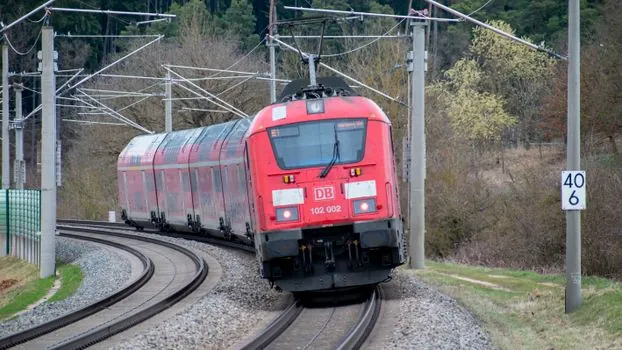
Silicone-rubber heaters are now appearing as a specified subsystem on battery-traction and hydrogen-traction trains, where battery thermal management in sub-zero ambient conditions is a hard engineering requirement, not an option [S5]. The construction is a resistance wire or etched-foil element laminated between two silicone sheets, giving a thin, flexible mat that bonds directly to battery enclosures, pipework, or instrument housings.
On cold-climate routes, the heater mat maintains battery pack temperature above the operating threshold before departure and during dwell time at stations, preventing capacity loss and reducing the cycling damage that permanent cold operation would cause [S5]. The same silicone-rubber heater construction is also used in switchgear cabinets, door-rail heaters to prevent ice loading on sliding-door mechanisms, and HVAC plenum anti-frost zones, which is why silicone grades show up not just as a sealing material but as a thermal-management material in the modern rail bill of materials.
Selection Workflow: From Vehicle Class to Approved Part
A spec-driven selection starts by fixing the vehicle class and the EN 45545-2 hazard level, then mapping the part location to a temperature, chemical-exposure, and mechanical-duty window, and only then choosing between VMQ, EPDM, FKM, or NBR [S1][S3]. Within VMQ, the next decision is form factor: extrusion (for continuous profiles and long gaskets), compression or injection moulding (for static/dynamic seals and anti-vibration mounts), or LSR injection (for complex geometries, over-moulded inserts, and high-volume small parts) [S3][S4].
Final approval requires the supplier to provide EN 45545-2 test certificates at the correct HL rating, full traceability of the compound batch, and dimensional-control data on the production run, with prototype validation and staged approvals built into the tooling development plan before full production rollout [S3]. Skipping any of these steps is the typical root cause of the legal-penalty and vehicle-recall scenarios that EN 45545-2 was written to prevent, and is why compound selection is rarely left to a purchasing function on modern rolling-stock programmes [S1]. For related selection logic on a different transport sector, the silicone rubber selection for marine engineering spec map covers the analogous FST-and-weathering decision tree in shipboard applications.
Common Failure Modes and What to Verify in the PO
The most common in-service failure on rail silicone is compression set on a door or HVAC gasket that was specified too soft, which then leaks air and water after a few years of cycling; the correct response is to specify a lower compression-set grade (typically 20-30% after 24 h at 175 °C) and to confirm the test method on the certificate. The second most common failure is swelling or hardness drift from chemical attack in under-chassis locations, where a non-FKM elastomer was misapplied; the correct response is to draw a chemical-exposure boundary on the drawing and to refuse FKM substitution for VMQ where FST rating, not chemical resistance, is the controlling requirement [S2][S3].
Procurement-side, the practical safeguards are: (1) require the EN 45545-2 certificate to name the HL level, the test house, and the test date; (2) require a compound data sheet with hardness (Shore A), tensile strength, elongation, compression set, and specific gravity; (3) require a cure certificate if the part is peroxide-cured versus platinum-cured, because the two systems behave differently in service; and (4) require dimensional reports on first article and on a defined AQL sample during production runs. A PO that lacks any one of these four items is the typical trigger for a costly retrofit on a coach or metro programme.
Trackable near-term signals: Innotrans 2026 (Berlin, September 2026) is the main European showcase where the next generation of EN 45545-2 HL3 silicone profiles, frames, and gaskets will be released, and at least one major supplier has already announced a dedicated rail-sealing launch for that event [S7]. Separately, the cold-climate silicone-heater segment is moving from aftermarket retrofit to OEM option on new battery-traction tenders, and approval data on the first production-fit installations is expected to become public through rolling-stock procurement notices over the next two procurement cycles [S5].