
Three-phase service is available in many industrial facilities, while single-phase service remains practical where only one-phase service exists [S1][S3].
The decision depends on supply voltage, branch capacity, required welding current, duty cycle, portability, and the power source design; an electroslag pressure welder must be rated for the exact input configuration and service installed.
Power Stability and Welding Output
Three-phase power uses three alternating waves operating simultaneously, so their peaks and valleys overlap and produce a more uniform supply than the repeating pulse of single-phase power [S1]. A three-phase supply also accommodates higher loads more effectively [S3].
The distinction is most visible in older transformer or rectifier equipment. User testing described three-phase operation at 400 V as producing a much more stable arc than single-phase operation at 220 V, while also allowing higher welding currents [S2]. In the same discussion, a modern single-phase inverter machine produced comparable weld quality to an older rectifier machine running on three-phase power, illustrating that power conversion and control can narrow the gap [S2].
Treat the 5% figure as a comparative source statement for three-phase welding power, not as a universal guarantee for every electroslag power source. The electroslag process and its remelting behavior must be qualified with production welds using the proposed machine and supply configuration.
Decision Matrix by Operating Criterion
On supply stability, three-phase leads because three offset waves overlap, while single-phase delivers a pulsating input [S1]. On current headroom, three-phase supports higher currents and heavier loads [S2][S3]. On installation cost, single-phase wins where suitable service already exists because installing a new three-phase branch, transformer, or feeder can add substantial site work [S2].
On portability, single-phase leads because it can operate from a standard one-phase outlet, while three-phase generally requires dedicated industrial service [S1]. On modern inverter performance, the gap narrows: one practical comparison found a single-phase inverter capable of welding as well as an older three-phase rectifier unit [S2].
The resulting rule is straightforward: specify three-phase when the process requires sustained high current, long weld cycles, or tightly controlled repeatability and the plant already has suitable three-phase capacity. Specify single-phase when mobility, residential or temporary service, low infrastructure cost, and moderate duty requirements dominate. Do not select from output amperage alone; the manufacturer must confirm input phase, voltage, frequency, required branch protection, cooling demand, and output performance at the intended duty cycle.
Single-Phase Machines for Portable and Retrofit Work
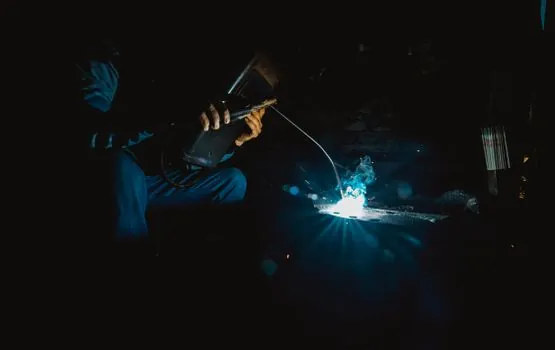
Single-phase is appropriate for field contractors, temporary installations, and workshops that can access only household or other one-phase service [S1]. Its advantage is infrastructure simplicity, not necessarily weld capability. The limiting factor is the maximum input current available from the branch and the power source's continuous output rating at that voltage.
Input voltage cannot be treated as interchangeable with phase count. A unit that is not explicitly listed for the proposed voltage or phase must not be connected merely because the connector appears compatible [S4].
For an electroslag power source, specify the minimum continuous single-phase input, recommended protective-device rating, allowable input-frequency range, and maximum uninterrupted output-current duration. If the required slag production rate or electrode feed range forces continuous operation above those limits, use three-phase service or specify a different machine. Do not assume that a modern inverter can compensate for an undersized branch or a power source omitted from its approved input configurations [S2][S4].
Three-Phase Machines for Production Capacity
Three-phase input is preferred when an electroslag pressure welder must sustain high current with low supply variation. Three-phase systems handle higher loads more effectively [S3], and practical welding comparisons identify smoother arcs, improved welding behavior, and higher current capability than at 220 V single phase [S2].
Three-phase equipment is also the cleaner choice when three-phase service already exists for motors or other industrial loads. In that case, the economic comparison is mainly equipment and installation cost, not the cost of creating a new utility connection [S2]. If three-phase service must be installed solely for the welder, calculate feeder, switchgear, protection, transformer, and civil works before accepting the performance gain.
The electroslag pressure welding versus mechanical coupler cost comparison is also affected by operating capacity: a welding cell that cannot meet cycle time because of input limitations may lose its productivity advantage. Evaluate total cost per accepted joint, including power infrastructure, consumables, scrap, rework, and downtime, rather than purchase price alone.
Failures From Undersized or Miswired Supply
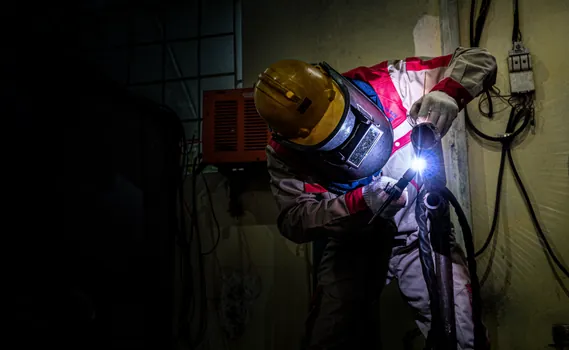
Connecting a one-phase machine to an unintended three-phase supply can produce severe damage at energization, and changing input jumpers without following the machine configuration procedure risks component failure [S4]. A higher nominal voltage does not establish phase count: one reported 300/300 machine was configured for 208, 230, or 460 V single-phase input through internal jumpers, despite initial assumptions that it was three-phase [S4].
The main failure modes are insufficient input current, input voltage outside the permitted tolerance, incorrect phase configuration, missing neutral where required, and inadequate branch protection. These faults can manifest as output instability, reduced welding current, overheating, nuisance protection trips, or damaged power electronics [S2][S4]. The machine nameplate and approved wiring diagram take precedence over general electrical assumptions.
Before purchase, record measured site voltage under expected load, service phase, frequency, available branch current, breaker or fuse rating, grounding arrangement, and connector type. Confirm those values against the power source manual. For temporary sites, include generator output frequency, voltage regulation, waveform quality, and connection limits; the claim that an inverter can accept dirty generator power does not replace manufacturer limits [S2].
Verification and Procurement Criteria
Require the supplier to state whether the quoted power source is single-phase or three-phase, its permitted input voltage or voltage ranges, maximum input current, required protection, cooling requirements, continuous duty rating, and output performance at the specified input [S4]. Ask for a factory confirmation or test record when the installation is unusual, particularly for 208 V, 400 V, 460 V, 575 V, or generator operation.
Use a process-specific acceptance test rather than relying on a nominal output label. For electroslag welding, qualify the electrode, remelting current and duration, slag composition and quantity, pressure, electrode feed speed, and repeatability over representative production cycles. Record input voltage, input current, phase, frequency, and any protection event during the run. A stable three-phase arc or slag process remains the controlling acceptance condition.
Electrical installation work should follow the equipment instructions, local wiring rules, and the applicable code for the site. No supplied research establishes a universal electroslag-specific phase requirement, so the process specification, power source manual, and qualified welding procedure must control the final decision. For most industrial continuous-duty cells with available three-phase service, three-phase is the lower-risk choice; for portable single-phase service, select a machine explicitly rated and tested for that duty.