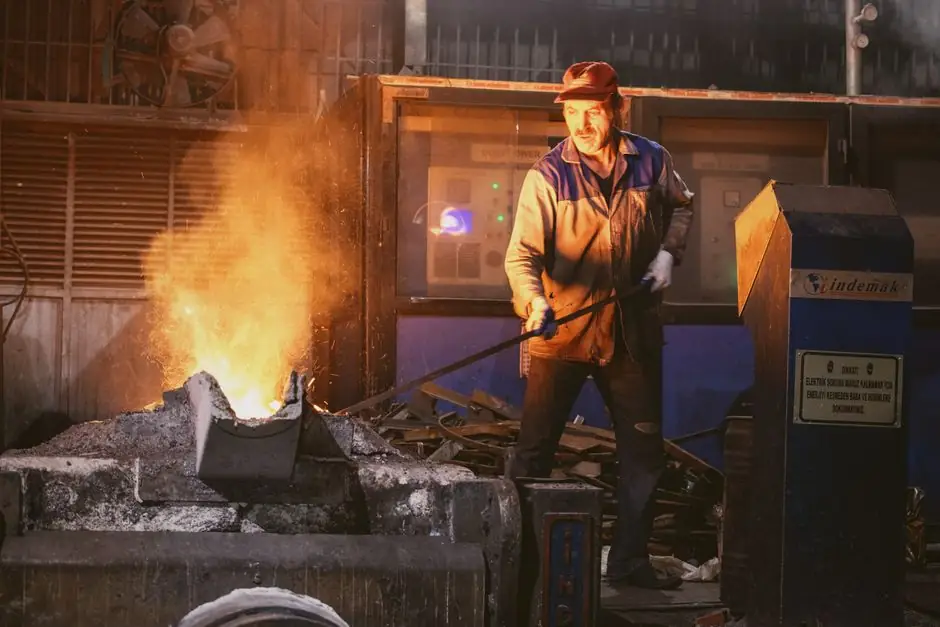
A 100 kg target pour normally requires more than a 100 kg crucible: size the vessel from metal volume, alloy density, batch losses, freeboard, melting schedule, and thermal-service requirements.
For industrial sizing, specify the alloy, charge weight, liquid-metal rate, pouring method, temperature, and alloy-change schedule before selecting furnace geometry, crucible material, and handling equipment [S1].
Convert Pour Weight Into Usable Crucible Volume
The correct starting calculation is the volume of metal, not the weight marked on a generic crucible listing. For a target pour mass W, calculate liquid volume as V = W divided by the alloy density, with W expressed in kilograms and density in kilograms per cubic metre. A 100 kg pour of aluminium at approximately 2,700 kg/m³ requires about 0.037 m³, or 37 litres, before accounting for charge and freeboard [S5].
Crucible capacity is commonly described by the mass of a specified metal, so 6 kg may refer to brass rather than a universal 6 kg capacity across aluminium, copper, bronze, iron, or gold [S2]. This makes alloy-specific data essential: volume remains constant, while the mass carried by that volume changes with density.
One hobby-sizing recommendation is to use about 25% more crucible volume than the material being cast [S2]. These are preliminary allowances, not universal design constants. Industrial furnace capacity should account for metal losses, freeboard, service conditions, and potential damage or replacement needs [S1][S3].
Set Batch Capacity Around The Production Schedule
Batch capacity should match the casting schedule rather than equal one isolated pour. A credible selection uses actual alloy designations, charge weights, target liquid-metal rate, and the casting schedule, with stationary or tilting crucible furnaces providing practical batch control for many copper, brass, and bronze applications [S1].
Three quantities must be separated: charge mass, deliverable liquid mass, and instantaneous pour mass. A furnace can melt a large total charge over a shift while still being unable to pour one large casting at the required rate. If the target pour is 100 kg but the usable liquid inventory is only 75 kg, the vessel cannot deliver that pour without a second ladle or a larger working batch.
Pouring method changes the selection. A crucible must match the furnace geometry, metal, temperature range, support, and lifting tools and must work with the intended tongs [S3]. For production quantities where continuous dosing accuracy matters, the furnace choice can also be compared with a holding furnace, although the supplied research does not quantify dosing accuracy.
Compare Capacity Across The Main Decision Criteria
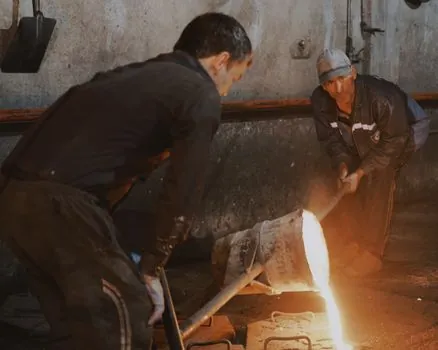
Crucible selection has four linked dimensions: working capacity, thermal capability, mechanical fit, and service life. A vessel that satisfies only the first can fail through overheating, contamination, thermal shock, unstable support, or damage from poor handling [S3].
Graphite crucibles can be used regardless of the metal up to around 1,200–1,300°C [S5]. Those figures describe material behaviour, not permission to run an unspecified vessel at 3,000°C. The equipment manufacturer’s temperature, atmosphere, and crucible specification governs.
Fit The Vessel To The Furnace And Pouring Tools
Outside diameter, overall height, rim shape, base shape, support, and lifting interface determine fit even when two crucibles have the same advertised capacity [S3]. A replacement should match the furnace model, crucible part number, outside dimensions, alloy family, maximum process temperature, required working capacity including freeboard, and specified tong contact points [S3].
Centre the crucible on the base block, keep it level, and provide at least an 8 mm (1/3-inch) gap between the crucible and the top and sides of the furnace [S6]. The furnace interior should also be checked against the crucible’s height and top diameter before purchase [S5].
Do not treat a smaller crucible nested inside a larger one as an approved adapter. That arrangement changes the heat path, stability, chamber clearances, and lifting geometry, and it is acceptable only when the furnace manufacturer approves the configuration and support method [S3].
Build In Thermal And Handling Limits

Crucible capacity is not the same as safe fill capacity at the furnace temperature. A 15 lb aluminium furnace can take hours to become ready, while a smaller furnace may reach an aluminium pour condition in about 20 minutes, demonstrating that size also changes cycle time and thermal mass [S4].
Allow for moisture, rapid temperature change, point-loaded tongs, impact from dense ingots, wedged bars, and dross buildup. Damp storage increases thermal-shock risk; fast heating can crack the vessel; and a long charge bar may expand before melting and press against the wall [S3].
The main difference between inexpensive and expensive German graphite crucibles is durability, with the more expensive models containing more silicon carbide and aluminium oxide and no clay [S5].
Validate Capacity Before The First Production Heat
Request written working capacity for the exact alloy, dimensions, maximum process temperature, support arrangement, and handling tools. Confirm whether the stated capacity is liquid volume, alloy-specific charge mass, or rated gross capacity, then document the freeboard, expected melt rate, pouring method, and casting schedule [S1][S3].
Measure the furnace compartment, including height, top diameter, base support, lid clearance, and tong access. One documented A30 crucible is about 8⅝ inches in diameter and 11½ inches high, with capacity listed as 66 lb of brass and 21 lb of aluminium, illustrating why one size number cannot be compared without alloy and dimensions [S4].
Inspect the cold crucible before every heat. Check the rim and pouring feature for chips or cracks, the outside wall for cracks, pits, and oxidation, the base for rocking or distortion, the interior for dross and thinning, and the tong area for crushing or gouging; retire a cracked or uncertain vessel rather than testing it with molten metal [S3].
The next trackable design record is a completed sizing sheet showing target pour mass, alloy density, calculated metal volume, selected crucible dimensions, alloy-specific working capacity, freeboard, melting rate, pouring method, maximum temperature, and replacement inspection criteria.