
A foundry should size a sand reclamation unit from the peak mass of reclaimable sand entering the return system, then apply a 1.25–1.50 design margin against verified hourly equipment throughput.
The calculation must separate sand demand, sand circulation, reclaimable waste and new-sand replacement because mechanical, chemical and thermal systems do not remove the same contaminants.
Build the Sand Balance Before Selecting Equipment
The correct sizing input is the reclaimable sand rate, not total annual sand purchases. Record the mass of returned sand per hour, its available operating hours, the proportion suitable for reclamation, and the new-sand addition rate required to maintain casting quality. [S5]
For hourly operation, divide the reclaimable sand rate by the planned availability factor to obtain the required processing rate. A nominal 3.0 tonne-per-hour machine then provides a 1.20 margin against that duty, which is below the 1.25–1.50 planning range used for this calculation.
Annual consumption remains necessary for commercial evaluation, but it is insufficient for equipment sizing. A plant can purchase 20,000 tonnes of sand per year while sending less than 1 tonne per hour through reclamation if its return system is large, sand is stored for long periods, or much of the material is disposed of rather than reused [S1][S5].
The system boundary must identify the incoming streams. Count sand returned from molding, core making and shakeout only when those streams enter the same reclaimer. Keep chemically bonded sand, green sand and casting-product families separate until their compatibility has been demonstrated, because grain condition, binders and casting requirements differ [S5].
Convert Tons Per Shift Into a Verified Capacity
Three operating quantities should be calculated: average load, peak load and recovery demand. Average load supports energy and operating-cost estimates, peak load establishes equipment capacity, and recovery demand distinguishes the mass that must be processed from the mass that may ultimately return to molding. [S5]
Use the formula: required capacity = peak reclaimable sand mass per shift ÷ scheduled operating hours. For a 12-tonne peak shift reclaimed over 6 hours, the base rate is 2.0 tonnes per hour. Adding a 1.50 design factor produces a 3.0 tonne-per-hour selection target.
The selected machine should exceed that target at its stated operating condition, and the calculation should retain a reserve for growth, variable return rates and short peaks. The plant must also confirm whether the supplier rates the machine using dry sand, sand containing residual binder, or another declared feed condition, because a throughput figure without a feed definition is not a comparable engineering specification [S1][S6].
Continuous pneumatic reclamation is suited to plants requiring sustained throughput and a small footprint [S1]. A foundry using a sand mixer for the reclaimed fraction must include the mixer’s batching or continuous capacity in the complete downstream calculation.
Compare Mechanical, Chemical and Thermal Routes
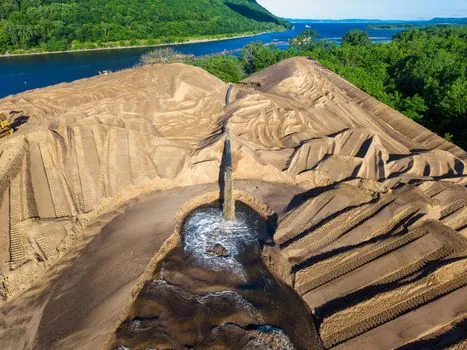
Mechanical, chemical and thermal reclamation must be compared on feed compatibility, contaminant removal, utility demand and usable sand yield before peak capacity is finalized. [S1]
Mechanical attrition equipment may use two V-shaped, oscillating crushing plates to reduce sand lumps to a predefined gap width [S6]. That specification supports screening and de-lumping calculations, but it does not establish the full reclamation rate because binder removal and sand-quality recovery remain separate requirements.
Chemical reclamation requires controlled acid concentration, sand-to-acid loading, temperature, stirring speed and reaction time. A 2024 study assessed reclaimed sand based on clay content, strength, GFN, LOI, and ADV [S3]. These results describe the tested material and process, not a universal equipment output.
Thermal reclamation adds heat after mechanical size reduction to burn organic binder. Literature describes high-temperature fluidized-bed thermal reclamation as capable of approaching 100% reclamation rates, but that performance cannot be transferred to another sand, furnace, resin system or operating schedule without qualification [S2][S8].
Apply a Capacity Margin Without Oversizing the Plant
Capacity margin protects against peak return flows, equipment downtime and measured throughput variation, but excessive reserve adds capital, footprint and energy demand without improving reclaimable sand yield. [S1]
For continuous pneumatic systems, a planning range of 1.25–1.50 is appropriate when it is applied to the calculated peak load and checked against the supplier’s rated duty. At 2.5 tonnes per hour of required capacity, this range corresponds to 3.125–3.75 tonnes per hour of selected throughput. A machine near the lower end suits a stable return system with reserve elsewhere; one near the upper end accommodates a less predictable stream or planned production growth.
A mechanical or thermal batch route should also include time for loading, heating, holding, discharge, screening and cleaning. If the complete cycle is 30 minutes and the rated batch is 1.5 tonnes, practical processing capacity is 3.0 tonnes per hour, before any maintenance or availability deduction. Treating the batch rating as the hourly rating would overstate the installation.
New-sand demand does not directly determine reclaimer size. The machine must process the sand entering the reclamation loop, not every kilogram of virgin sand purchased for the same production volume. A 95% reclaimed and 5% new sand blend, cited in a foundry customer example, still requires the reclaimer to handle the circulating reclaimed fraction [S1].
Set Acceptance Tests for Reclaimed Sand
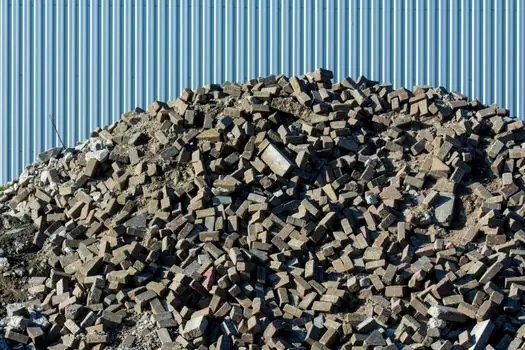
Acceptance should be based on measured sand properties and acceptable castings, not recovery percentage alone. The 2026 foundry guidance recommends defining material-use limits separately for heavy sections, slender cores and ordinary external molds [S5].
At minimum, the commissioning plan should establish limits for grain-size distribution, clay content, grain fineness number, loss on ignition, acid demand where chemistry is relevant, moisture, strength, permeability and post-pour residue. Chemical reclamation work evaluates clay content, compressive strength, GFN, LOI and ADV, and field trials demonstrated use of the tested reclaimed sand in core production [S3].
Reclaimed sand grain size affects compactibility and binder demand, and a published assessment calculated an AFS GFN of 63.58 for its dry reclaimed sand [S4]. That result is a material test value, not a universal target. Each foundry must compare reclaimed sand with its own acceptable mold or core specification.
Measure quality before and after the reclaimer at steady operating conditions. If average recovery is high but casting scrap, cleaning time or binder consumption rises, the apparent capacity gain is not economically useful. The sand cooler, sand mixer and storage system must also have enough capacity to receive the reclaimed stream without creating bottlenecks.
Define Economic and Operating Boundaries
The economic case should compare disposal avoided, virgin sand avoided and quality losses against power, labor, maintenance, consumables, screening and capital cost. [S1]
A 2024 chemical-reclamation study reported a running cost per ton of reclaimed sand below half the cost of fresh sand, with the result tied to its operating conditions and cost inputs [S3]. A pneumatic supplier states that its Pro-Claim system can save 75–90% of the cost of new sand, while also requiring no additional post-processing such as screening or cooling [S1]. These figures have different boundaries and should not be placed in the same calculation without reconciling included costs.
For a simple annual comparison, multiply annual reclaimable sand mass by the difference between virgin sand cost per tonne and net reclamation cost per tonne. Subtract disposal savings separately, then include binder changes, labor, maintenance, utilities, screening, cooling and the value of rejected or downgraded sand.
A pneumatic unit may operate continuously without a dedicated operator, but that does not remove inspection, wear-part maintenance and quality-control duties [S1]. The plant should also confirm space for dust collection, screen handling, access for maintenance and utilities at the selected rate.
Validate the Selection With Plant Data
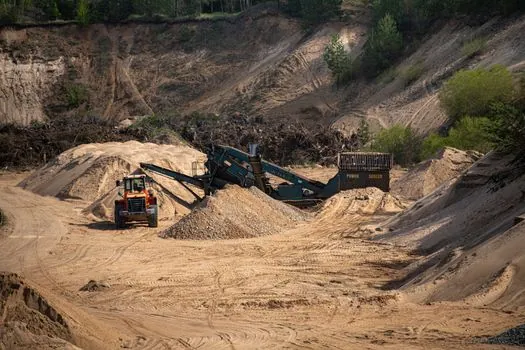
The most reliable selection comes from a one-week mass-flow audit of returned sand, followed by a controlled trial at the calculated duty and an acceptance test on the exact sand families intended for reuse. [S5]
Start with the peak reclaimable flow, apply the 1.25–1.50 margin, and compare the result with the rated capacity of the selected equipment under the declared feed condition. Then verify that downstream screens, mixers, coolers and storage can accept the full rate without reducing effective reclaimer output.
Track two signals after commissioning: the mass of new sand displaced per tonne of reclaimed sand, and the change in scrap or cleaning cost associated with reclaimed material. The process is sized correctly when those two signals improve without pushing sand properties outside the limits established for each casting family.