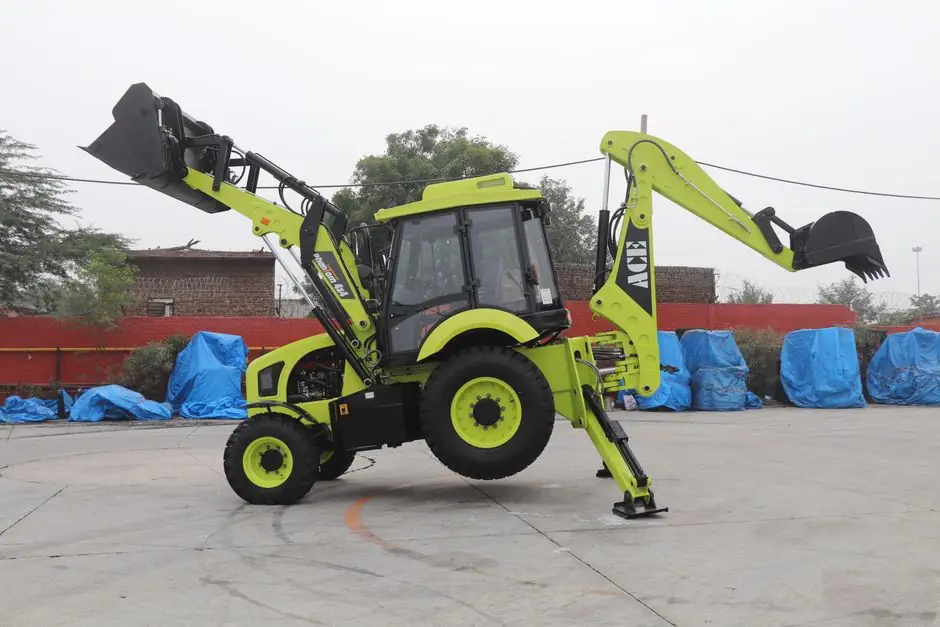
Radial-lift skid steers pivot the boom on a single rear arc, producing peak forward reach at mid-height and strongest breakout force at ground level, per industry guidance [S1][S3].
Vertical-lift skid steers use a multi-pivot linkage that travels nearly straight up, holding the load closer to the machine through the full lift path and delivering higher lift height and rated operating capacity (ROC) [S1][S4][S7].
How the two lift paths actually differ
Radial geometry traces a C-shaped curve, so the bucket is farthest from the cab at mid-height and closest at the top and bottom of the arc [S1][S4]. Vertical geometry uses a parallel-style linkage that keeps the load path roughly perpendicular to the ground, which is why vertical-lift units are the standard configuration when the job is loading high-sided trucks or stacking pallets [S4][S7].
The mechanical difference is the count of pivot points: a single rear pivot on radial, multiple pivots on vertical, and the extra joints are why vertical-lift arms cost more to build and more to maintain [S1][S5]. A skid steer loader spec sheet will list ROC at 50% of maximum lift height, a metric that exposes the real gap between the two designs because radial machines lose capacity faster as the boom rises [S7].
Selection criteria buyers actually run
Job type is the first filter. Radial arms generate the most breakout force at ground level, which translates into faster bucket penetration in compacted soil, harder backfilling push, and cleaner dozing work [S1][S5]. Vertical arms trade that ground-level force for higher hinge-pin height, which matters the moment a high-sided dump truck or a second-story scaffold enters the cycle [S3][S4].
Reach stability is the second filter. Vertical-lift linkages hold the load closer to the machine across the entire arc, while radial booms let the load drift forward at the midway point, reducing stability when carrying heavy material at speed [S4]. For a fleet running pallet forks, a vertical lift module on a compact loader is the practical equivalent of staying inside the wheelbase while raising the load.
Cost and maintenance are the third filter. Radial units are cheaper to buy, simpler to service, and have fewer wear parts because the linkage is shorter, with fewer pins and bushings [S4][S5]. Vertical units carry a price premium and higher scheduled-service cost, but the offset is higher ROC per machine, fewer counterweight add-ons, and lower tire or track wear per ton moved [S5][S6].
Who each path is for, and who it is not for
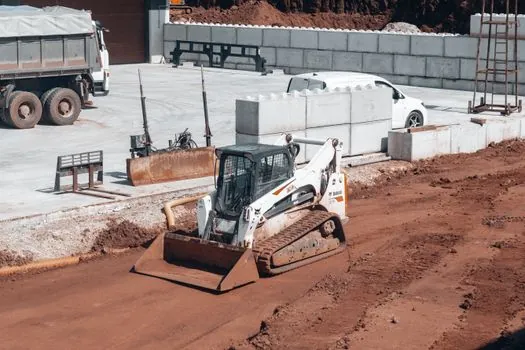
Radial lift fits contractors running 60% or more of their hours on digging, trenching, grading, ground-level brush clearing, and snow pushing at the bucket or blade [S1][S3][S5]. It is the wrong tool the day the job site adds a high-sided dump truck, a hopper feeder, or a stacking rack above operator eye level [S4][S7].
Vertical lift fits rental yards, agricultural operators, landscape crews feeding high-sided trailers, and any site where pallet forks or a wheel loader-style loading cycle dominates the hour meter [S3][S4][S7]. It is overkill for crews that only dig basements, do back-blading, or push snow, where the extra linkage adds cost without earning its keep [S5][S6].
Side-by-side decision comparison
Five criteria, scored by the published descriptions, line up cleanly. On ground-level breakout, radial wins. On maximum lift height, vertical wins. On forward reach at full height, vertical wins because the linkage holds the load back over the cab [S4][S7]. On visibility, radial wins because the arm has fewer structural members in the line of sight to the bucket edge [S4][S5]. On purchase price and scheduled maintenance, radial wins; on ROC at the hinge pin and per-ton stability, vertical wins [S1][S5][S6].
Two operational cues separate the two in the field. A radial machine dumping at full lift height risks spilling back into the cab or over the rear tires, so operators tend to dump lower, which is fine for backfilling and below-eye-level work [S4]. A vertical machine can carry a loaded bucket at full height for longer cycles without that spillover risk, which is why loading high-sided trucks is treated as the canonical vertical-lift task [S1][S3][S7].
Failure modes and field limitations
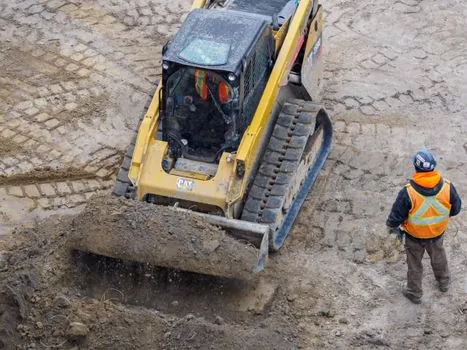
Radial arms lose ROC quickly above mid-height, so a radial unit spec'd at 2,000 lb ROC at 50% of lift height can drop into a working range that the operator must respect when stacking or loading [S4][S7]. The same arc that gives radial its digging power also moves the load away from the machine at the worst moment for stability, which is the second-half of the lift [S4][S6].
Vertical arms add more pivot pins, more hydraulic lines, and more daily greasing points, and those extra wear surfaces are the source of the higher long-term maintenance line item [S1][S5]. Visibility through the boom is also reduced because the parallel linkage places a structural member closer to the operator's sightline on most vertical-lift chassis [S4][S5].
Standards, sourcing, and the price frame
There is no ISO or SAE rule that mandates one lift path over the other; selection sits inside the OEM-published ROC curve, typically expressed as pounds (or kilograms) at 50% of maximum hinge-pin height [S7]. Operators and fleet buyers therefore spec the lift path against the actual lift target, the truck sidewall height, or the rack shelf height, not against a regulatory line.
For buyers comparing new-machine cost across lift paths in 2026, the price gap and the operating-cost gap are covered in detail in the new skid steer price 2026 spec guide, where frame size, brand tier, and wheel-versus-track choice move the line item more than the lift-path choice does. Crews balancing downtime risk should also weigh a backhoe loader when the jobsite needs both dig depth and truck-loading reach in one package.
Verdict and the signal to track next
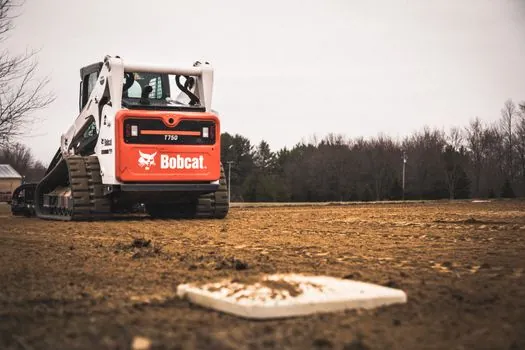
Run radial for ground-engaged work, run vertical for any cycle that finishes above operator eye level, and run the same rule of thumb whether the undercarriage is wheels or tracks [S3][S4][S7]. When the fleet has both, the radial unit becomes the digging and grading specialist while the vertical unit becomes the loader and stacker specialist, which is the split most rental yards already operate [S4][S6].
The signal worth tracking over the next two buying cycles is the closing ROC gap at mid-height, because OEMs are extending parallel-link kinematics into smaller frame sizes, which is gradually compressing the historical 10-15% ROC advantage that vertical-lift machines held in the sub-2,000 lb ROC class [S4][S5].