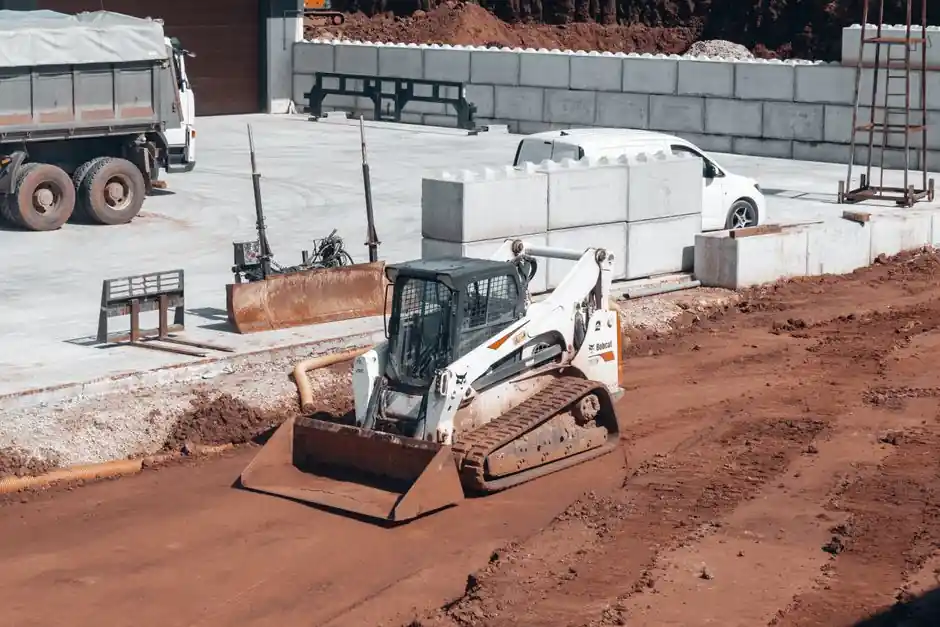
Skid steer loaders in mining are specified as auxiliary support machines, not primary ore movers, with rated operating capacity (ROC) typically ranging from 370 lb to 4,130 lb and operating weight from 1,750 lb to 18,528 lb across the global model population [S3]. On a hard-rock or coal site the SSL handles cleanup, conveyor underspace work, shotcrete support, and small-haul mucking, where a 50% tip-load ROC rule is the baseline sizing check most procurement engineers apply [S2][S6].
Because loading and hauling absorbs 50–60% of total mine production cost and maintenance adds another 22–56% of opex, the wrong SSL class costs more in tire, hydraulic, and final-drive replacement than any first-cost saving on the unit [S1]. Underground applications in particular compress the choice to compact-frame, vertical-lift machines with flameproofing and operator-cab filtration [S2].
ROC, Operating Weight, and Power Bands That Define the Mining Class
Standard skid steer loader specs span net power from 15 hp to 191 hp across the full population, with operating weights up to 18,528 lb on the largest tracked-frame derivatives [S3]. For mining auxiliary service, the practical operating band is narrower: 60–75 hp engine packages with operating weights in the 5,800–7,200 lb bracket, the class that includes the CAT 226D3 at 67.1 hp, 5,849 lb, 1,550 lb ROC and the CAT 232D3 at 67.1 hp, 6,514 lb, 1,900 lb ROC [S4].
Vertical-lift machines are the right architecture for face work where the bucket must clear a haul truck sidewall or feed a hopper. The Cat 270 lists 3,557 lb ROC and 3,941 lb with the optional counterweight, while the larger 272D3 XE is rated at 3,950 lb ROC for heavier muck handling [S6]. For tight underground headings the ROC of the CAT 242D3 (2,200 lb) at 74.3 hp, 7,138 lb operating weight, 121.1 in. lift pin height, and 66 in. width is a representative mine-rated geometry point [S4]. The entry-level CASE SR160B at 60 hp, 44.7 kW, 1,600 lb ROC, published 50% of tipping load, is a more typical open-pit support unit [S5].
Cab Safety: ROPS, FOPS, Pressurization, and Operator Protection
ROPS (Roll-Over Protective Structure) and FOPS (Falling Object Protective Structure) certification is the floor of operator-cab specification on any SSL deployed underground or in a pit where overhead loaders cycle, and procurement packs for mine-grade machines are documented with these certifications alongside CE and EPA Tier 4 Final / EU Stage V paperwork [S1]. Higher-tier mine units add a pressurized, climate-controlled cabin to keep particulate out of the operator envelope, a feature that has appeared on recent Bobcat mining variants [S2].
Gehl's mining-skewed models historically carry more rugged operator protection hardware, including reinforced cab structures and isolated mounts, which is the differentiator to look for when comparing brands for an underground tender [S2]. For surface-pit use with shot-fall risk, FOPS Level 2 (the higher mass-drop rating) is the conservative spec; for clean open-pit auxiliary service FOPS Level 1 is normally sufficient, but the level must be specified in writing, not assumed.
Fire and Explosion Risk: Suppression, Flameproofing, and Engine Scrubbers
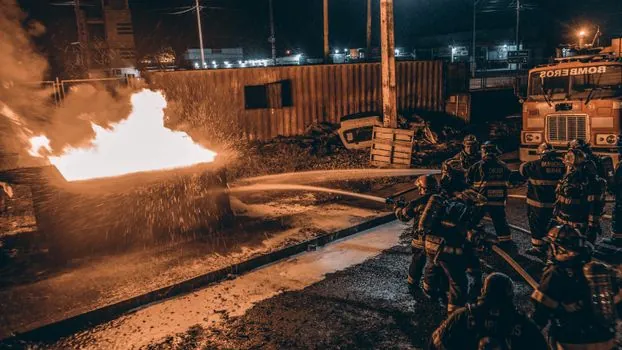
Onboard fire suppression is a baseline requirement on a mine SSL, because the machine frequently works close to conveyors, hydraulic power packs, and refueling points, any of which can introduce a hot-work ignition source [S2]. Where the deployment is in a coal mine heading or a dusty underground drift, an explosion-prevention package on the engine is the relevant upgrade, and JCB has released a model that includes explosion prevention technology combined with an engine scrubber specifically for this service [S2].
Flameproofing, the package that contains any ignition event inside an enclosure rather than suppressing it after the fact, is the third tier of mine-grade cab and engine protection, and is generally specified for underground hard-rock headings where methane or coal-dust atmospheres are credible [S2]. Procurement should treat fire suppression, flameproofing, and engine scrubbers as three separate line items, since vendors will sometimes quote only the suppression system and treat the rest as an option.
Attachments, Maneuverability, and Final-Drive Lifecycle
Maneuverability is the structural reason an SSL is chosen over a wheel loader on a mine site: skid steering gives a near-zero turning radius, which is decisive in 3–4 m wide underground headings where a backhoe loader or a larger loader simply will not cycle [S7]. The same machine can swap between bucket, pallet fork, dumper/hopper, broom, and belt-scraper attachments in a single shift, which is the productivity case for deploying SSLs in the support fleet rather than as a dedicated machine [S2].
Conveyor-underbelt scraping, one of the most common SSL duties on a mine, requires a low-profile, high-flow attachment circuit and frequent operator entry to confined spaces, so the dust-load on the radiator and the hydraulic final drives is much higher than the rated duty cycle of the same machine in a general construction application. Because mine sites are typically far from dealer service, the final-drive service interval and the availability of remanufactured hydraulic motors, tested to OEM spec and used in place of a new motor, is a measurable part of mine SSL lifecycle cost [S2].
Selection Criteria for a Mining-Class SSL
Match the SSL to the deployment band first, then to the brand. For open-pit auxiliary service, a 60–75 hp radial-lift or vertical-lift machine in the 1,500–2,200 lb ROC band with Tier 4 Final/Stage V emissions and ROPS/FOPS Level 1 will handle 80% of the support duties at the lowest acquisition and tire cost. For underground heading work, move to a 67–75 hp vertical-lift frame, FOPS Level 2, pressurized cab, onboard fire suppression, and (in coal or methane-classified workings) the explosion-prevention and engine-scrubber package [S2][S4].
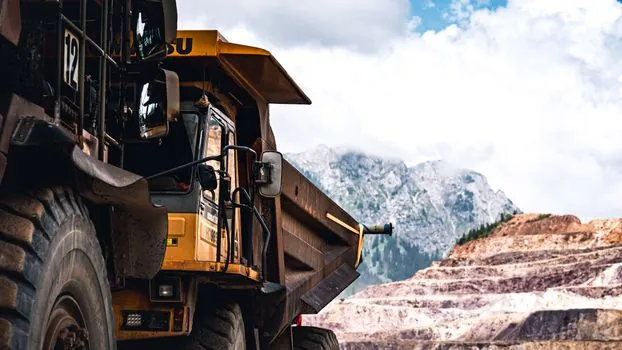
The CAT 226D3, 232D3, 236D3, and 242D3 represent the most documented spec points for a compact mine-support class; the CAT 270, 272D3 XE, and 285 XE (6,457 lb ROC, compact track loader architecture) cover the heavier utility band where higher ROC is the dominant constraint [S4][S6]. The CASE SR160B is a published reference point for the 1,600 lb ROC, 60 hp entry band [S5]. Match a skid steer loader to a mining dump truck class on the same site, since an undersized bucket will not feed the truck and an oversized frame cannot reach the truck sidewall in a confined loading bay.
What an SSL Is Not For in Mining
A skid steer is not a primary ore loader on a hard-rock face. For that duty, a wheel loader or crawler excavator in the 20–80 tonne class is the productive unit, and the SSL is best thought of as a multiplier on the productivity of those primary units, not a replacement [S1][S7]. A skid steer loader will not match a compact track loader (CTL) on soft underfoot conditions, where a tracked frame reduces ground pressure; in those duties the equivalent Cat 279D3 or 285 XE CTL is the right architecture, not a wheeled SSL [S6]. A standard, non-mine SSL without fire suppression and FOPS Level 2 should not be specified for any application where shot-fall, conveyor dust, or methane liberation is credible, regardless of how attractive the first-cost looks.
Trackable Spec and Market Signals
Three datapoints are worth following for a 2026 procurement review. First, ROC and operating-weight bands on the SSL population (370–4,130 lb ROC, 1,750–18,528 lb operating weight, 15–191 hp) as documented on the RitchieSpecs index of 370 models, which is the most direct public record of where the market is consolidating [S3]. Second, the global mining equipment market reported at USD 155.41 billion in 2025, projected to USD 239.44 billion by 2033 at a 5.6% CAGR, with surface mining equipment at 39.0% of 2025 revenue and Asia Pacific at 35.9% of global share, which sets the procurement-cycle context for any 2026 tender [S1]. Third, the fire-suppression and explosion-prevention package line on OEM option lists, since the spread of those packages from JCB-class vendors to Bobcat and Gehl mine variants is the clearest visible movement on mining-grade SSL specification [S2].
See also our earlier report, Spherical Roller Bearing vs Ball Bearing: Selection Map for Radial Load, Speed, and.