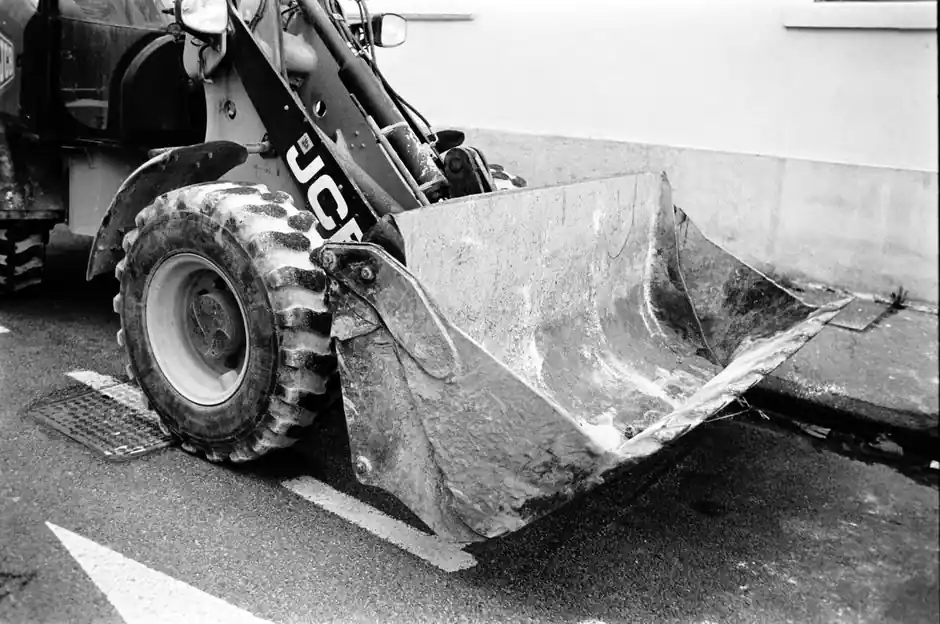
Skid steers typically fit narrower working corridors and pivot within their own wheelbase because left and right wheel pairs are driven independently, so the machine rotates inside its own length [S1]. Compact wheel loaders use articulating or all-wheel steering, which delivers a smoother arc but a larger swept radius, so they need more clearance at the corners of a yard [S1].
Compact wheel loaders generally price higher than skid steers of comparable operating capacity, but the spread is described as "not huge" and is offset by higher roading speed and a more comfortable cab on multi-shift yard duties [S5]. Operators comparing the two side by side consistently rate the compact wheel loader ahead on lift capacity, traction and travel speed, with the skid steer ahead only where space is the binding constraint [S2].
Steering Geometry and Yard Footprint
Skid-steer turning is a true zero-radius pivot: the left-side wheels counter-rotate against the right-side wheels, so the machine spins inside its own length, the tightest geometry available in a compact loader class [S1]. That pivot is the single biggest reason a skid steer survives a 3 m gate, a 4 m alley between sea-container stacks, or a stall barely wider than the bucket.
A compact wheel loader steers by articulation (pivot at the centre joint) or by independent four-wheel steer, producing a curved arc with a noticeably larger radius than a skid steer pivot [S1]. Operators describe the trade as "the compact wheel loader does almost everything better, except in tight areas", with the TC80-class unit cited as lifting more, seeing better and tracking faster than a large skid steer [S2]. For yard geometry under roughly 6-7 m clear width with frequent 180-degree reversals, the skid steer geometry still wins.
Operating Weight, Lift Capacity and Cycle Time
Compact wheel loaders in the small-frame class (Volvo L20-L25, Cat 904, Kubota R420) typically post 1.6-2.5 t operating weight and 0.6-0.9 m³ bucket capacity, with higher hydraulic flow and breakout force than a same-class skid steer [S1][S4]. On a yard-loading 3-5 t truck, a compact wheel loader with a 4-cylinder diesel commonly holds a 6-10 km/h roading gear, cutting travel time between stockpile and truck by roughly 30-40% versus a skid steer constrained to low-speed work circuits [S2][S5].
Skid steers of the same lift class (rated operating capacity ~750-1,200 kg) are lighter, usually 2.7-3.8 t, and cycle faster in tight work but lose time on long hauls because of lower top travel speed and more aggressive tyre scrub on every direction change [S1]. On hard, stable yard surfaces (concrete, asphalt, compacted hardcore) the skid steer's weight advantage shows up as lower ground pressure per cm² and less surface damage when the bucket is empty [S3].
Tyres, Tracks and Ground Pressure
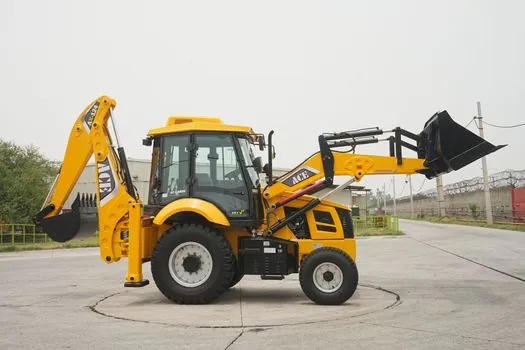
Skid steers run four equal pneumatic tyres and are described as the better performer on hard, stable ground and in tight working conditions, while compact track loaders (a separate, third category) win on soft, rough or slippery surfaces [S3]. A wheeled compact wheel loader, by contrast, is larger and rides on heavier, deeper-tread tyres, distributing its mass over a longer wheelbase and so floating better on loose yard surfaces than a narrow-wheelbase skid steer [S1].
For a clean concrete or asphalt yard with no mud and no soft shoulders, the wheeled skid steer is the lowest-disturbance option: it spins on a dime and exerts low ground-bearing pressure [S3]. For a yard with crushed-rock pad, gravel apron or seasonal soft spots, the compact wheel loader's longer wheelbase and bigger contact patch handle the variability better; if soft ground is the dominant problem, a compact track loader (rubber tracks) sits between the two, at the cost of track life of roughly 1,000-1,900 hours depending on operator behaviour and surface mix [S4].
Attachment Density and Quick-Coupler Choice
Skid steers are the universal attachment platform: standard buckets, toothed buckets, augers, brooms, pallet forks, trenchers, snow blowers, tillers and dozens more, all on a common quick-attach plate [S1]. That attachment density is the practical reason a skid steer dominates mixed-task yards (mulch, pallets, snow, sweep, auger post holes) where the machine is re-tasked several times per shift.
Compact wheel loaders use a separate attachment family, often a Z-bar or parallel-linkage coupler, and the range is wider but shallower: bulk buckets, forks, light grading tools, snow blades. Coupler mismatch is a real cost item, so fleets that already run skid-steer attachments see a high switching penalty; fleets standardising on wheel-loader ISO couplers keep the cost lower and gain faster truck-loading cycles [S5]. For a deeper comparison of attachment-side operating weight, lift-path geometry and tipping load, the skid steer loader and wheel loader reference pages lay out the rated operating capacity and hydraulic-flow tiers in detail.
Visibility, Cab and Operator Fatigue
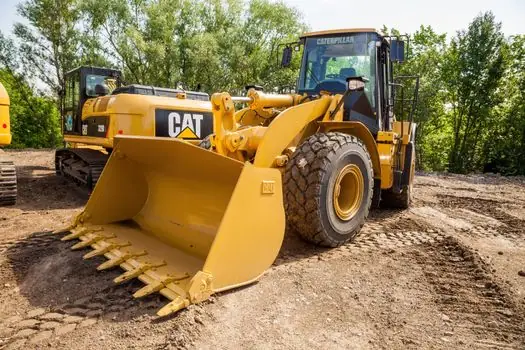
Compact wheel loaders put the operator higher, behind a steeper-sloped bonnet, with a clear sightline to the bucket cutting edge and to the truck target, which is why operators describe them as having "better visibility" in side-by-side yard work [S2]. Skid steers sit lower, with side pillars and a rear engine cowl that block the rear three-quarter view, so they rely more on reverse alarms and spotter routines in busy yards.
Cab noise, vibration and ingress/egress also favour the wheel loader: full-height door, ROPS/FOPS enclosure, often climate control, and a sprung seat versus a skid steer's two-post canopy and lap-bar entry [S5]. On a multi-operator yard where shifts run 8-10 hours and the same machine is loaded onto a low-boy daily, the wheel loader's ride quality measurably reduces operator fatigue, which is a real maintenance cost in a tight labour market.
Price, Resale and Total Cost of Ownership
A compact wheel loader of comparable operating capacity carries a higher list price than a skid steer; the spread is described as "not huge" but consistently in the wheel loader's direction, with the gap widening once options (3rd spool, ride control, auto-shift, climate cab) are added [S5]. Resale is strong on both, but skid steers hold value in denser secondary markets because the attachment ecosystem is portable between owners.
Operating-cost drivers diverge: skid steers burn tyre sets faster (every direction change scubs the tyres) and have higher hydraulic-heat loads when running high-flow attachments continuously; wheel loaders burn more diesel per hour but fewer tyres and less hydraulic-thermal stress per cycle [S2][S4]. For an accurate hourly cost picture including operator time, the cold-milling rate map in cold milling machine hourly rental with operator: 2026 rate map is a useful benchmark for parallel mobile-plant economics, even though the prime-mover class differs.
Decision Matrix by Yard Constraint
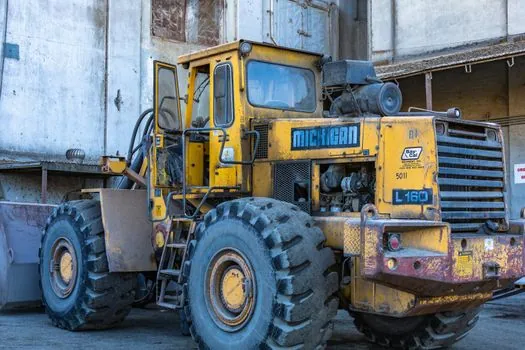
Use the matrix below as the selection gate. Width refers to the narrowest working corridor or gate the machine must clear, not the average yard dimension. [S4]
Width under 5 m, mixed attachments, frequent 180-degree turns: skid steer. Width 5-7 m, mixed attachments, some truck loading: skid steer still wins on geometry; consider a small-frame compact wheel loader only if 30%+ of cycles are linear haul-to-truck. Width over 7 m, truck loading is the dominant cycle, ride quality matters: compact wheel loader. Ground is soft, muddy, or steep more than 30% of the year: compact track loader (a third option) [S3][S4].
Limitations and Common Failure Modes
Skid steers fail in three predictable ways: tyre wear from constant skidding, hydraulic-hose chafing on the right-side lift arm, and chain/belt drive wear on high-hour units. None are unique, but they are accelerated by tight-yard duty where 70%+ of the shift is low-speed direction changes [S1][S4].
Compact wheel loaders fail in a different pattern: articulation-joint bushing wear, front-axle seal leaks on units used in wet-yard conditions, and higher parts cost when the hydrostatic drive loop needs a rebuild. They are also heavier, so transport on a standard 3.5 t plant trailer often requires a low-boy with proper GVM headroom, an item the skid steer usually avoids [S5].
Standards, Safety and Compliance
Both machine classes are covered by ISO 12100 for general machine safety, ISO 3449 for falling-object protective structures (FOPS) and ISO 3471 for roll-over protective structures (ROPS); any cab or canopy specified for yard work should carry explicit FOPS/ROPS markings rather than rely on the OEM brochure alone. Operator training falls under the regional construction-equipment competence regime (OSHA 1926.602 in the US, the relevant PUWER/CSCS provisions in the UK) and should be checked against the local authority before commissioning. [S4]
For diesel-engine emissions compliance on machines placed in service in 2026, the EU Stage V and US EPA Tier 4 Final labels are the active thresholds; no retrofit of a non-compliant unit is permitted for sale into regulated markets, and emission-related warranty service intervals are now shorter than the hydraulic service intervals on most units. Tyre selection for mixed yard surfaces should be matched to the load-rated ply printed on the sidewall, not the nominal size, because compact loaders are routinely overloaded with attachment mass beyond the original equipment-rated operating capacity.
The choice between a skid steer and a compact wheel loader is a geometry decision first, a productivity decision second and a price decision third. Measure the narrowest corridor and the longest one-way haul before you spec; the numbers will pick the machine for you, and the aerial work platform sizing logic (lowest-cost machine that meets the geometric constraint) applies the same way to ground-engaging compact loaders.