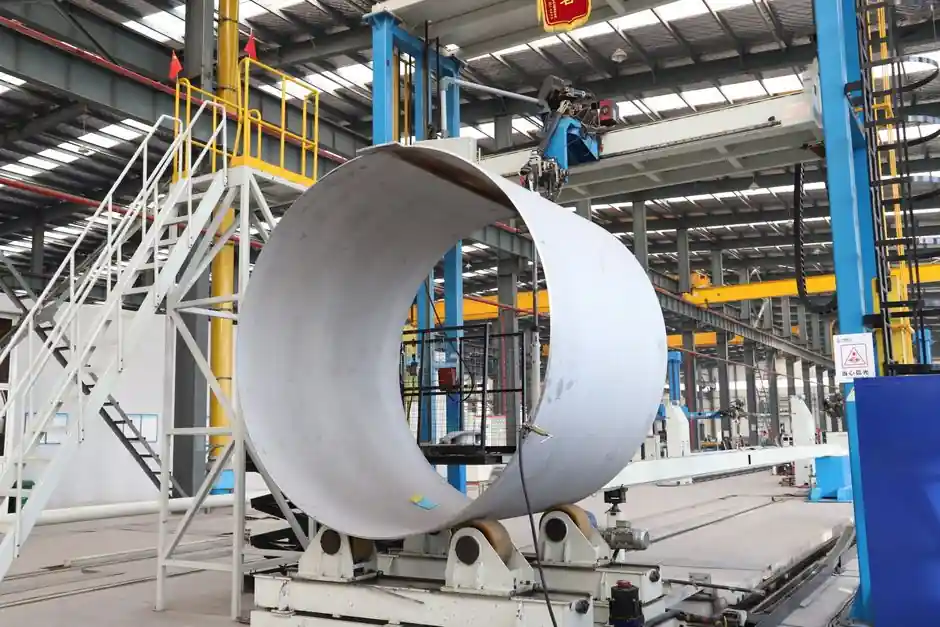
Production rate for a half-lane cold milling machine typically falls in the 1,000 to 2,500 square yards per hour range when cutting 1.5 to 2 inches on a stable asphalt substrate, while a full-lane large miller can push past 4,000 SY/hr on the same depth [S3][S4].
Rate is not a single number, it is a function of milling class (small/compact/large), working width, cut depth, drum speed, and how many minutes per hour the machine is actually cutting instead of repositioning, dumping, or waiting on haul trucks [S4].
What "Square Yards Per Hour" Actually Means in the Field
The unit is straightforward, square yards of pavement removed in 60 minutes, but the number is almost never 60 minutes of cutting. Field guidance from contractors and equipment engineers puts effective milling-and-loading time at 40 to 45 minutes per hour on a well-run job [S4]. The remaining 15 to 20 minutes is consumed by truck swaps, drum reversals at the end of each pass, grade-control corrections, and occasional bit changes.
That is why published machine throughputs must be discounted before they go into a bid. A Wirtgen W 120 Fi rated at 3 ft 11 in (1.2 m) working width running at a sustainable 25 m/min (82 ft/min) can theoretically cover 1,800 SY/hr, but real production at 2 inch depth lands closer to 1,200 SY/hr once the 40 to 45 minute factor and the partial passes at job boundaries are netted out [S3][S4].
Class-by-Class Production Rate Range
Small milling machines (14 in to 2 ft drum width, 45 to 105 kW) cover roughly 200 to 600 SY/hr at standard 1.5 to 2 inch depth, and the limiting factor is almost always the conveyor, not the drum [S3]. Compact milling machines (3 ft 3 in to 4 ft 11 in, 160 to 313 kW) hit the 1,000 to 2,500 SY/hr band that most contractors actually see on parking-lot and urban arterial work [S3].
Large milling machines (6 ft 7 in to 14 ft 5 in, 500 kW and up) can clear 4,000 SY/hr and beyond on motorway rehabilitation, but they are sensitive to logistics: a 14 ft 5 in (4.4 m) wide miller can outrun three haul trucks before the first truck returns for the second pass [S3][S4]. Public agency contract specs recognize the same envelope, the New York State OGS contract requires a minimum 5,000 SY per purchase order under the "Production Cold Milling" line item, which only makes economic sense if the awarded machine class is compact or large [S1].
Depth and Material Penalty on Rate
Cutting deeper cuts production non-linearly, because the harder resistance at the drum forces the operator to drop travel speed, and the extra tonnage per SY stretches the haul cycle. Field estimators put standard 1.5 to 2 inch partial-depth milling at 1,200 SY/hr on a mid-size compact, 2 to 4 inch intermediate depth at roughly 600 to 900 SY/hr, and full-depth 4 to 6 inch work at 300 to 700 SY/hr, assuming consistent substrate [S5].
Micro-milling is a special case. Drum tooth spacing drops from the standard 15 mm to roughly 5 mm, which produces a finer texture but caps production around 400 to 800 SY/hr even on a compact class machine, because the finer pattern cuts slower and accelerates pick wear [S5]. The pickup on this is operational: contractors bidding micro-milling at standard partial-depth rates lose money, because the wear cost alone on the cold milling picks is two to three times the per-SY tooling cost of a 15 mm pattern.
Comparison of Machine Classes on Rate-Driving Criteria
Three criteria separate the classes: working width (SY covered per pass), power-to-weight ratio (how deep you can cut at full width without stalling), and conveyor capacity (how fast RAP clears the drum). Small mills win on maneuverability in parking lots but lose on conveyor throughput, capping at 600 SY/hr; compact mills (W 100 Fi through W 150 Fi at 265 to 313 kW) hit the productivity sweet spot for most US paving work; large mills are justifiable only on motorway-length projects where the 6 to 14 ft width pays back in fewer passes [S3].
For a contractor sizing a fleet, the practical decision tree is: under 5,000 SY per day, one compact class machine; 5,000 to 15,000 SY per day, one large miller plus four haul trucks; over 15,000 SY per day, two large millers in echelon with a conveyor or windrow loading system. That last option is where the core machine-style centralized control room concept (operator cab, grade sensors, conveyor telemetry in a single integrated station) starts to pay off, because two half-width large mills running in parallel produce smoother cross-slope than a single full-width pass.
Cost-per-SY Translation of Rate
Rate drives price. Standard 1.5 to 2 inch milling runs $1.50 to $4.50 per SY, intermediate depth $2.50 to $6.00, full-depth $3.00 to $7.00, and micro-milling $4.00 to $9.00, all per April 2026 contractor pricing [S5]. At 1,200 SY/hr and a loaded machine rate of $450/hr including operator and fuel, the contractor's direct cost is $0.38/SY before markup, which is consistent with the lower end of the partial-depth band [S5].
Mobilization ($1,500 to $8,000) and traffic control ($800 to $3,500/day per MUTCD) are fixed regardless of rate, which is why the 500 to 2,000 SY minimum that most contractors enforce is a real economic floor, not a sales tactic [S5]. A 400 SY driveway mill job at 1,200 SY/hr is a 20 minute cut plus four hours of mob and traffic setup; no honest quote can land below $1.50/SY on that scope. For a better read on the hauling side of the equation, the Class A vs Class B CDL for dump truck drivers split defines which haul truck class the milling contractor needs to keep in rotation.
Where Public Bid Tabs Disagree With Contractor Lists
Arkansas DOT Letting 1/21/2026 showed unit prices from $0.60 to $20.00 per SY for the identical pay item "COLD MILLING ASPHALT PAVEMENT", a 33x spread that is only partly explained by depth [S1]. The other drivers are quantity (a 60,000 SY project absorbs mobilization across enough square yards to drop the unit price under $1.00), access (trench milling on a 1,200 SY job in Needham, MA ran $15.00 to $18.00/SY), and traffic-control scope (night work in a city costs more than daytime rural work).
The lesson for estimators: published production rates give you the upper bound on SY/hr, but the realized cost per SY is dominated by the fixed-cost stack, mob, traffic control, survey, and sweep, plus the RAP ownership question (contractor keeps it and sells it back as aggregate, owner keeps it and writes a separate hauling line). Neglect the fixed-cost share and a fast cutting machine still loses money on a 400 SY job.
Market Signals That Confirm the Rate Envelope
The cold milling machine market is on a 5.23% CAGR from a 2024 base of USD 1.69 billion to a 2035 projection of USD 2.96 billion, with a competing forecast putting it at USD 2.7 billion in 2026 rising to USD 3.6 billion by 2030 at 6.1% CAGR [S6][S7]. Both datasets point to fleet expansion, not fleet replacement alone, which is consistent with a widening production-rate envelope as more compact-class machines enter US rental fleets.
Contractors who want to track what the equipment side is doing should watch the next round of Wirtgen F-series compact miller updates and any Caterpillar PM-series announcements, because each new class typically widens the power-to-width ratio and pushes the 1,200 SY/hr ceiling higher. Two trackable signals: bit-holder fatigue life on standard 15 mm patterns (currently 800 to 1,200 SY per holder set) and conveyor swing-cycle time on compact mills (currently 6 to 9 seconds per dump, the limiting step on small-machine class throughput).