
Photoelectric smoke detectors, not ionization, are the default specification for food processing areas, since steam, atomized fats, and cooking aerosols routinely cause ionization units to false-alarm while leaving photoelectric chambers largely undisturbed [S2]. The practical impact is decisive: nuisance alarms in a bottling hall, bakery tunnel, or fryer line cost production minutes, force evacuation, and erode operator trust in the very system designed to protect them [S2].
Selection in 2026 is governed by a stack of overlapping requirements: UL 268 for smoke detector listing and sensitivity range, NFPA 72 for commissioning and periodic sensitivity testing, and local jurisdictional rules for food trucks, mobile vendors, and processing rooms [S1][S3][S4]. For facilities that also handle flammable refrigerants, dust hazards, or solvent cleaning, the detector must be coordinated with the broader hazardous-area plan, not picked in isolation.
Why Photoelectric Wins in Food Processing
Photoelectric detectors sense light scatter from smoke particles in a chamber, so they respond to the larger, cooler smoke aerosols typical of smoldering cooking residue, packaging fires, and overheated conveyor belts, while ignoring the small ionic disturbances and rapid temperature transients that swamp ionization sensors [S2][S3]. The mechanism is not magic: aerosols from atomized fats, the most common false-alarm trigger in bakeries and fryer lines, are visible-light scatterers, exactly the signature photoelectric chambers are tuned to detect, yet at far lower concentrations than those that actually indicate a developing fire [S2].
Ionization detectors, by contrast, are tuned to the invisible combustion byproducts of fast-flaming fires and respond to almost any airborne particulate, which is why food prep areas see roughly an order of magnitude more nuisance events with ionization units than with photoelectric units, per the comparative operating experience summarized in mainstream detection guidance [S2]. For that reason, the standard operating rule in commercial kitchens and adjacent processing rooms is photoelectric plus a rate-of-rise heat detector, with ionization units reserved for storage racks and dry goods warehouses where fast-flaming paper or cardboard fires are plausible [S2][S3].
Sensitivity Range and the UL 268 Window
Listed photoelectric smoke detectors are calibrated to alarm within a sensitivity window of 0.5% to 4.0% obscuration per foot under UL 268, the standard referenced by NFPA 72 for smoke detector performance and listing in the United States [S3]. A detector that has drifted below 0.5%/ft is dangerously desensitized; one that drifts above 4.0%/ft is so twitchy that routine cooking aerosols will trip it, defeating the purpose of installing it in the first place [S3].
Drift is driven by contamination, not age alone: dust, insect intrusion, cooking grease residue, tobacco smoke deposits, and corrosive vapors all accumulate inside the sensing chamber and shift the optical baseline [S3]. In a flour mill or sugar packaging line, dust loading is severe enough that quarterly visual inspection and the scheduled two-year sensitivity test are the minimum acceptable practice, not the maximum [S3].
NFPA 72 Testing Cadence and What the Numbers Say

NFPA 72 requires that commercial smoke detectors be tested for sensitivity within the first year after installation and every two years thereafter, which is the cadence most food processors should be operating against in 2026 [S3]. On addressable analog systems, the panel continuously reads each detector's analog value and flags drift before it crosses the listed threshold, so a technician can identify out-of-range units from a laptop or keypad in minutes, then focus hands-on cleaning only on those heads [S3].
Conventional systems have no such feedback channel, so field sensitivity testing requires a calibrated aerosol tool such as the Testifire or SDi Solo, which delivers a known smoke concentration and verifies that the detector trips inside its listed window [S3]. NFPA 72 also permits third-party laboratory sensitivity testing, an option that some Authorities Having Jurisdiction require for high-value or high-hazard food lines [S3]. A complete cleaning cycle, insect screen replacement, and re-test of a single addressable head takes roughly 5 to 10 minutes, which is why the economics favor addressable loops in any plant larger than a single production room [S3].
Detector Options Compared for Food Processing
Four detector families dominate the food processing spec sheet, and the right pick depends on what is actually burning, misting, or condensing in the protected space: [S2]
Photoelectric smoke detectors: best general-purpose choice for processing rooms, packaging lines, dry storage, and cold rooms. Low false-alarm rate with cooking aerosols, good sensitivity to smoldering fires, listed 0.5% to 4.0%/ft under UL 268 [S3].
Ionization smoke detectors: fastest response to clean-burning flaming fires such as solvent or pure-cellulose ignition. Not recommended in or near cooking lines because of nuisance-tripping from steam and atomized fats; better suited to dry goods warehouses separated from wet processes [S2].
Rate-of-rise and fixed-temperature heat detectors: the right answer for fryer hoods, oven exhaust plenums, autoclaves, and any spot where normal operation routinely produces smoke-like aerosols. Heat detectors fail safe (no false alarms) at the cost of late warning; pair with a photoelectric smoke detector on the ceiling for life safety [S2].
Multi-criteria / combination detectors: combine smoke, heat, and sometimes CO sensing with on-board algorithms to reject cooking aerosol signatures. Higher unit cost, justified in large open processing halls where nuisance alarms are politically and financially expensive [S3].
Mobile Food Prep, Food Trucks, and Jurisdictional Add-Ons

Food trucks, mobile food preparation vehicles, and tent vendors sit at the intersection of food processing and life-safety code, and most U.S. jurisdictions now require a working smoke alarm plus a carbon monoxide alarm before issuing an operating permit or a certificate of occupancy transfer [S1][S4]. Virginia's Community Risk Reduction program, for example, distributes smoke alarms through local fire departments as part of a 2025-2026 public safety push, a reminder that state fire marshal offices are actively auditing mobile vendors for working detectors and documented installations [S1].
The practical spec for a food truck or mobile prep vehicle is a sealed 10-year lithium photoelectric smoke alarm mounted in the sleeping or crew compartment, a rate-of-rise heat detector above the cooking line, and a CO detector if any combustion appliance is enclosed [S1][S2]. The detector must be listed to UL 268 for smoke and UL 217 for the residential-style combination units commonly used in vehicles [S3]. For permanent processing rooms, the spec ramps up to addressable photoelectric loops with sensitivity reporting on the fire alarm panel, mapped 1:1 to the AHJ's required as-built drawings [S3].
False Alarm Reduction: Where the Money Actually Goes
The cheapest false-alarm fix is also the slowest: relocate the detector at least 10 to 15 feet horizontally from the nearest cooking appliance or steam source, since heat, steam, and atomized fats all decay rapidly with distance [S2]. The second-cheapest fix is to engage the kitchen exhaust fan at full speed during cooking, which lowers the aerosol concentration in the breathing zone of the detector by a factor of three or more in typical residential and small-commercial hoods [S2].
Modern addressable panels also support a 15- to 20-minute temporary sensitivity reduction or detector disable, useful for live-fire cooking demonstrations and cleaning cycles, but never a substitute for proper placement because disabling the sensor leaves the kitchen unprotected for that window [S2]. For large facilities, the highest-leverage investment is the multi-criteria detector plus addressable loop, since panel-side rejection of cooking aerosol signatures eliminates the operator-override habit that erodes the safety culture over time [S2][S3].
Coordination with Adjacent Hazardous Areas
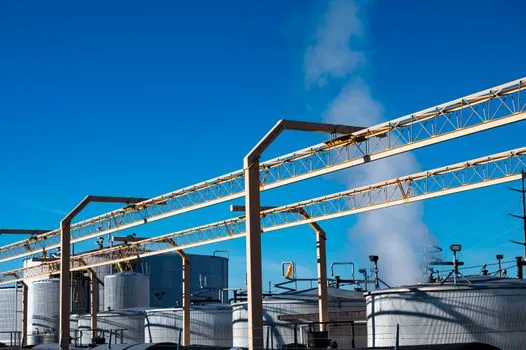
Food processing plants rarely exist in isolation. A facility that also runs an ammonia refrigeration plant, a flour dust handling system, or a solvent cleaning line needs the smoke detection spec coordinated with the dust and gas detection spec, so a single fire scenario does not get handled by two incompatible systems. A photoelectric smoke detector and a combustible gas detector, for example, can share a FACP but respond to different physical phenomena and must be mapped to separate cause-and-effect matrices, not treated as redundant inputs [S3].
Where dust is the dominant hazard, the smoke detector spec should explicitly call out dust-resistant chamber construction, and the dust detector spec should be reserved for the dust cloud hazard itself, since conflating the two leads to either under-protected rooms or repeated nuisance trips during bag changes and bin fills. A gas detector becomes mandatory once any refrigerant, sanitizing CO2, or combustion byproduct is present in quantities that can reach the lower explosive limit or an occupational exposure threshold, and the oxygen detector is required in any confined-space purging or nitrogen blanketing operation adjacent to the processing floor. The combustible gas detector sits alongside the smoke detector in any bakery using natural gas-fired ovens, where the dominant failure mode is a gas leak, not a packaging fire.
Maintenance and Replacement Cycle
A photoelectric detector's working life in a food processing environment is dominated by contamination rate, not by calendar age. Hard-wired residential-style units are typically rated for 10 years from manufacture, after which the entire unit must be replaced, not refurbished, because the sensing chamber and the electronic baseline have both drifted beyond recoverable limits [S5]. Addressable commercial detectors are listed for a longer service life but still require a documented replacement plan because chamber contamination is cumulative and irreversible in the field [S3][S5].
Cleaning itself is a six-step process that the plant's fire system contractor should run on a fixed schedule, not on a call-by-call basis: isolate the head on the panel, vacuum the chamber with a non-static nozzle, wipe the insect screen, replace the screen if torn, reinstall, then verify sensitivity on the panel or with a calibrated aerosol tester [S3][S5]. Skipping the final verification step is the single most common audit finding in 2026 third-party food plant inspections, because the cleaning looks fine until a real fire or a real nuisance event exposes the drift [S3].
Specification Checklist for a 2026 Food Processing Build
The minimum-viable spec for a new food processing build or major retrofit in 2026 is: addressable photoelectric smoke detectors with UL 268 listing, sensitivity range 0.5% to 4.0%/ft, panel-readable analog values; rate-of-rise heat detectors above any cooking or steam-producing appliance; CO detectors where combustion appliances are enclosed; multi-criteria detectors in large open halls where nuisance alarms are intolerable; and a sensitivity test at year one, then every two years, documented against NFPA 72 [S3]. The contractor must also supply as-built drawings with detector coordinates, sensitivity baselines, and the cleaning cycle that will be followed for the next decade.
Trackable signals to watch in the next planning cycle: the smoke detector selection criteria for oil and gas facilities overlap heavily with food processing where ammonia refrigeration and solvent cleaning are present, and the chemical plant hazardous-area spec map defines the additional ATEX/IECEx layer if any part of the plant is classified Zone 1 or Zone 2. A third adjacent reference, the welding operations detector spec map, covers maintenance bays adjacent to food lines where hot work permits intersect with detector sensitivity windows.