
Standby current for a typical addressable smoke detector runs 50-375 microamp per head, while the panel and notification appliances, not the detector, dominate the alarm load used in battery sizing [S3].
The NFPA 72 secondary-power formula is Ah = (I_standby x 24 h) + (I_alarm x 5/60 h), all multiplied by 1.20 to cover battery aging and temperature drift, then rounded up to the next standard SLA size [S4]. For related control-panel architecture, the fire alarm control panel page lays out the regulated power, PGM, and Keybus outputs that feed a detector loop.
Standby current: what the detector head actually draws
Addressable loop devices sit in microamp territory in normal monitoring because the photoelectric or ionization chamber is pulsed, the sounder base is off, and the LED indicator is dark most of the time. TSS USA's published 50-375 microamp band for an addressable smoke detector is the realistic operating window, with most current-production analog addressable heads clustering near the 200 microamp end of that band [S3]. The standby column is also where the panel itself, the isolators, the addressable modules, and any door holders all add up. TSS USA notes a magnetic door holder draws a constant 20 mA per unit in standby, which is the same order of magnitude as an entire loop of 100 quiescent detectors and a common cause of "the math is fine but the battery is huge" surprises on small jobs [S3]. A real-world small retrofit posted on Mike Holt's forum: 1 FACP, 16 smoke detectors, 5 strobes, 4 horn/strobes, 3 pull stations produced 0.0549 A standby and 2.842 A alarm, with the 16 detector heads contributing well under 1 mA of the standby total [S2].
Alarm current: where the panel and NACs take over
Alarm current is dominated by the notification appliance circuit, not the detector. The same Mike Holt example: 0.0549 A standby versus 2.842 A alarm, with the detector heads themselves drawing roughly 1 mA each in alarm, so nine horn/strobes and five strobes accounted for the bulk of the 2.8 A [S2]. MEPBase's worked example for 120 addressable detectors, 20 call points, 8 modules, and 40 horn-strobes gave 0.195 A standby versus 3.68 A alarm, and 0.120 A of that alarm total came from the 120 detector heads at 1 mA each, with 3.200 A coming from the 40 horn-strobes at 80 mA each [S4]. For a deeper look at the loop power and signaling electronics that the detector plug into, the smoke detector entry covers the chamber, base, and sounder-base current path. Mike Holt thread respondents also point out that NAC device current is set by the candela tap on each strobe, so swapping a 15 cd strobe for a 75 cd unit changes the alarm current even though the standby number is unchanged [S2].
The NFPA 72 battery math, line by line

NFPA 72's secondary-power rule: 24 hours of standby followed by 5 minutes in full alarm, then a 20% derating for aging and temperature, rounded up to the next standard amp-hour size [S4][S6]. Cadgen's user guide confirms 24 hours and 5 minutes as the defaults, with a configurable derating factor of 1.20, 1.25, or 1.30 depending on jurisdiction and environment [S5]. Applied to the small Mike Holt retrofit: (0.0549 x 24) + (2.842 x 0.0833) = 1.318 + 0.237 = 1.555 Ah, x 1.20 = 1.87 Ah, then rounded up to a standard 4.5 Ah SLA because most panels will not accept a 2 Ah cell and charging circuits can misbehave with undersized packs [S2]. The MEPBase 120-detector example: (0.195 x 24) + (3.68 x 0.0833) = 4.69 + 0.31 = 5.00 Ah, x 1.20 = 6.0 Ah, rounded to 2 x 12V 7 Ah batteries [S4]. Standby typically contributes 80-90% of the raw Ah; alarm is small because 5 minutes is 0.0833 hours, which is why cutting quiescent current moves the battery size more than any other lever [S4].
Conventional versus addressable: how the detector type shifts the math
Conventional 2-wire smoke detectors usually draw more standby current than addressable heads because they need a constant analog current through the sensing chamber and rely on the panel to detect the threshold shift, while addressable heads run on a polled digital loop and only wake on their time slot. A 2-wire conventional head commonly sits in the 50-100 microamp quiescent band with an alarm current closer to 50 mA, where an addressable head sits in the 50-375 microamp band with an alarm current around 1 mA [S3]. The alarm-side advantage of addressable reverses in conventional systems because the head itself contributes 30-60 mA per device, so 16 conventional heads add roughly 0.5-1.0 A to the alarm total that the 16-head addressable version in the Mike Holt example does not [S2][S3]. Either way, notification appliances still dominate the alarm column: 80 mA per horn-strobe at 15 cd, more at 75 cd or 110 cd, and 40 of them on a single NAC will swamp everything else [S4].
Derating factor, charger limits, and panel minimums
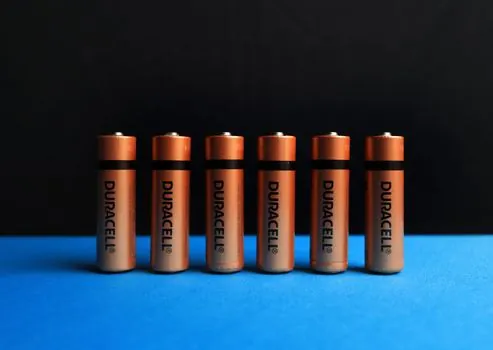
NFPA 72 practice applies a 20% derating as a floor; Cadgen's configurable values of 1.20, 1.25, or 1.30 are project-level decisions, with 1.25 being the standard commercial default and 1.30 used in cold-storage or high-temperature spaces where SLA capacity drops faster [S4][S5]. The 1.20 floor is the absolute minimum and is what most AHJs accept on a stamped submittal [S4]. Panel-side constraints bite next: Johnson Controls' PC5020 work sheet caps total continuous draw at 480 mA, requires 14 Ah minimum at 24-hour standby and 35 Ah at 60-hour standby under that cap, and limits in-cabinet batteries to two 7 Ah cells, with anything larger needing the PS5350 external charger supporting up to 60 Ah [S1]. The Mike Holt thread also documents a Siemens charging-circuit failure mode where undersized batteries cooked themselves because the panel expected a 15 Ah minimum; this is why "the calc says 1.9 Ah" still ends up as 7 Ah or 4.5 Ah on the as-built sheet [S2]. The wider power-supply discipline that drives these limits is covered on the construction machinery and equipment reference page for off-grid DC plants using similar sizing math.
Codes, edge cases, and what changes the 24-hour / 5-minute rule
BS 5839-1 uses 24-hour standby plus 30-minute alarm, and some jurisdictions require 60-hour standby for unmonitored premises; both are explicit overrides of the NFPA 72 defaults that the calculator must accept as inputs [S4][S5]. Voice evacuation and emergency voice/alarm communication systems (EVACS / PAVA) require 15 minutes of alarm at the end of standby, not 5 minutes, because amplifier draw is higher and occupants need longer to evacuate; this is a project-class setting in Cadgen, not a per-device toggle [S4][S5]. High-rise occupancies, some healthcare facilities, and certain IBC-driven designs push the alarm window to 15 minutes regardless of voice capability [S5]. Separate notification-appliance power supplies and booster NACs each need their own worksheet; lumping them into the panel battery is a common submittal error that the MEPBase guidance flags explicitly [S4]. Magnetic door holders at 20 mA each, and similar constant-standby loads like beam detectors and aspirating-fan supplies, should be summed into standby before the 24-hour multiplier is applied, not buried under "miscellaneous" [S3][S4].
Tradeoffs when you push the detector count or strip it back
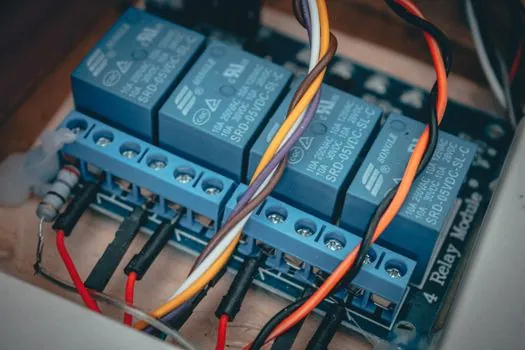
Adding detectors raises standby and alarm roughly linearly, so 200 addressable heads versus 120 heads adds about 0.3 Ah to standby and 0.08 Ah to alarm, before the 1.20 multiplier, which then forces a jump from two 7 Ah batteries to two 12 Ah or two 18 Ah depending on the panel's charger rating [S4]. Cutting standby load by removing door holders, swapping analog addressable modules for lower-current types, or shutting off LED indicators on detectors is the single most effective battery-shrinking lever because the 24-hour standby term dominates the equation [S4]. Going below the panel's stated minimum battery size is a false economy: Siemens and other major-panel charge circuits expect a minimum mass to regulate correctly, and an undersized pack can be cooked in weeks even if it passes the Ah calculation on day one [S2]. For comparison, battery-standby sizing for gas alarm controller panels uses similar 24-hour standby math but with shorter alarm windows, and the perimeter alarm page covers the separate standby current behavior of PIR and dual-tech sensors that often sit on the same cabinet supply.
Trackable signals to watch: NFPA 72's next revision cycle (no public effective date confirmed) and any update to the 20% derating factor in the annex, plus panel-side charger-current datasheet revisions that may shift the 480 mA total-draw cap on legacy mid-size FACPs. A practical next step is to run a 60-hour standby scenario on the same 120-detector MEPBase example, which moves 4.69 Ah to 11.7 Ah standby and the rounded battery from 2 x 7 Ah to 2 x 18 Ah, the kind of jump that decides whether the batteries fit in the cabinet or require an external enclosure [S1][S4][S5].
Background reading: IIC vs IIB Cable Gland Gas Group: Selection, Flame-Path and Spec Boundaries.