A correctly sized solenoid valve is selected by port configuration, flow coefficient (Cv or Kv), minimum operating pressure differential, media compatibility, and coil class — not by the largest port size that fits the pipe.
Specifying the wrong number of ports or the wrong flow coefficient is the single most common cause of valve failure: undersized valves starve actuators, oversized valves seat poorly and chatter at low flow.
Port Configuration and Function Code
Port notation follows ISO 5599 / ISO 15407 conventions: the leading digit is the number of ports, the second is the number of positions — 2/2 (two-port, two-position) for on/off, 3/2 (three-port, two-position) for single-acting cylinders, 5/2 (five-port, two-position) and 5/3 (five-port, three-position) for double-acting cylinders and mid-position logic [S1][S2].
The AirTAC 4STV series covers 3/2-way pilot duty, while 4SV and 7SV series deliver 5/2 and 5/3-way directional control at working pressures typically 0.15–0.8 MPa for filtered compressed air [S2]. The Chinese 4V100 and 4V200 series from Quansheng follow the same convention, with 5/2 and 5/3 bodies designed for ISO 1/4 to 1/2 porting and CV values of roughly 0.6–1.4 [S1].
Choosing the wrong function code — for example, a 3/2 valve on a double-acting cylinder — is unrecoverable without re-plumbing, so lock the function code before the flow coefficient.
Flow Coefficient: Cv vs Kv Conversion
Flow capacity is rated as Cv (US gallons per minute at 1 psi drop) or Kv (cubic metres per hour at 1 bar drop) — convert with Cv ≈ 1.156 × Kv, so a Kv 0.5 body equals roughly Cv 0.58 [S5].
For pneumatic duty on standard ISO 1/4 valves, expected Cv lands between 0.4 and 1.6; the 4V100 family sits in that band [S1][S2]. Process-fluid duty on 1/4 NPT brass or SS316 bodies typically delivers Cv 0.05–0.6 — for example the Chinese SLQF 2/2-way line spans Cv 0.04 to 0.4 across the DN1.5–DN6 orifice range [S4].
To size a water or air service, convert required flow to a target ΔP (commonly 10% of inlet pressure for liquids, 5% for gases) and solve Q = Cv · √(ΔP / SG) — pick the next Cv up, not the nearest, to retain margin as seat wear progresses.
Minimum Pressure Differential and Pilot vs Direct-Acting
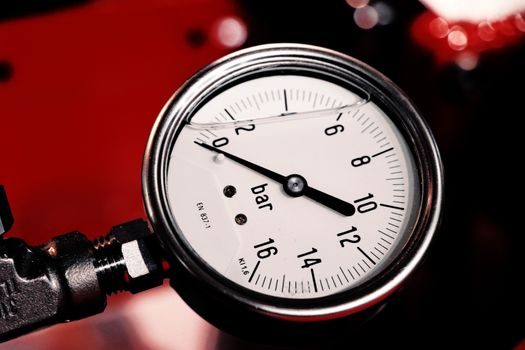
Direct-acting 2/2 valves open against zero differential — useful on low-pressure drains, instrument air, and gravity return lines [S4]. Pilot-operated 5/2 and 5/3 valves require a minimum pressure differential (typically 0.1–0.2 MPa for the 4V/4SV/7SV family) to build pilot pressure that shifts the main spool [S1][S2].
When system pressure can fall below the rated minimum differential, the spool fails to shift and the coil still energises — the classic "dead head" symptom. Specify a direct-acting 3/2 or 2/2 (such as AirTAC 4STV) for any branch that may sit at or near atmospheric on the downstream side [S2].
Pilot bodies deliver larger Cv per unit envelope because the solenoid only moves a small pilot armature, not the main flow path — that is why 5/2 valves at Cv 1.0 fit the same 1/4 package that a direct-acting Cv 0.2 would need.
Media, Material, and Seal Compatibility
Wetted material must match the fluid. Brass and SS304 bodies cover most water, oil, and air duty; SS316 is required for chloride-bearing media, demin water, and pharma CIP loops. Elastomer selection rides on temperature: NBR covers -10 to 80 °C water and oil, EPDM is mandatory for steam and hot water above 80 °C, FKM (Viton) handles hydrocarbons up to 180 °C, and FFKM / PTFE seats push the upper limit to roughly 200 °C [S5].
The Quansheng / SBLF and SLQF ranges ship with NBR or FKM seals as standard, with the SBD timed-drain valve using a dedicated drain-port elastomer rated for condensate [S1][S4]. For OEM pneumatics on factory lines, the 4SV and 7SV AirTAC bodies use NBR seals and anodised aluminium bodies that tolerate compressor oil carryover and ambient dust without filtration finer than 40 μm [S2].
Media temperature, viscosity, and entrained solids all shift effective Cv downward — a 30% over-sizing in Cv is standard practice when handling fluids above 50 cSt or any stream carrying particulates.
Coil Class, Duty Cycle, and Electrical Interface
Coil class dictates ambient and surface-temperature limits. The IP65 class is the pneumatic-industry baseline; coils rated for outdoor or washdown enclosures step up to IP67. Continuous-duty coils (100% ED, class F or H insulation) suit process skid applications; intermittent-duty coils (50–70% ED) save money on solenoid-pulse systems like the SLPM magnetic-latching pulse trains used in dust collectors [S1][S2][S4].
Standard voltages cluster at 24 VDC, 110 VAC, 220 VAC at 50/60 Hz; AirTAC's 6D/6DW integrated series adds a communication module for IO-Link or fieldbus drop-in replacement of the discrete coil, with the same mechanical body as the pneumatic 4SV [S2]. For hazardous-area process plants, specify an Ex d or Ex e coil and pair it with an air solenoid valve body certified to the same zone — mixing an Ex-rated coil on a non-Ex valve body defeats the protection.
The solenoid coil is field-replaceable on most 4V/4SV/7SV/6D bodies — a cost saving on multi-year maintenance when the coil burns out before the mechanical seat does.
Selection Map: 2/2, 3/2, 5/2, and 5/3 Variants
Use this criteria grid to shortlist before drilling into a specific datasheet. Numbers cited are typical industrial baselines drawn from the four product lines above; verify against the exact model PDF before purchase [S1][S2][S4].
Decision criteria: (1) port function, (2) typical Cv, (3) minimum ΔP, (4) preferred duty. 2/2 direct-acting (e.g. SLQF brass body) — Cv 0.04–0.4, ΔP 0, on/off water/air drain duty. 3/2 direct-acting (4STV) — Cv 0.2–0.5, ΔP 0.05–0.8 MPa, single-acting cylinder pilot. 5/2 pilot (4V100 / 4SV) — Cv 0.6–1.4, ΔP 0.15 MPa, double-acting cylinder directional control. 5/3 closed-centre pilot (7SV) — Cv 0.8–1.6, ΔP 0.15 MPa, mid-position hold required for vertical-axis safety.
For machine builders ordering hundreds of units a year, 5/2 pilot bodies dominate the bill of materials — a linear guide axis, a pneumatic clamp, and a directional valve almost always travel together on the same sub-assembly.
Who Should NOT Pick the Mainstream 5/2 Pilot
Skip the 5/2 pilot-operated valve on three duty profiles: (a) any service where downstream pressure can sit at or below 0.1 MPa — the pilot will not shift, and a direct-acting 3/2 is the right call; (b) hazardous-area Zone 1 or Zone 0 where coil classification matters more than flow capacity — specify a NAMUR-mount 5/2 with a certified Ex coil instead of a generic 4V100; (c) high-cycle life above 10 million cycles per year — pilot valves suffer seat wear that direct-acting 2/2 poppet bodies handle better at small Cv. [S1]
Mobile hydraulics on excavators such as the Komatsu PC200LC-8 use solenoid valves in the pilot stage that drive a separate hydraulic main stage, not a single solenoid handling full pump flow [S3]. The same logic applies to any proportional or servo system — the solenoid modulates a pilot, the pilot moves the work valve.
Failure Modes, Maintenance, and Cross-Reference
The four most common field failures are coil burnout (over-voltage or water ingress, fix: replace the solenoid coil only, body is usually fine), seat wear (media-borne particulate, fix: add a 100 μm strainer upstream), slow shift (pilot port clogged, fix: clean the orifice or rebuild the pilot block), and external leakage (O-ring fatigue, fix: full rebuild kit) [S1][S2][S4].
A typical AirTAC 4V100 / 4SV pneumatic valve carries a mean-time-between-failure of roughly 5–10 million cycles on clean, lubricated air at rated pressure; pushing past 30 million cycles in a year means you should re-rate to a higher cycle class or move to a crossed-roller guide-style mechanical solution where the motion does not depend on a pneumatic cycle [S1][S2].
Trackable next signals: revised Cv tables in the 6D/6DW datasheet for IO-Link variants [S2], and any new SBLF / SLQF CN-region product release from Quansheng bearing updated Kv numbers for low-pressure steam service [S1].
Related analysis: Crossed Roller Guide Installation: Datum, Preload, Lubrication.