
Sulfide all-solid-state cells require ~100 MPa cold-press steps to consolidate Li 5.4 PS 4.4 BrCl 0.6 argyrodite electrolyte powder into 13 mm pellets before electrode stacking [S2].
Process instrumentation now spans four distinct stages: powder pressing force, residual moisture quantification, in-situ mechanical expansion tracking during charge/discharge, and operando structural probing during cycling. Each stage uses dedicated hardware rather than repurposed Li-ion tooling.
Sulfide Stack Assembly: Pressure, Geometry, and Moulding
Sulfide solid-state cells are built from dry-pressed powder, not coated foils. The IEST Solid Electrolyte Test System (SEMS) pre-compresses LPSC solid electrolyte powder at 100 MPa with a 60 s hold, then discharges the 13 mm pellet for electrode loading (12 mm cathode, 13 mm anode) inside a glovebox [S2]. Hard particle-to-particle contact is the design constraint, which is why inter-particle volume change during cycling becomes the dominant reliability variable rather than SEI growth as in liquid Li-ion.
Commercial test hardware mirrors this geometry. The Matlabs Solid State Battery Test Cell uses a stainless-steel body with PEEK/PTFE insulation, dual O-ring sealing, and a screw-nut compression assembly supporting φ16 mm stacks, with optional heating stages and pressure sensors [S5]. For thicker research pellets (2.5 mm) the higher internal resistance has to be offset by a sixfold increase in electrolyte ionic conductivity versus conventional Li 6 PS 5 Cl argyrodite [S4].
Residual Moisture: Why 300°C Evaporation Is No Longer Enough
Standard Karl Fischer evaporation methods operate at 300–400°C, which is insufficient to release strongly bound moisture retained in solid-state and ceramic-based battery materials, leading to incomplete moisture recovery [S3].
High-temperature Karl Fischer platforms based on the EV-2000 Solid Evaporator push sample heating to 1000°C, paired with a coulometric titrator (AQ-300 or MOICO-A19) for ppm-level quantification [S3]. The targeted failure modes are degradation of solid electrolytes, reduced ionic conductivity, parasitic side reactions, and shortened cycle life. Without complete moisture release from dense or sintered material, incoming-lot qualification numbers drift, and pilot-line yield data becomes untrustworthy.
In-Situ Expansion and Operando Structural Tracking
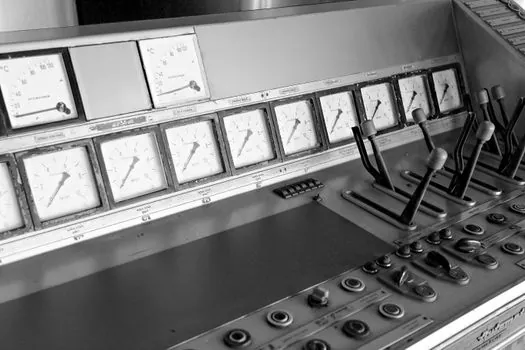
The In-Situ Silicon-Based Anode Swelling Rapid Screening System (RSS) from IEST is used alongside SEMS to characterise charging- and discharging-induced volume change in sulfide full cells, where the absence of liquid buffer means particle-level strain translates directly into stack-level thickness change [S2].
For structural changes inside a working cell, the ILL D20 diffractometer has demonstrated operando neutron powder diffraction on a 2.5 mm-thick pellet containing at least 140 mg of NMC622 positive electrode, with a Li 0.5 In alloy negative electrode [S4]. Neutrons penetrate the full pellet bulk, are highly sensitive to lithium (which X-rays struggle to track), and resolve elements with similar atomic numbers such as the transition metals in NMC. A high-conductivity argyrodite (Li 5.4 PS 4.4 BrCl 0.6) enabled roughly 55% lithium extraction from the NMC active material, comparable to standard lab-scale cells, despite the much thicker geometry forced by the neutron experiment.
Instrument Selection: A Four-Criteria Comparison
Selecting a solid-state battery metrology stack in 2026 is a four-way decision, not a single-instrument buy. The table below lines the main option families against the criteria that actually drive CAPEX and integration risk. [S2]
On measurement target, screw-press test cells cover stack-level pressure and EIS, high-temperature Karl Fischer covers bulk moisture, in-situ swelling rigs cover thickness change, and neutron/X-ray synchrotron beamlines cover crystal-structure evolution during cycling. On throughput, lab cells and KF titrators run continuously in-house; beamline access is scheduled and shared. On sample form factor, lab cells accept φ16 mm stacks, KF systems accept mg-scale powder, swelling rigs accept full coin-format cells, and beamlines need ≥140 mg of active material per pellet. On capital cost band, lab cells and KF systems sit in the low-to-mid five-figure USD range per station, while dedicated beamtime on D20-class instruments carries six-figure annual programme costs.
Process engineers specifying a pilot line will usually buy (1) and (2) outright, contract (3) as a shared service for material screening, and reserve (4) for collaborative beamline proposals during failure-analysis investigations. The four criteria answer a different question: lab cells answer "does the stack hold pressure?", KF answers "is the powder dry enough?", swelling rigs answer "how much does it grow?", and beamlines answer "where exactly is the lithium going?". Skipping any one of these leaves a blind spot that a single instrument cannot fill.
Material and Electrochemistry Constraints
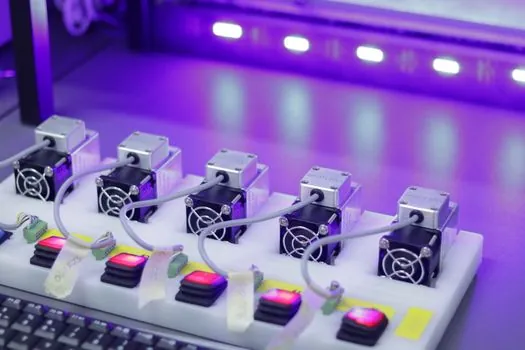
Solid electrolytes must combine four properties simultaneously: ionic conductivity, mechanical strength, chemical stability, and redox stability, and no single material family has cleared all four thresholds at production-relevant cost [S1]. The three main technology routes in 2026 are oxide, polymer, and sulfide/halide, with the sulfide/halide branch drawing the heaviest process-instrumentation investment because of the hard-contact pressing requirement and the moisture sensitivity flagged in the previous section.
Lithium zirconium-based inorganic solid electrolytes are a representative research target, with structural-evolution studies appearing in 2026 peer-reviewed literature [S6]. The common thread across oxide, sulfide, and halide systems is that any trace moisture that survives the dry-room environment will attack the electrolyte surface, so inline KF checks at material receipt and after any milling or sintering step are the cheapest insurance against a scrap batch.
Standards, Limits, and Open Instrumentation Gaps
No single IEC or ISO standard currently specifies solid-state battery process control instrumentation end-to-end; metrology references the same family of Li-ion standards for voltage, current, and temperature accuracy, plus customer-specific pressure and moisture limits written into the PQ protocol. The practical pressure window for sulfide cell cold-pressing is 100 MPa with a 60 s hold based on published IEST data [S2], the practical moisture-detection ceiling on an EV-2000-class platform is 1000°C evaporation with ppm-level KF readout [S3], and the practical operando pellet thickness for neutron diffraction is 2.5 mm with ≥140 mg NMC622 active material [S4].
Field-side, the open gaps are (a) high-temperature KF for in-line rather than batch use, (b) continuous stack-pressure feedback during cycling rather than a set-and-forget screw preload, and (c) non-neutron operando probes (such as ultrasonic or dilatometry-based methods) that can run in a dry-room instead of a central beamline facility. Until those close, the four-instrument stack above remains the de facto reference architecture for solid-state pilot lines.
Trackable next signals: new commercial offerings in the 1000°C-class KF evaporator category, and peer-reviewed results extending the IEST 100 MPa pre-compression protocol to halide-based rather than sulfide-based solid electrolytes. For related process-control coverage, see the process calibration primer and the multifunction process calibrator reference; for the broader solid-state quality landscape, the 2026 field map of solid-state battery manufacturing quality standards and the sodium-ion Industry 4.0 materials outlook cover adjacent chemistries and standardisation routes.
The underlying component specifications are covered under process control.