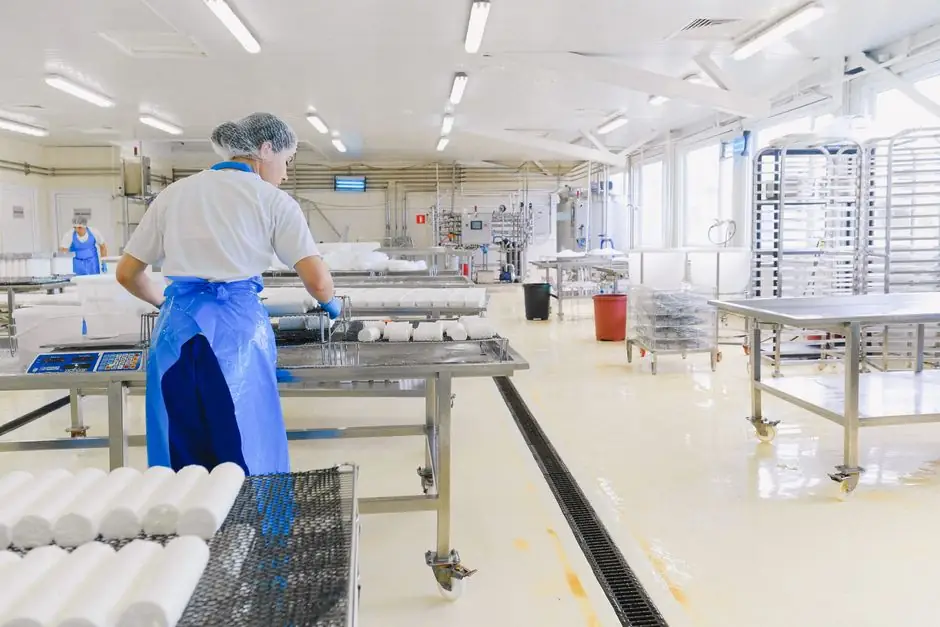
China's sodium-ion output reached 2.45 GWh in H1 2026, up 16% year-on-year, with energy storage as the largest application segment [S1]. For distributors, EPC contractors, and brand owners, partnering with an established sodium battery manufacturer now offers a faster, lower-risk route than building in-house capacity from a standing start [S1].
ZVEPOW's public OEM/ODM programme illustrates the present scope: nine product lines covering 12V to 1200V DC, 50Ah to 1850Ah modules, and a 1.45MW container-scale energy storage system on a single factory footprint, with CE and UN38.3 already in hand and IEC 62619 plus UL 1973 on the safety certification roadmap [S1].
OEM, ODM, and Wholesale: Decision Boundaries
An OEM battery project lets the customer define size, capacity, voltage, BMS behaviour, communication protocols (CAN, SMBus, RS485), connectors, housing, and safety features, while the factory executes engineering, testing, and supply chain, with the customer retaining the product concept and IP [S4]. An ODM project inverts that: the manufacturer owns the pack and BMS platform, the customer customises branding, packaging, connectors, and minor performance parameters, and development cost plus lead time drop because the platform is already tooled and tested [S4].
ZVEPOW frames the same logic as three concrete tiers: wholesale (stock, volume-priced, zero customisation, for distributors and project contractors), OEM (customer brand on ZVEPOW's proven designs, with labelling, packaging, firmware tuning, and minor spec adjustments, for brand owners entering the sodium market), and ODM (full custom design including capacity, voltage, form factor, BMS, and communication protocols, for established brands with specific technical requirements) [S1]. The economic ranking is stable across both sources: OEM delivers the highest specification fit and IP control but the longest development cycle, ODM cuts engineering cost and launch time by riding a shared platform, and wholesale sets the lowest entry barrier for a market test [S1][S4].
What an OEM/ODM Sodium Line Actually Delivers in 2026
ZVEPOW's published manufacturing scope covers 9 product lines (ZVNFELI base station, ZVNRL/ZVNRH rack, ZVNWL wall-mount, ZVNSL/ZVNSSL/ZVNSSH stacked, ZVN lead-acid replacement, SIBESS C&I series) with system capacity from 610Wh (12V/50Ah module) to 2.23MWh (20-foot container), an operating temperature window of -40°C to +80°C on the lead-acid replacement family, and 6,000+ cycle life on the sodium-ion chemistry [S1]. Communication stacks include RS485, RS232, CAN, SNMP, and Modbus, with custom protocols available on request, and inverter compatibility spans 25+ brands including PYLON, Deye, Growatt, Sofar, Schneider, SMA, and Victron [S1].
Process engineers will note that the sodium-ion cell sits at a different point on the depth-of-discharge curve than lithium: NFPP chemistry enables 95–98% of nominal capacity to be accessed in service, versus roughly 80% on a typical lithium-ion cell kept inside the conventional 10–90% SOC window, and 100% depth of discharge is mechanically tolerated because sodium cells use aluminium current collectors on both electrodes instead of copper on the anode [S3]. Combined with a 6,000-cycle rating and -40°C to +80°C envelope on the lead-acid replacement line, that spec set changes how a BESS integrator sizes usable kWh per rack [S1][S3].
Cathode Chemistry: Why NFPP Is Reshaping the OEM Bill of Materials
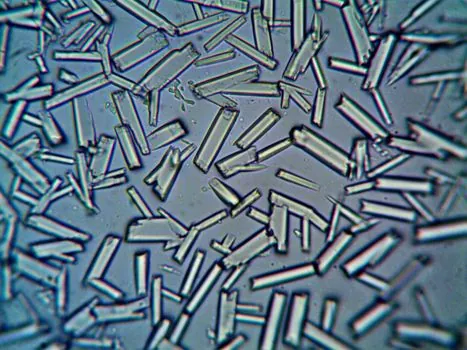
Two sodium-ion cathode families dominate current OEM/ODM builds: layered transition-metal oxides and sodium iron pyrophosphate (NFPP, Na₄Fe₃(PO₄)₂P₂O₇), a polyanionic structure whose 3D phosphate framework resists oxygen release under overcharge, external short circuit, crush, and thermal stress [S2][S3]. The operational consequence is that NFPP cells tolerate 100% depth of discharge mechanically, while the layered-oxide variants sit closer to the upper end of the abuse-tolerance spectrum and still need narrower SOC windows in stationary storage [S3].
On a cost axis, sodium-ion uses sodium carbonate (soda ash) at roughly $300 per ton against lithium carbonate that has traded between $13,000 and $80,000+ per ton, and the supply concentration is the inverse of LFP: 99% of LFP cathode, 92% of anode, and 100% of LFP cell supply, plus 77% of BESS system supply, is controlled by a single country, a structural risk that sodium-ion is being positioned to diversify around [S3]. For an OEM/ODM buyer, the practical takeaway is that specifying NFPP for a stationary ESS SKU is a cathode-level decision with knock-on effects on rack sizing, HVAC load, and transport-classification paperwork [S2][S3].
Use-Case Fit: Who Should Pick Which Model
Wholesale fits distributors, retailers, and project contractors who want stock sodium SKUs at volume pricing with no engineering commitment, the fastest path to a market presence while the H1 2026 trajectory plays out [S1]. OEM fits brand owners with a defined product brief (logo, label, packaging, manual, custom BMS parameters, alarm thresholds, charging curves) who want to reskin a proven platform and ship under their own marque, with CE, UN38.3, and MSDS already included and IEC 62619 plus UL 1973 coordinated on request [S1]. ODM is the right tier for established brands with non-standard form factors, custom BMS logic, or protocol stacks (Modbus, CAN, SNMP) that have to be designed in from a clean sheet, accepting a longer development window in exchange for full specification control [S1][S4].
The line between OEM and ODM is not theoretical on the factory floor: OEM customisation areas typically cover size, shape, voltage, capacity, cell chemistry, BMS, communication protocols, charge and discharge settings, connectors, cables, housing materials, safety protection features, and product branding, while ODM customisation stays at the level of branding, packaging, connectors, and minor performance parameters because the core pack design, BMS platform, certifications, and production line are already fixed [S4]. For a buyer evaluating sodium-ion cell cost structures, the model that is closest to the cell-cost narrative on $/kWh will bias ODM decisions toward shared platforms, and OEM decisions toward bespoke racks; the Sodium-Ion Cell Cost Breakdown 2026 reference walks through where those dollars land.
Limitations, Failure Modes, and What Buyers Should Pressure-Test
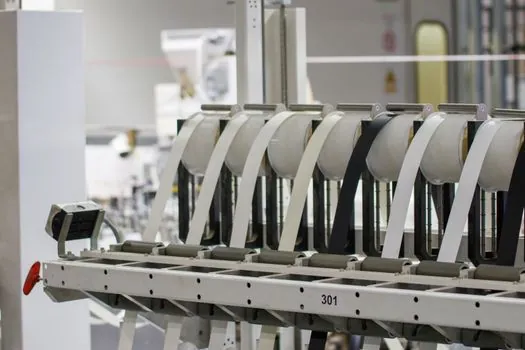
Three constraints consistently appear in the public material. First, certification gaps: a partner may carry CE, UN38.3, and MSDS at the SKU level, but UL 1973 and IEC 62619 are still on the roadmap rather than on the label, so North American utility-scale and EU stationary BESS tenders will need a coordinated certification plan rather than an off-the-shelf document set [S1]. Second, chemistry heterogeneity: layered-oxide cells and NFPP cells behave differently under 100% depth of discharge and under thermal abuse, and an OEM that ships both under one product code without clear SOC-window guidance will force the integrator to re-validate usable kWh per rack [S2][S3]. Third, supply concentration: although sodium carbonate is widely available, the broader cell and BESS supply chain still routes heavily through China, so a "China + 1" sourcing strategy on sodium-ion will need explicit second-source commitments for cathode precursor, hard carbon anode, and electrolyte [S3].
Two trackable signals for the next quarter: watch whether ZVEPOW and similar sodium specialists publish UL 1973 and IEC 62619 certificates against part numbers rather than roadmap language, and watch whether NFPP cathode SKUs start to be quoted separately from layered-oxide SKUs in OEM price lists so integrators can price the cathode-level decision [S1][S2]. For instrumentation buyers mapping sodium-ion cell formation and BESS skid commissioning, the Sodium-Ion Battery Process Control: 2026 Instrumentation Spec Map reference lines up the pressure transmitter, flow meter, and PLC stack against formation cycling and electrolyte batching.
For the relevant spec sheets and selection criteria, see additive manufacturing material.