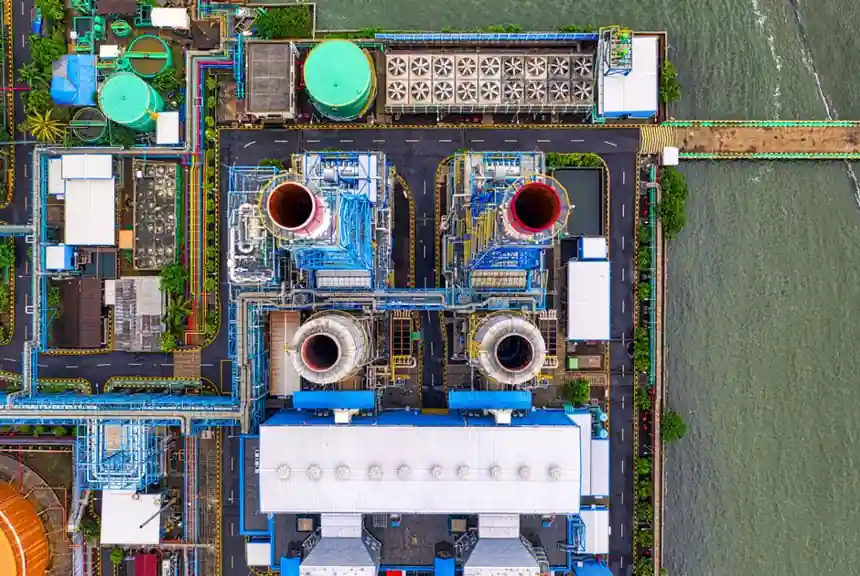
Solid-state battery cell capacity has crossed into the GWh range for individual manufacturers, with Intellvation (operating as Super Power New Energy) confirming 3 GWh of dedicated solid-state cell capacity and tooling for 500 Ah large-format cells, alongside an integrated BMS and BESS stack [S5].
That cell-side number is matched by a step-change in module demand: the solid battery modules market is projected to grow from USD 980 million in 2026 to USD 12,506 million by 2036 at a 29.0% CAGR, an absolute opportunity of USD 11,526 million [S4]. Parallel estimates put the EV-focused solid-state cell market on a 61.2% CAGR from a USD 78.6M base in 2026, and the broader solid-state battery market on a 42% CAGR from USD 167.76M in 2025 [S6][S7].
Cell-level capacity: GWh lines, 500 Ah format, and chemistry mix
Production-capacity planning for solid-state cells now hinges on three concrete numbers: a 3 GWh nameplate cell line, 500 Ah large-format cell manufacturing capability, and a chemistry split in which sulfide electrolytes are projected to hold 38.0% module share in 2026 due to high ionic conductivity and compatibility with lithium-metal anodes [S5][S4]. Intellvation's R&D bench, five PhDs and ten master's-level engineers, targets the cell, the BMS, and the energy storage power station as a single stack rather than a single product, which materially changes the way procurement specs are written [S5].
For comparison, the same 2026 module forecast segments pouch format at 41.0% share and the below-1 kWh power class at 51.0% share, reflecting that early programs are dominated by mobile robots and compact aerospace systems rather than passenger-EV packs [S4]. Process engineers planning capacity should therefore expect first-volume orders to come from industrial automation, not automotive: industrial robots alone are estimated at 39.0% of 2026 module share [S4].
Module spec envelope: 1C cycling, 84% retention at 350 cycles, 95% retention above 1,000 cycles
Module-level validation data is the new gate, and the data points are converging. A Dalian Institute of Chemical Physics team (Chinese Academy of Sciences) reported a PVDF-based dehydrofluorinated gel composite electrolyte that retained 84.15% capacity after 350 charge-discharge cycles at 1C on an NCA cell, with Li3OCl creating a Lewis-basic environment that strengthens the organic-inorganic interface [S1]. Reference programs from QuantumScape and Factorial Energy have separately demonstrated more than 95% capacity retention beyond 1,000 cycles, and Factorial secured a first commercial aerospace order in July 2026 after drone testing showed more than 30% range improvement [S1][S4].
Energy density and operating envelope are also tightening. Changan's "Golden Bell" all-solid-state cell is targeting 400 Wh/kg with trial installations planned before the end of Q3 2026, and solid-state cells are specified to operate safely up to 80 deg C versus roughly 50 deg C for liquid-electrolyte lithium-ion, removing the separator and the casing mass that constrain pack design [S3]. This temperature headroom is the technical reason pack engineers can spec smaller cooling plates and fewer mechanical safeguards, which feeds back into flow meter and pressure transmitter sizing for thermal-loop skids.
Decision criteria: who needs solid-state capacity now, and who should wait
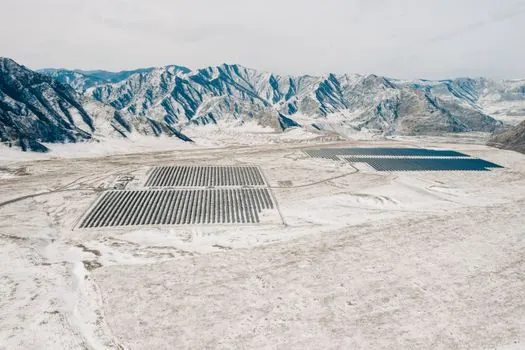
Capacity planners should match the use case to three hard criteria: cycle life at 1C, energy density in Wh/kg, and module-level safety documentation (swelling, thermal control, service-life data) rather than cell-chemistry claims alone [S4]. On those criteria, the early-volume winners are industrial-robot integrators (39.0% of 2026 module demand), sub-1 kWh mobility platforms (51.0% share), and aerospace or defense programs that need energy-to-weight and audited safety records [S4].
Passenger-EV programs sit in a different bucket. The 42% CAGR in the broader solid-state battery market and the 61.2% CAGR in the EV solid-state battery market are both off very small 2025-2026 bases (USD 167.76M and USD 78.6M respectively), so EV-scale cell offtake remains a 2027-2030 story [S6][S7]. For sodium-ion lines running in parallel, planners evaluating adjacent chemistry risk should read the sodium-ion OEM vs ODM selection map, since several cell makers are using shared dry-room infrastructure to bridge both programs.
Geography and standards: UK 37.0% CAGR, Japan 35.8%, Germany 24.4%, South Korea 21.6%
Regional capacity build-out is uneven but quantifiable. Fact.MR's August 2026 forecast puts the United Kingdom at a 37.0% CAGR through 2036 on the back of battery scale-up funding and zero-emission vehicle rules, Japan at 35.8% through its domestic battery strategy, Germany at 24.4% on automotive validation, and South Korea at 21.6% as cell makers add next-generation roll-to-roll lines [S4]. On the demand side, the IEA reported in May 2026 that EV battery deployment reached 1.2 TWh in 2025, up almost 30% year on year, which sets the addressable pack market into which solid-state modules will compete [S4].
On the compliance side, CE certification is the near-term export gate for Chinese cell makers serving European BESS buyers, and Intellvation has explicitly framed its technology roadmap around CE-aligned BESS manufacturing rather than cell-only sales [S5]. Sulfide electrolytes also require dry-room dewpoints below roughly -40 deg C and inert-atmosphere handling, which is why sulfide-dominant lines are typically co-located with humidity-controlled HVAC and where industrial valve and pressure sensor specs for solvent and argon lines should be reviewed before line acceptance.
Manufacturing economics: cell chemistry, format, and integration model
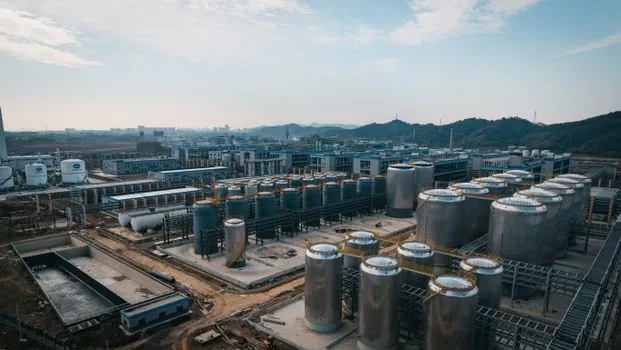
Solid Power's public business model highlights a second viable path: rather than building a full GWh cell line, a developer can supply electrolyte materials, prototype cells, and the manufacturing know-how (process IP, dry-room protocols, formation cycling recipes) that lets an existing gigafactory convert lines from liquid to solid electrolyte [S8]. For capacity planners, this is the equivalent of a licensed-process option: lower capex, slower differentiation, but a faster path to qualified module output.
By contrast, vertically integrated cell makers such as Intellvation are absorbing cell, BMS, and BESS power-station assembly in-house, with manufacturing bases in Shandong and Xuzhou feeding a Shanghai international sales office [S5]. The trade-off is straightforward: licensed-process models reduce capex per kWh but dilute margin on chemistry IP, while vertical-integration models preserve margin but require procurement to manage PLC integration, formation cycler uptime, and pack-level safety testing in one supply contract.
Risk and constraint set: dendrites, swelling, and module-level safety data gaps
Three failure modes still bound the 2026 capacity envelope. First, lithium dendrite formation at the solid-solid interface remains a degradation vector, which is why the dehydrofluorinated PVDF-Li3OCl interface chemistry in the Dalian result is treated as a process-relevant result, not a lab curiosity [S1][S2]. Second, mechanical stress from charge-discharge swelling drives pack-level safety behavior and is the single biggest reason suppliers are being asked to publish module-level rather than cell-level validation data [S4][S2]. Third, sulfide-based electrolytes, while dominant in the 2026 module mix, are moisture-sensitive and require controlled-atmosphere lines that constrain retrofit of existing liquid-electrolyte gigafactories [S3][S4].
Capacity planners should also note that Solid Power's published strategy treats manufacturing know-how as a billable product, which means second-source supply of formation protocols is now commercially available, reducing the lock-in risk that historically accompanied cell-maker-of-record contracts [S8]. For teams with limited capex headroom, this shifts the build-vs-buy question toward buy-and-qualify.
Trackable signals for the next planning cycle: (1) the Q3 2026 Changan trial-installation milestone for the 400 Wh/kg "Golden Bell" cell [S1]; (2) the next Fact.MR regional breakout, where the UK's 37.0% CAGR is the highest in the published set and the most likely to anchor European cell offtake [S4]; (3) module-level safety data publication from sulfide-cell developers, which Fact.MR identifies as the gating procurement criterion for early automotive qualification [S4].