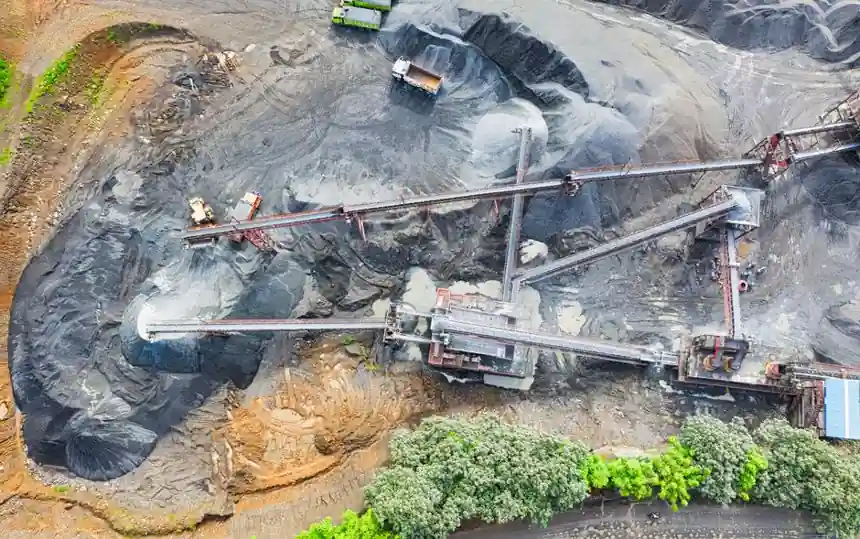
China produces roughly 50–55% of the world's activated carbon, with annual output exceeding 1.2 million metric tons and FOB pricing on coal-based granular activated carbon (8×30 mesh, iodine ≥900) at $580–$1,350/ton compared to $1,200–$2,500/ton from US domestic producers [S5].
The premium manufacturing cluster sits in three provinces: Ningxia (anthracite coal for coal-based pellet and granular carbon), Fujian (wood-based and coconut-shell lines), and Shanxi (bituminous coal, cost-advantaged) [S2]. Global activated carbon market value reached $5.62 billion in 2025, with Asia-Pacific accounting for 43.95% of demand, per Fortune Business Insights data republished in 2026 industry coverage [S5].
Raw Material Geography and Product Type Selection
Ningxia Taixi anthracite is the headline feedstock for coal-based activated carbon, prized for low phosphorus, low ash, low sulfur, high calorific value, high mechanical strength, and high chemical activity, the "three lows, six highs" profile that defines premium Chinese coal-based GAC [S2]. Shanxi runs on similar coal geology with incremental cost advantages; Fujian operates wood-based lines and dominates coconut-shell processing through Southeast Asian shell imports [S5].
Form factor drives end-use fit: powdered activated carbon (PAC) for municipal wastewater dosing, granular activated carbon (GAC) for water filtration beds and gold recovery, and pelletized carbon for gas-phase industrial streams. Coconut-shell GAC commands a 15–20% year-over-year price uplift on tightening Indonesian shell supply, with FOB prices now at $2,900–$4,500/ton as of 2026 [S5]. Coal-based GAC remains the workhorse for PFAS, mercury, and chlorinated-solvent removal because Chinese factories can deliver NSF/ANSI 61-certified product to municipal tenders [S5].
HS Code, Duty, and Tariff Exposure
HS code 3802.10 covers activated carbon exports and drives the duty calculation in every destination market; the same code triggers Section 301 tariffs of 25% on Chinese-origin product entering the US, even when the landed cost remains competitive [S1][S5]. US HTS 38021000 carries a base duty of 0–4.8% depending on FTA eligibility, while chemically activated carbon is classified as UN 1362, Class 4.2 (self-heating substance), Packing Group III under IMDG and IATA [S4].
EU buyers face REACH registration and CE marking obligations for industrial-use carbon, while African markets (Zimbabwe, Nigeria) layer environmental permits on top of the standard commercial invoice, packing list, and Certificate of Origin [S4]. Saudi Arabia and the UAE require SASO and ECAS certification respectively, a step that adds documentation lead time but is non-negotiable for legal import [S4]. Buyers should treat HS classification as the first gate: a mis-declared code is the single most common cause of customs holds on Chinese carbon shipments [S1].
MOQ, Pricing Structure, and Container Loading
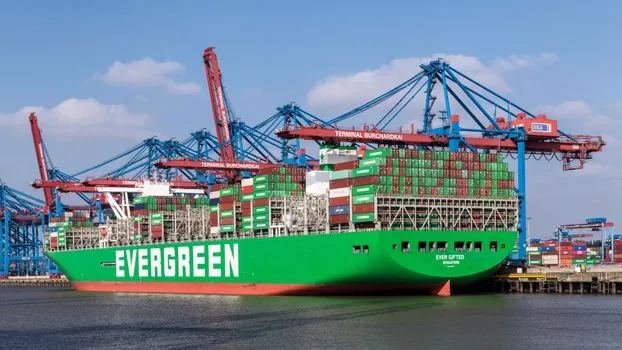
Factory MOQ starts at 1 metric ton for samples and small-batch validation, scaling to 20–26 MT per 20-foot FCL or 24–28 MT per 40-foot FCL, the latter capped by weight, not volume, because activated carbon is dense [S1]. A 20' FCL ocean freight runs $1,500–$3,500 to most major ports; a 40' FCL runs $2,000–$5,000; LCL consolidation costs $80–$150/CBM with a 5–10 day transit penalty; air freight is reserved for sub-500 kg samples at $4–$8/kg [S1][S4].
Packaging choice changes the per-container math: 25 kg bags yield 800–1,000 bags (20–25 MT) per 20' FCL, 500 kg jumbo bags deliver 40–44 bags (20–22 MT), and 1,000 kg bulk bags give ~20 bags (20 MT) at the lowest packaging cost [S1]. All bags require an inner PE liner, plus desiccant and a moisture-barrier liner for long ocean voyages, and palletized loading reduces bag damage but cuts capacity by roughly 10% [S1]. Industrial buyers running flow meter-controlled water treatment skids will see the lowest landed cost by ordering 40' FCL coal-based GAC at the upper end of the MOQ band.
Freight Mode Selection by Destination and Volume
FCL ocean freight is the default for ≥15 MT shipments, with transit times of 25–35 days from Guangzhou/Shenzhen to Europe, 30–40 days to the Americas, and 28–45 days to African ports like Lagos and Dar es Salaam [S4]. LCL suits 500 kg–15 MT orders consolidated at CFS facilities in Shanghai, Ningbo, or Shenzhen, and is the only viable option for buyers testing new suppliers before committing to container volumes [S4].
Air freight and express courier (DHL, UPS, FedEx class-1 agent service) cover 50–500 kg urgent orders at 5–8 day transit to major airports (LHR, ORD, SIN) and 10–14 days to remote destinations via regional hubs [S4]. DDP (Delivered Duty Paid) service is available to 190+ countries for buyers who want a single line-item landed cost, useful when the buyer's procurement team lacks in-house customs expertise [S4]. Pallets for air freight are capped at 1,500 kg per IATA guidelines, and oxidizer contact must be eliminated at loading to prevent self-heating events [S4].
Compliance, Certification, and Documentation Stack
Steam-activated carbon is exempt from dangerous-goods classification under ADR/RID (road/rail) but still requires UN 1362 labeling for sea and air transport, and a certified laboratory self-heating test report is required to claim any exemption from UN 1362 [S4]. The documentation stack includes commercial invoice (with local-language translation), packing list, Certificate of Origin, MSDS in English plus destination language, dangerous-goods declaration for chemically activated carbon, and import permits such as Brazil's ANVISA for water-purification grades [S4].
For industrial process buyers integrating carbon into pressure transmitter-monitored filter vessels, the key certifications to demand are NSF/ANSI 61 for drinking-water contact, AWWA B604 for granular carbon, and ASTM D2862 for cylinder-to-particle density; Chinese suppliers serving municipal contracts will provide these on request [S5]. Missing or incorrect paperwork is the dominant cause of demurrage charges, so verify the full document set before the container leaves port [S1].
Who Should and Should Not Source from China
China is the right origin for buyers needing ≥1 MT/month of coal-based GAC, pelletized carbon, or impregnated grades at 30–50% landed-cost savings versus US or European supply, and for buyers who can absorb 25–40 day transit [S1][S5]. It is the wrong origin for buyers needing under-100 kg emergency replenishment (air-freight cost kills the math), for US buyers in specific anti-dumping order scopes where landed cost after Section 301 duties erases the China discount, and for any application requiring unannounced batch-traceability audits that smaller Chinese factories cannot accommodate [S1][S5].
Volume and consistency requirement rules the rest: a single 20' FCL trial order (20–26 MT) is enough to validate one supplier's lot-to-lot iodine number, hardness, and ash content before scaling to monthly contracts. Operators running crossed-roller guide-equipped automatic backwash filters will see the most stable performance from coal-based 8×30 mesh with iodine ≥900, a grade that multiple Ningxia and Shanxi factories produce to repeatable spec [S5].
Track three signals over the next quarter: Indonesian coconut-shell export volumes (currently declining and driving the 15–20% FOB price uplift), Section 301 tariff review outcomes for HS 3802.10, and NSF/ANSI 61 audit results from the top three Fujian wood-based producers, all of which will reset the 2026 sourcing math for water-treatment and gold-recovery buyers [S5]. For a manufacturer-level market read, the activated carbon market share baseline breaks down the top suppliers by capacity and certification depth.