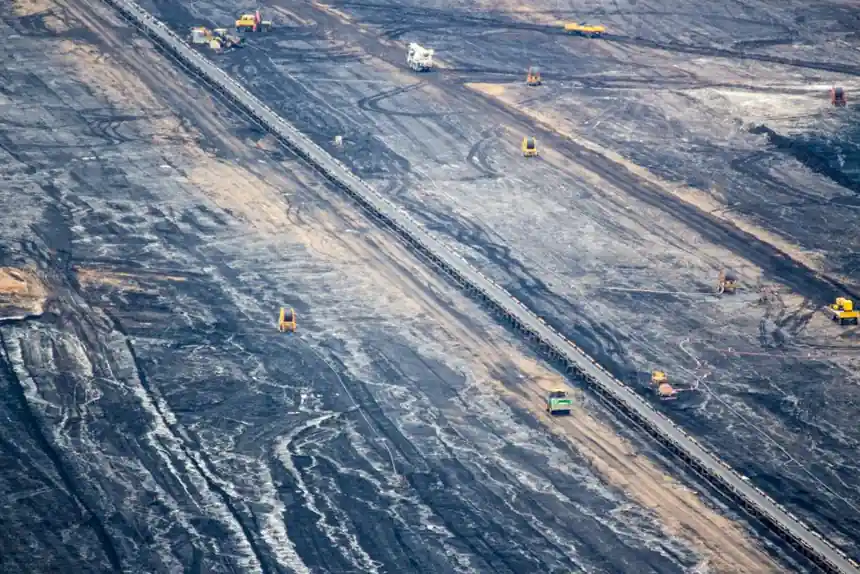
Vanadium demand is structurally concentrated, with over 85% of global consumption still tied to steel microalloying, while vanadium redox-flow batteries (VRFBs) represent the swing variable that could redraw the demand map by 2030 [S1].
For any buyer, that single concentration number dictates the procurement strategy: lock the metallurgical baseline first, then add a circular and battery-grade hedge on top. Specifications, not spot prices, are where the real margin is protected.
Define the Spec Before You Talk to a Supplier
Vanadium oxide (V2O5, CAS 1314-62-1) is commonly traded at an assay of ≥99%, and is offered as crystalline powder or flakes; the form must be specified in writing before RFQ release [S2]. For metallic vanadium, lots are typically graded 99.9% to 99.95% purity with 1–10 mm or 1–50 mm lump sizing, supplied in 1 kg to 100 g minimum order units depending on refiner [S4].
Three numeric anchors drive almost every dispute downstream: assay percentage, impurity ceiling (Si, Fe, S, P for steel-grade; alkali metals for catalyst-grade), and moisture/size envelope. If those three are not on the purchase order, the Certificate of Analysis becomes a negotiation document instead of a verification document.
Map the Form to the Application, Not the Other Way Around
V2O5 (CAS 1314-62-1) is the dominant entry point for both metallurgical and chemical-process users, and 25 kg bag packaging is the de-facto standard export unit for oxide [S2][S3]. Ferro-vanadium (FeV) is the steel-industry workhorse, traded in 25-ton minimum lots at roughly $13,000–$18,000/t on recent spot references [S4].
Specifying the wrong form for a metallurgy use-case is the most common cost leak in the category.
Supplier Vetting: Geography, Certification, Cash Terms

Primary refining of vanadium-bearing magnetite (VTM) and co-product slag is concentrated in China, Russia, and South Africa, and Chinese chemical-platform listings dominate export channels for both oxide and metal grades [S1][S2]. For a procurement-qualification audit, the minimum evidence set is: CAS-number match on the COA, ISO 9001 quality system certification, SGS or equivalent third-party assay, and a documented reorder rate visible on the B2B platform.
Trade terms matter as much as unit price. V2O5 export is conventionally quoted FOB or CIF, with MOQs around 25 kg per order for oxide and 25 t for FeV [S2][S4]. A 1 kg MOQ on a 99.9% metal listing is a sample lane, not a production lane; do not let MOQ flexibility disguise a capacity ceiling.
Price, Volatility, and Where to Hedge
Vanadium prices are explicitly flagged as volatile in current market analyses, driven by the steel-volume baseline on the demand side and tight VTM slag supply on the upstream side [S1].
Two practical hedges: (1) split volumes across at least two qualified refiners in different provinces to neutralise single-site outage risk, and (2) match PO tenor to forecast consumption in 60–90 day slices rather than annual contracts, so the contract can be re-priced when the index moves. For VRFB-exposed buyers, the EU strategic-analysis recommendation is to layer in electrolyte-reuse and slag-recovery offtake as a structural buffer [S1].
Circular Supply: The Strategic Lever Most Buyers Skip
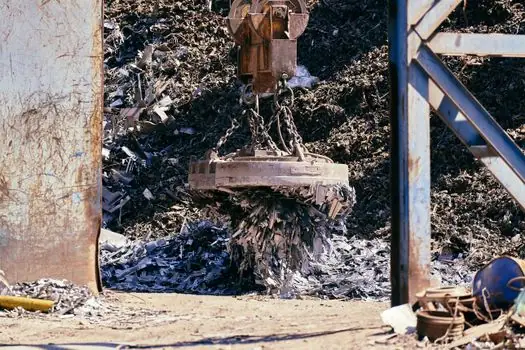
The single most under-used procurement lever in vanadium is circular sourcing. Spent V2O5 catalysts from sulfuric-acid plants and VRFB electrolyte at end-of-first-life can be re-refined back to battery-grade specification, and secondary slag from steelmaking already supplies a meaningful share of Western demand [S1].
For an EU or US buyer, a resilient sourcing policy now reads as: primary FeV from existing channels, plus a 15–25% circular allocation (recovered catalyst + recycled electrolyte) sourced through a qualified recycler, plus a strategic-stock or offtake agreement for VRFB-grade material to lock priority when grid-storage demand spikes [S1]. This three-track layout is the only configuration that survives the 2030 demand-mix shift flagged in the strategic review.
Failure Modes: What Kills a Vanadium PO
Three failure modes account for the majority of rejected lots and warranty disputes in this category. First, hydrate/size drift: V2O5 picked up moisture in transit, and the assay drops below 99% on receipt; mitigate by specifying sealed foil liner inside the 25 kg bag and a max moisture clause. Second, impurity creep on metal grades: tramp Si and Fe exceed the steelmaker's nitrogen-controlled spec; mitigate by requiring the COA to break out Si, Fe, S, P as numbered columns, not a single "balance" line. [S1]
Third, MOQ-vs-capacity mismatch: a 1 kg MOQ supplier that wins a 20-ton annual contract may not actually hold the bulk capacity, and the second shipment slips by 8–12 weeks. The pre-RFQ capacity audit, asking for the refiner's last four quarters of bulk shipment tonnage, is the cheapest insurance available. For buyers who also need on-site measurement instrumentation, the pressure transmitter selection grid is a parallel decision worth running on the same procurement cycle.
When Vanadium Is the Wrong Material

Vanadium is the wrong material when the duty is purely corrosion resistance in a neutral-pH aqueous service, where 316L stainless or duplex grades outperform FeV additions at lower unit cost; or when the duty is bulk structural steel where HSLA niobium microalloying delivers comparable strength at a more stable price index. The procurement decision to skip vanadium is as data-driven as the decision to buy it. [S4]
For adjacent flow and level instrumentation on a vanadium-processing line, flow meter and industrial valve specification work should be run in parallel, because electrolyte-handling systems for VRFB service demand wetted materials that are themselves vanadium-compatible above 1.6 M V(V) concentration.
Next node to track: the EU Critical Raw Materials Act offtake-instrument guidance, which is the regulatory vehicle most likely to reshape Western vanadium procurement terms through 2027. Watch for a third strategic-stock announcement from a member-state agency and any battery-grade refining hub final-investment-decision in the Nordics before year-end. The procurement strategy is set, the timing is the variable.
Related analysis: Perimeter Alarm System Selection for Chemical Plants: Spec-First Map.