
China-sourced BESS in 2026 sits in a $65–101/kWh battery-pack band, the lowest of any major market, with total lithium exports clearing RMB 420 billion in 2025 and energy-storage shipments up 38.7% year over year [S4][S7].
Overseas storage orders in H1 2026 rose another 45.3%, led by European household storage, then Australia and North America, against a domestic installed base that already crossed 25 GW of battery storage capacity in 2022 [S1][S4].
Cell chemistries and what each one is actually for
LFP (LiFePO4) dominates the export mix, with NMC filling the energy-density tier above it, and sodium-ion (UN3551) entering the catalogue for cabinets where lithium supply is the binding constraint [S3][S4]. Round-trip efficiency on the better LFP utility cabinets now runs above 90%, which is the threshold most European EPCs use to drop a quote from a shortlist [S1].
Lead-acid volumes still grow 5–8% annually, but the export story is lithium: consumer lithium cells rose 6.2% in 2025, while energy-storage packs ran at the 38.7% pace that dragged the headline figure up [S4]. Sodium-ion matters for grid buyers sensitive to lithium price volatility; for buyers chasing cycle life at 80% DoD across 6,000+ cycles, LFP remains the default.
Supplier tier map: who actually ships the volume
Three names move the bulk of utility-scale containerized volume: CATL (EnerC liquid-cooled series, EnerX/Tianhe platform), BYD (MC Cube, with a strong UK/Germany/US grid-scale track record), and Sungrow, which sits closer to the PCS/integration end of the stack [S3]. The CATL, BYD, EVE, CALB, and Gotion cluster covers the cell-plus-pack tier, while a long tail of pack assemblers in Guangdong, Anhui, and the Pearl River Delta handles OEM/private-label work [S4].
Buying channel markup explains why two quotes for the same kWh number look unrelated: direct-from-factory is 0% markup, a local sourcing agent runs 3–6%, online trading companies add 18–32%, and the platform-sourcing-agent layer falls in between [S4]. The premium on a trading-company quote is paying for convenience, not for the cell, and any buyer chasing the $65/kWh end of the band will be working direct or with a vetted agent.
Class 9 shipping under UN3536 and the UN38.3 failure rate
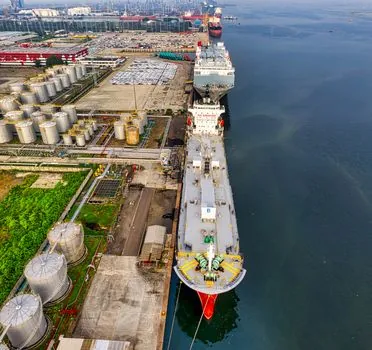
Containerized ESS cabinets are Class 9 Miscellaneous Dangerous Goods, and the correct UN number for a fully integrated cabinet (battery packs + BMS + thermal management + fire suppression in one enclosure) is UN3536, lithium batteries installed in a cargo transport unit, not UN3481, which is the most common misclassification in early 2026 [S3]. Sodium-ion cabinets ship under UN3551, with the same Class 9 obligations [S3].
58% of port detentions on Chinese battery shipments trace back to a missing or expired UN38.3 test report, and a valid MSDS plus a sea-transport appraisal are non-negotiable for the same booking to clear [S4]. The cabinet itself is a Shipper's Owned Container (SOC) holding 40+ tonnes of Class 9 DG, so even though it looks like a 20GP/20HQ/40GP/40HQ, it is not a general dry van and carriers apply roughly 30 t payload limits on a 20HQ; cabinets over 40 t need special stowage or breakbulk handling [S3].
Spec sheet the supplier must fill in before you wire a deposit
Five numbers separate a usable BESS quote from a placeholder: nominal capacity (kWh), usable capacity at the stated depth of discharge, round-trip efficiency (AC-to-AC, not DC-only), cycle life to 80% retained capacity, and the IP/NEMA rating of the cabinet [S1][S2]. Modular systems that allow cabinet-level paralleling raise user satisfaction by up to 30% on installed projects because they avoid forced full-array upgrades when one cabinet ages faster than the rest [S1].
On the system side, the inverter must match the destination grid code, the battery configuration must match the inverter's DC voltage window, and the BMS must expose the protocol the SCADA actually speaks, which is where most cross-supplier builds break before they reach commissioning [S2]. For buyers specifying residential or small-commercial cabinets, the same BESS sourcing playbook used for grid-scale procurement applies to component matching and certification tracking.
Two fraud patterns that survive every due-diligence questionnaire
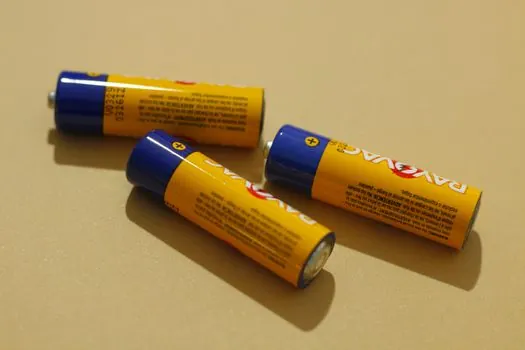
Inflated nameplate capacity and second-hand cells repackaged as new are the two failure modes that surface weeks after delivery, not on the supplier's factory audit, because they sit below the spec the buyer asked to verify [S4]. Mitigations are mechanical: a third-party capacity test on a randomized cabinet from the production batch, a request for cell traceability documents (lot codes + date codes), and a witness of the BMS firmware version against the datasheet.
Chinese wholesale battery prices have dropped roughly 90% since 2010, and that deflation is what makes the arbitrage work, but it is also what funds the race-to-the-bottom on cells [S1]. A quote priced 15–20% under the going rate for the same kWh is not a bargain; it is a signal that one of those two failure modes is being priced in.
Cost stack, warranty terms, and the realistic lifetime math
The $65–101/kWh China pack band reflects battery cells only, not the integrated cabinet, and the integrated liquid-cooled cabinet with PCS, EMS, thermal management, and fire suppression lands materially above that figure once BOS is added [S7]. Lifecycle cost, not first-cost, is the variable that decides project ROI, and warranties of 10 years or 6,000 cycles at 80% DoD have become the contractual baseline for LFP utility quotes [S1][S6].
Warranties are only as good as the service network behind them, and that is where Chinese OEM-backed projects tend to outrun second-tier pack assemblers in regions without a local service partner [S2][S6]. For buyers building a multi-MW portfolio, the transformer-side TCO logic is a useful parallel: total ownership and lead time, not unit price, drive the realised cost per MWh.
Logistics plan that gets a first ESS shipment through customs
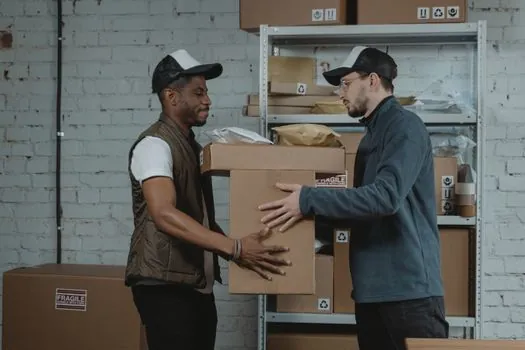
Bookings must clear carrier pre-approval before the container reaches the port, and a specialist freight forwarder who already handles Chinese Class 9 is cheaper than the delay cost of a general-cargo broker learning on your shipment [S3]. The documentation set is fixed: UN38.3 test summary, MSDS, sea-transport appraisal, dangerous goods declaration with the correct UN number, packing list showing SoC at time of shipment, and thermal-management verification for any liquid-cooled cabinet [S3][S4].
Two trackable signals to watch over the next two quarters: the proportion of Chinese BESS export volume cleared under UN3536 versus legacy UN3481, and whether the H1 2026 +45.3% overseas storage order growth holds into H2 once the first wave of EU and Australian household-storage installations reach first-fire and produce reference data [S3][S4].
Detailed specification references: energy management, energy meter, and linear guide.