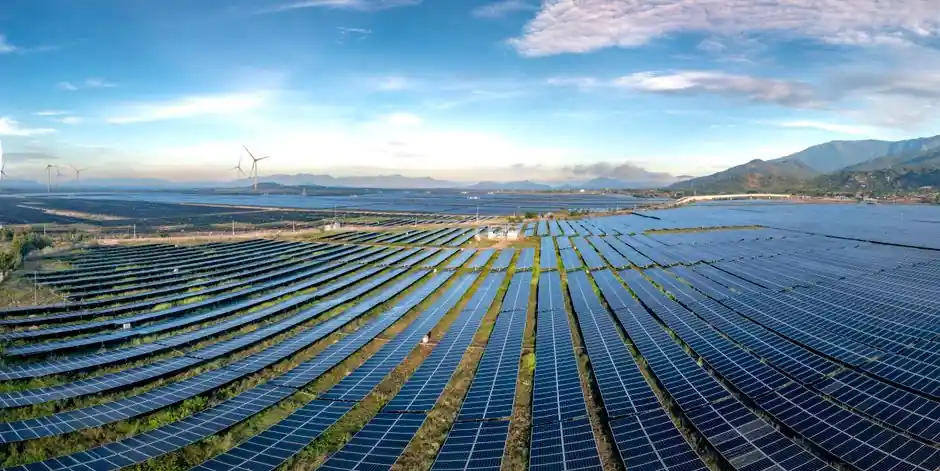
China's installed power capacity reached 3.99 TW in 2025 and is forecast at 4.33 TW in 2026, with renewables holding 53.78% of capacity mix and coal still delivering 60% of actual generation [S5]. For any importer, EPC contractor, or utility-procurement engineer, those three numbers dictate which categories of grid hardware are realistic to source, and which are not.
The U.S. comparison frame matters too: a 7,300-plant grid network, 160,000 miles of high-voltage lines, and 145 million customers depend on a generation mix where natural gas led at 38% in 2019 and wind (7.3%) had just passed hydro (6.6%) [S1]. Buyers replacing or augmenting that kind of fleet with Chinese-made switchgear, inverters, transformers, and cables need spec-level clarity, not factory-tour brochures.
What "grid sourcing from China" actually covers
Grid hardware sourced from China spans at least seven distinct product families: utility-scale inverters, distribution and power transformers, HV/MV/LV switchgear, power cables and busways, protection relays, smart meters, and energy-storage systems (ESS) including BMS and PCS units. Each family has its own certification regime, factory cluster geography, and lead-time profile. Treating "China grid equipment" as a single category is the first mistake importers make. [S2]
The switching-power market alone, a slice of this equipment ecosystem, reached RMB 253.2 B in 2025, projected at RMB 267 B in 2026, with total power-equipment exports near RMB 387 B for 2025, up nearly 19% YoY [S3]. Energy-storage inverters were the fastest-growing sub-segment at over 40% YoY, which is directly relevant for grid-tied BESS projects. The implication: supplier density exists, but the storage-inverter niche is the most volatile on quality.
Supplier tiers: factories vs. trading companies vs. brand OEMs
Verified Chinese factories (those with in-house SMT lines, transformer winding, and a CNAS-accredited test lab on site) typically offer 7-12 day lead times and a full CE/UL/SASO certification package [S3]. Trading companies quote faster and undercut by 8-15%, but they have no control over component substitution, which is exactly how a 120 W nameplate unit ends up delivering 70 W on a load test [S3].
EU and US local brands carry a 45-70% price premium and lead times stretching to 45 days; Southeast Asian OEMs sit 12-28% above Chinese factory pricing with 15-30 day lead times and partial certification coverage [S3]. For a procurement manager running a competitive bid, the matrix is straightforward: pick the tier that matches your QC bandwidth, not the tier that posts the lowest FOB price.
Core product families and their selection criteria
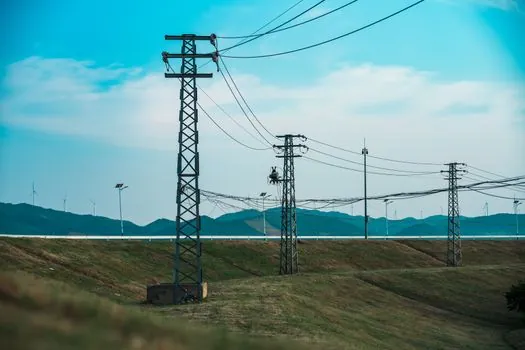
For distribution transformers, the procurement spec must lock in core steel grade (typically CRGO M4-M6), winding material (copper vs. aluminum), vector group, and impedance percentage; 6-8% impedance is standard for most distribution units. [S1]
For power cables, the critical parameters are conductor cross-section (mm²), insulation material (XLPE vs. PVC), voltage class (0.6/1 kV LV, 3.6/6 kV to 26/35 kV MV), and fire-performance rating (LSZH, IEC 60332-3). Solar PV systems, a major export category, bundle panels, inverters, lithium batteries, mounting structures, and protection devices into matched kits, and buyers must confirm the inverter complies with the destination country's grid-connection standard before signing a PO [S2].
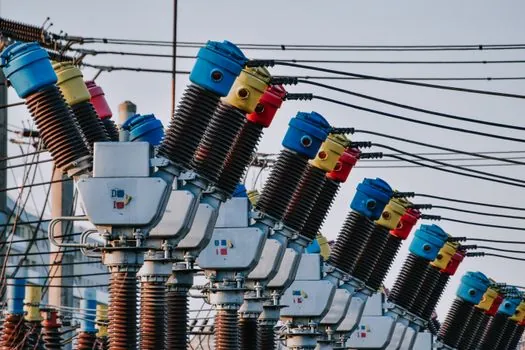
For switchgear, low-voltage (LV) panels typically use 415 V AC at 50/60 Hz with 50/65 kA short-circuit withstand; medium-voltage (MV) gear covers 3.6 kV to 40.5 kV with vacuum or SF6 interruption. Smart power meters for AMI rollouts should be specified with IEC 62053-22 Class 0.2S or 0.5S accuracy, DLMS/COSEM or Modbus protocol, and at least 8 kV surge immunity.
Comparison matrix: China vs. EU/US vs. Southeast Asia
On a 100 kW three-phase inverter, a verified Guangdong factory typically lands 30-40% below an EU equivalent and 10-18% below a Vietnamese OEM, with full CE/UL documentation included [S3]. On commodity 12 V adapters under 100 W, the gap collapses to single digits, and sourcing advantage shifts to volume rebates and QC consistency rather than headline unit price [S3].
For ESS containers (1 MWh lithium LFP, liquid-cooled), Chinese system integrators hold the strongest cost position globally, with cell-level LFP pricing 30-50% below Western pack assemblers, though UL 9540A large-scale fire-testing certification and IEEE 1547 grid-code compliance remain mandatory for North American projects. On 110 kV power transformers above 50 MVA, the supply base narrows dramatically and lead times extend to 6-9 months even from tier-1 Chinese OEMs.
Who this sourcing route is for, and who should avoid it
This route fits EPC contractors building solar-plus-storage plants in markets with IEC-based grid codes, distributors assembling residential or commercial solar kits, and industrial buyers replacing MV switchgear or distribution transformers on a 3-6 month delivery window. It does not fit buyers who need nuclear-class safety documentation, utilities bound by tight domestic-content rules, or projects under 1 MW where local stockist pricing is competitive enough that shipping 12,000 km does not pencil out. [S2]
The China-linked grid technology security question, raised in the May 2026 CMU Electrotech Moneyball paper, applies most directly to digitally connected grid assets: smart inverters, AMI meters, power distribution RTUs, and grid-edge IoT power mixers of control functions [S4]. For projects with national-security scoping, segregation or domestic-source requirements may apply, and buyers should confirm with their procurement compliance office before issuing RFQs.
Factory clusters and the supply-chain density advantage
Guangdong produces roughly 35% of China's power-supply output, with Shenzhen and Dongguan hosting the densest cluster of transformer winders, PCB houses, plastics mold shops, cable assemblers, and certification labs within a 30-minute drive of each other [S3]. This density is the structural reason a Chinese factory can quote, sample, and ship faster than almost anywhere else on the planet.
For solar systems specifically, the supply chain is described as one of the most complete in the world, covering raw cells to finished mounting hardware, with multiple panel technologies, inverter types, and battery capacities available from competing suppliers [S2]. That same density means any given component can be sourced from 3-7 vendors within a single industrial park, which gives buyers leverage on pricing and on second-source qualification.
Certifications, factory audit red flags, and quality control
Non-negotiable certifications for grid hardware include CE, UL, IEC 61850 (substation communication), IEC 62443 (cybersecurity for grid-edge devices), and IEEE 1547 (interconnection). For solar systems, mandatory documents per destination include grid-connection certification, type-test reports for panels (IEC 61215), inverter safety (IEC 62109), and battery transport compliance (UN 38.3) [S2].
A SCADA software suppliers and manufacturers 2026 platform map is worth cross-referencing when sourcing RTU or gateway hardware, since protocol mismatches at the substation bus are among the top commissioning delays reported on Chinese-supplied projects.
Lead times, MOQ, and shipping logistics
Standard MOQs for Chinese grid hardware: 50 units for utility inverters, 100 units for smart meters, 20 units for distribution transformers, and 5 km drums for power cables (though many suppliers accept 1-2 km on LV classes). Lead times run 15-25 days for inverters and smart meters, 30-45 days for distribution transformers, and 60-90 days for MV switchgear panels. Sea freight from Shenzhen or Shanghai to North America runs 22-30 days; to Europe 28-35 days; to Africa 35-45 days. [S2]
For solar kits, packaging customization and private-label options are widely available from Chinese system suppliers, and shipping container loading is typically optimized to 28-32 cubic meters per 40 HQ [S2]. One overlooked variable for solar specifically: panel dimensions affect container loading density, so buyers should confirm pallet and carton dimensions against their logistics plan before locking the PO.
Trackable signals for the next 6-12 months
Three signals to watch: (1) U.S. Section 301 tariff adjustments on Chinese grid components, the China renewable portfolio quota expansion and provincial green-certificate trading volume, and the 12.12% CAGR forecast for renewables capacity additions through 2031 [S5], which directly expands the supplier base in solar inverters, BESS, and UHV transmission hardware. Buyers planning 2027 delivery should track the NDRC's annual renewable auction calendar, which has replaced feed-in tariffs since 2025 [S5], as it drives both domestic Chinese pricing and exportable surplus volume.