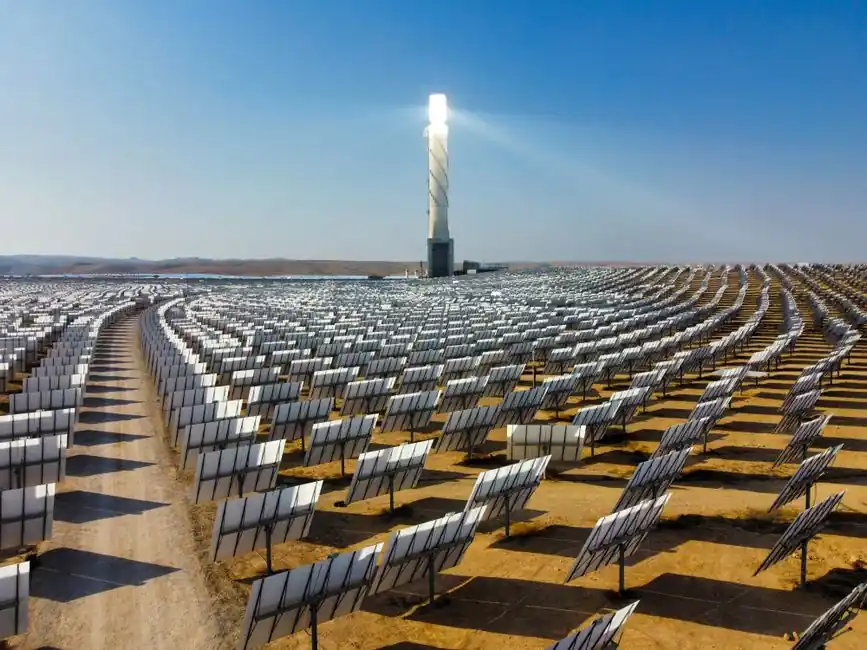
China's falling renewable-energy costs allow it to leverage a 50 per cent share of global green hydrogen production capacity as of April 2026, making the country the dominant upstream node for any international buyer [S1].
The acceleration sits inside the 15th Five-Year Plan (2026 to 2030) and a March 2026 city-cluster pilot programme that channels up to CNY 1.6 billion (US$232 million) per cluster into fuel-cell, steel, green ammonia, methanol, shipping and aviation applications [S2].
Capacity and the new "scale-up" policy posture
China's energy regulator moved the national hydrogen plan into a "scale-up" phase in April 2026, framing the molecule as a "strategic lever" for energy security [S1]. Demonstration projects in Inner Mongolia and Ningxia had been stood up by the end of 2025 as the proving grounds for grid-connected renewable hydrogen production [S5].
Capacity figures published in mid-2026 cite approximately US$33 billion of the US$110 billion in committed global hydrogen investment flowing to China, roughly one-third of the worldwide pipeline, alongside the country's leading position in deployed electrolyser count [S5]. For a sourcing manager, that translates into a market where Chinese OEMs are simultaneously the largest stack makers, the largest project developers, and the largest off-takers, so domestic pricing tends to set the global marginal cost.
What "green" means under the new rules
On 23 June 2026, China issued renewable energy consumption rules for industry that explicitly include renewable hydrogen and its derivatives in the minimum consumption accounting, a structural change that effectively underwrites domestic offtake for electrolyser developers [S3].
The policy builds on the 2021 to 2035 long-term hydrogen plan first released in 2022 and on the 2024 Energy Law, which formally placed hydrogen inside the national energy management framework [S5]. For a foreign buyer this matters because Chinese "green hydrogen" contracts will increasingly reference the new consumption rules rather than ad hoc renewable-energy certificates, and the renewable share of input electricity will become a contractual spec line item rather than a marketing claim. Process gas buyers should expect to see explicit H2 purity, isotope/CO2 footprint, and renewable-electricity share figures attached to each shipment under these revisions.
Project typologies: ALK vs PEM vs SOEC at the megaton scale
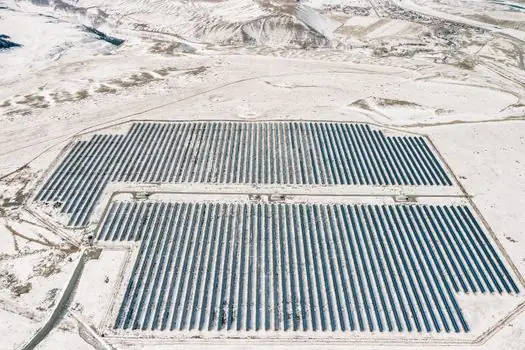
Shaanxi Hydrogen Energy Green Source Technology lists a 6.9 billion RMB flagship, the Yulin Zero-Carbon Industrial Park Hydrogen Project, sized at 100,000 tonnes per year and claimed to avoid 2 million tonnes of CO2 annually, integrating ALK, PEM and SOEC electrolysis on a single site in Northwest China [S4]. That configuration is now the template that Chinese provincial governments benchmark new bids against: hybrid ALK for baseload, PEM for fast ramping on wind/solar variability, and SOEC for high-temperature integration with industrial heat sources.
ALK remains the lowest capex per kW of output and dominates Chinese installations; PEM is preferred when the upstream solar/wind resource is intermittent and the electrolyser must follow a moving renewable signal; SOEC is being trialled at the smallest scale but has the highest electrical efficiency band and is the technology most often paired with industrial waste-heat or nuclear process steam [S4]. International buyers evaluating Chinese stacks should score suppliers on all three cell types, not just ALK, because the policy push toward "wind-solar-hydrogen-ammonia-alcohol" integrated bases explicitly rewards multi-technology portfolios [S5].
Subsidy, pilot scheme and what is actually bankable
The March 2026 city-cluster programme is a five-cluster reward scheme layered on top of the 2021 to 2035 plan, retaining the fuel-cell vehicle focus while adding steel, metallurgy, green ammonia/methanol, shipping and aviation use cases [S2]. Total central-government awards under the prior 2021 pilot were about CNY 5.1 billion (US$719 million) over more than three years; the new envelope is roughly CNY 8 billion (US$1.17 billion) over four years, with a per-cluster ceiling of CNY 1.6 billion [S2].
That subsidy size is one to two orders of magnitude smaller than the CNY 32 billion (US$5 billion) China injected into EVs from 2016 to 2020, so the policy is best read as a market-shaping signal, not a project-finance backstop [S2]. Downstream green-steel demand, not the grant, is the actual offtake engine, and as Transition Asia's Isadora Wang framed it, "subsidies can help, but they cannot carry the industry forever" [S2]. For a sourcing plan, treat the subsidy as a short-term margin tailwind on Chinese supply, not as a permanent cost floor.
Where the buy should land: industrial clusters, not commodity export
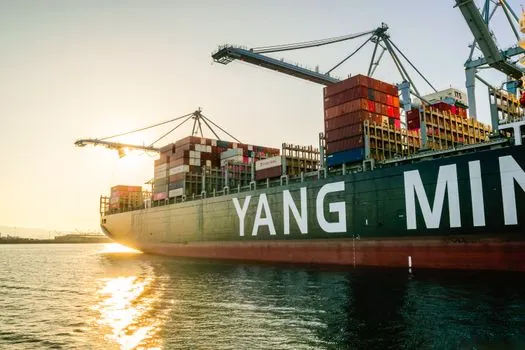
Chinese green hydrogen is currently a domestic-offtake product, not a seaborne commodity, and the 2025 to 2026 demonstration projects in Inner Mongolia and Ningxia were deliberately sited next to wind/solar bases rather than export terminals [S5]. Industrial gas buyers should plan around three concrete cluster archetypes: Yulin-style zero-carbon industrial parks in Shaanxi combining ALK/PEM/SOEC for steel and chemicals feed; the wind/solar-hydrogen-ammonia-methanol integrated bases endorsed by the National Energy Administration for downstream fuel synthesis; and city-cluster pilot sites in the five designated regions where the 2026 subsidy ceiling is most easily accessed [S4][S5].
Buyers who only want a molecule delivered to a European or North American port will find that the export supply chain is still being built and that unit cost is dominated by liquefaction or ammonia/methanol carrier conversion rather than the electrolyser stack. Buyers who colocate offtake inside the Chinese cluster, for example as green ammonia offtake for downstream chemicals, will see materially better unit economics. This mirrors the architecture choices facing any large-scale gas buyer, including the routing and compression trade-offs that govern industrial valve and flow meter spec selection on multi-node supply lines.
Supplier screening criteria a sourcing engineer should use
Four hard screens are emerging from the 2026 policy mix: (1) demonstrated ALK/PEM/SOEC multi-technology capability, not a single-stack roadmap, because the integrated-base model requires all three [S4]; (2) a contractually stated renewable-electricity share consistent with the 23 June 2026 consumption rules [S3]; (3) participation in a designated city-cluster pilot, since that is the gateway to the CNY 1.6 billion per-cluster envelope [S2]; and (4) reference capacity in the 10,000+ tonnes per year band, where Chinese suppliers like the Shaanxi flagship are now operating [S4].
Stack count is no longer a proxy for capability, since Chinese capacity additions in 2025 to 2026 have outrun average quality. Process instrumentation buyers evaluating the same kind of multi-supplier shortlist can apply a similar gating logic, weighting reference projects over headline capacity, which is the same pattern used in pressure transmitter selection for hazardous-area process skids. The same logic applies to motion-control sourcing for downstream hydrogen handling skids, where reviewing the OEM lineup, payload tiers and a current sourcing map is now standard practice, much like the field-guide approach used for articulated robot suppliers.
What is NOT in scope for a 2026 green hydrogen buy
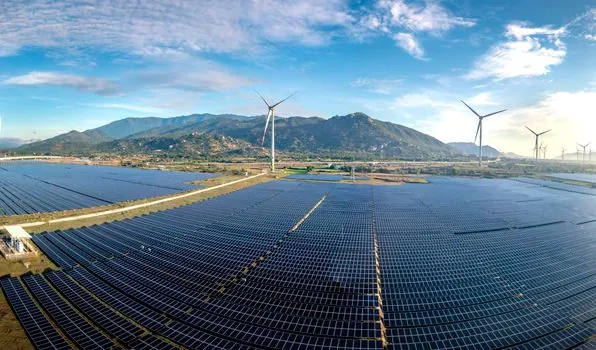
Spot-traded, seaborne green hydrogen molecules at scale remain unavailable from China in 2026, the global hydrogen market is still in a cost-and-infrastructure-constrained phase rather than a commoditised phase [S6]. Buyers who require an E.U. RFNBO-compliant or U.S. 45V-compliant certificate of origin should not assume a Chinese standard is automatically aligned, since the Chinese rules count renewable hydrogen and its derivatives toward industrial consumption but do not yet mirror the EU delegated act or U.S. Treasury 45V definitions point-for-point [S3][S6].
Buyers also should not assume the subsidies follow the molecule; central-government awards are project-based and tied to city-cluster milestones, so a contracted offtake does not automatically inherit the grant [S2]. Finally, buyers should not treat "China supply" as a single risk bucket, the policy mix rewards provincial clusters and integrated bases, so credit and execution risk is best read cluster-by-cluster rather than country-wide.
Trackable signals for the next 12 months
Three verifiable signals will indicate whether the scale-up phase is converting capacity into bankable supply: (a) publication of the first tranche of city-cluster milestone reports under the March 2026 programme, expected against the four-year award window; (b) the first full year of compliance reporting under the 23 June 2026 renewable consumption rules for industry, which will show whether renewable-hydrogen volumes are actually being counted [S2][S3]; and (c) the next China International Hydrogen Congress and Expo cycle, where 2026 figures such as the US$33 billion committed-investment tally will be revised and where provincial capacity additions in Inner Mongolia, Ningxia and Shaanxi will be re-baselined [S5].
Spec-level background on the components involved: linear guide.