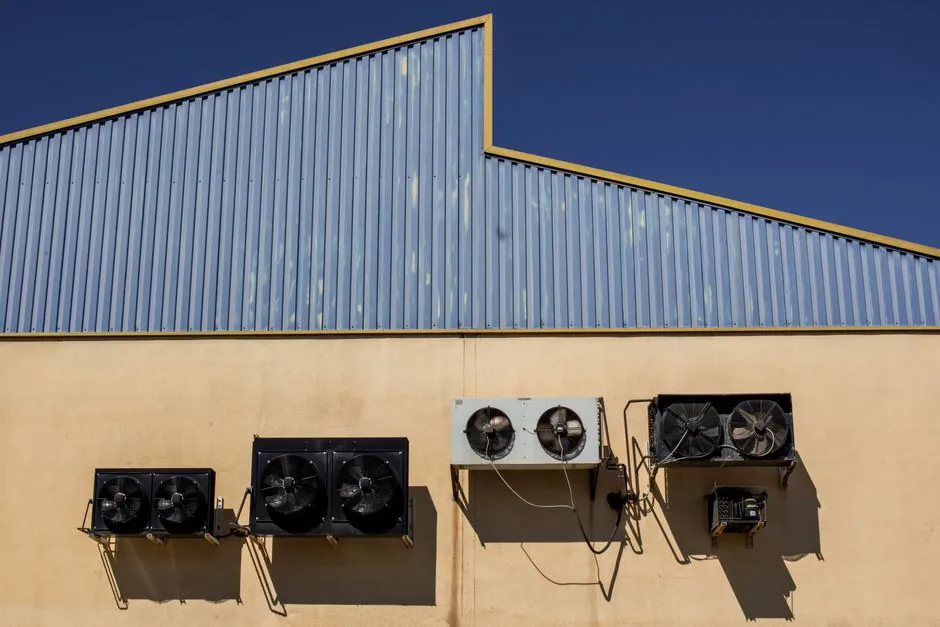
China supplies a broad stack of industrial and commercial refrigeration equipment, from supermarket display cabinets and island freezers to cold-room condensing units and process chillers, with established clusters in Qingdao, Suzhou, Guangdong, and Hefei [S1][S5]. For an importer, the first decision is not the brand but the product category: commercial front-of-house cooling (display cabinets, beverage coolers, ice-cream freezers) and industrial cold-chain equipment (cold-room units, condensing units, scroll/screw chillers) follow very different supplier pools, certifications, and MOQ profiles [S1][S2].
Supplier platforms (Alibaba, Global Sources, Made-in-China) are the typical starting point, but a 2026 industry guide notes that the best-fit manufacturer is rarely the largest one; it is the one whose product range, OEM/ODM ability, voltage adaptation, and export packaging align with the buyer's category, order volume, and target climate class [S1][S7]. A 2024 sourcing reference likewise stresses that verifying the supplier before any deposit is what separates successful first-time importers from the rest [S2][S8].
Product Categories and Matching Supplier Tiers
Chinese refrigeration output splits into four practical buyer-facing bands: household refrigerators, commercial front-of-house equipment (display cabinets, beverage coolers, ice-cream freezers, island freezers, upright display chillers), cold-room condensing units and evaporators, and process chillers. Snowsea's 2026 manufacturer map lists these as the dominant OEM/ODM categories in Qingdao and Suzhou, and explicitly notes that the household segment is dominated by Haier, Midea, Hisense, AUCMA, and Xinfei, while commercial display and cold-room work is split across a much longer tail of specialist factories [S1].
For industrial buyers, the most relevant tier is the commercial-refrigeration and cold-room specialist (Snowsea, CORESUN, Homa, Wanbao and similar Suzhou/Qingdao factories), not the household majors. These specialists typically offer OEM/ODM customization, private-label branding, multi-voltage adaptation (220V/50Hz, 220V/60Hz, 110V/60Hz), and 20'/40'/40HQ container loading support, which is what an exporter actually needs [S1][S2]. Buyers should reject suppliers that cannot state climate class (N/ST/T for tropical markets), refrigerant type, and cabinet liner material on the quotation.
Selection Criteria: What to Verify Before the Deposit
A 2024 buyer's guide to importing commercial refrigeration from China lays out ten core evaluation points: product range, cooling and freezing performance, OEM/ODM customization ability, private-label support, cabinet size and structure flexibility, voltage and plug adaptation, QC process, export packaging, container loading support, and long-term supply stability [S2][S1]. The first three are deal-breakers; the rest decide whether the deal is profitable.
Concretely, a buyer should request, in writing: (1) the climate class rating (Class N 16-32°C, Class ST 16-38°C, Class T 16-43°C) for each model; (2) the refrigerant code (R290, R404A, R134a, R448A, R744/CO2, and the F-gas phase-down risk for EU buyers); (3) the cabinet insulation foam type and thickness (CFC-free cyclopentane-blown PU, typically 40-60 mm for display, 75-100 mm for cold-room panels); (4) the compressor brand and warranty terms; (5) CE/RoHS/UL/ETL/SASO/PVOC/SONCAP certificates matched to the destination market; and (6) a pre-shipment inspection (PSI) clause tied to an AQL sampling plan, not a hand-wave "QC before shipping" [S1][S2][S5]. Reference industrial filter procurement workflow applies the same PSI discipline to a different component family, and the QC pattern is identical.
Who This Sourcing Path Is For, and Who It Is Not

China sourcing fits: distributors and supermarket-equipment buyers sourcing private-label display cabinets and freezers at 100-2,000 unit MOQs; HoReCa buyers sourcing glass-door merchandisers and under-counter units in 40'HQ container batches; food processors sourcing cold-room panels and split condensing units; and project buyers sourcing modular cold rooms for African, Middle Eastern, and Latin American cold-chain projects, which CORESUN and similar Suzhou suppliers actively target via FHA-HoReCa Singapore and Gulf Host Dubai [S1][S5].
China sourcing is the wrong path for: buyers needing ATEX/IECEx-rated explosion-proof refrigeration for Zone 1/Zone 2 hazardous areas (most Chinese factories are not in that certification set; default to European or US brands); buyers needing ammonia (R717) industrial refrigeration with ASME pressure-vessel code work (Chinese ammonia chiller supply exists but documentation and after-sales spares coverage outside China are thin); and buyers needing sub-100-unit runs of highly engineered units (the per-unit tooling amortization kills the savings at very low MOQ, regardless of what the sales rep says) [S1][S2]. Buyers who need genuine explosion-proof industrial refrigeration with documented IECEx certification should pivot to a different edge gateway procurement map and apply the same spec-first discipline elsewhere.
Criteria-Based Comparison of Main Sourcing Routes
For commercial display and front-of-house cooling, three routes dominate, and the right one depends on volume, brand need, and destination market. (1) Direct OEM/ODM factory (Snowsea, CORESUN, Homa, Wanbao) gives the lowest unit cost and full private-label control, at MOQs of roughly 100-300 units per SKU and lead times of 30-45 days after deposit; tooling charges (molds, dies, silk screens) are typically USD 3,000-15,000 amortized across the first run [S1][S3]. (2) Trading-company export hubs (Guangzhou, Yiwu) buy finished units from several factories, rebrand, and consolidate mixed-container loads, which is faster (15-25 days) and tolerates lower MOQs (20-50 units), but removes direct factory QC leverage and adds 8-15% margin [S2][S7]. (3) Alibaba/Global Sources marketplace sourcing offers the lowest entry friction, but a 2024-2026 sourcing guide flags this as the highest-risk channel because verification (business license, on-site audit, third-party inspection) is on the buyer, not the platform [S7][S8][S9].
The decision pivots on four criteria: brand control (factory wins), order volume (factory wins above 200 units/SKU, trader wins below), mix flexibility (trader wins), and after-sales risk (factory wins for long-term supply, trader wins for one-off project containers) [S1][S2][S3][S7]. For industrial-process cooling specifically, the industrial chiller supplier map covers the upstream process-chiller tier that sits above display refrigeration.
Logistics, Compliance, and Refrigerant Constraints
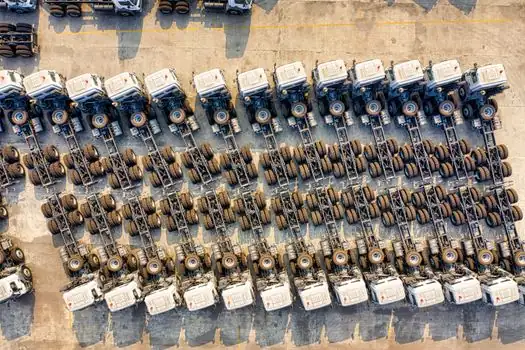
Refrigeration equipment is high-cube and damage-prone: a 40'HQ container typically loads 50-90 upright display units or 80-150 chest freezers depending on cabinet dimensions, and any supplier that cannot provide a container-loading plan with weight distribution and foam protection spec is not ready to export [S1][S2]. Sea freight from Qingdao or Shanghai to most major ports runs 18-35 days plus 7-14 days for destination clearance and last-mile delivery, so plan a 45-60 day order-to-shelf lead time from deposit to in-country warehouse [S2][S4].
Compliance is where most first-time importers lose money. CE marking is mandatory for EU-bound display cabinets, but CE without a third-party test report from a notified body is a common paper-only offering; SASO (Saudi), SONCAP (Nigeria), PVOC (Kenya/Tanzania), and INMETRO (Brazil) are destination-specific, and the supplier's "we have all certificates" line should be replaced with a request for actual certificate PDFs tied to specific model numbers [S1][S2][S5]. For refrigerant policy, EU F-gas Regulation 517/2014 phase-down pushes commercial buyers toward R290 (propane, GWP 3) or R744 (CO2, GWP 1) in new equipment; R404A service stock remains common but is regulated and taxed in the EU, and a 2026 export shipment of R404A-charged cabinets to a tropical market should be reviewed against the buyer's local Kigali Amendment obligations [S1][S2].
Common Failure Modes and How to Avoid Them
Three failure modes account for most first-container disappointments. (a) Spec drift: the quoted cabinet has a thinner insulation foam, a different compressor brand, or a lower climate class than the sample; lock the spec sheet by model number with photos, weights, and serial-number ranges, and require a golden sample retained at the factory for reference [S1][S2]. (b) Voltage and plug mismatch: a 220V/50Hz unit shipped to a 110V/60Hz market without a step-up transformer or compressor swap will fail on first start; confirm destination voltage, plug pattern, and refrigerant charge pressure at quotation, not at goods-ready [S1][S7]. (c) Refrigerant leaks and compressor warranty disputes in transit: insist on a 24-hour leak-down test on every unit (typically 0.8-1.0 MPa nitrogen hold, soapy-bubble inspection at welded joints) and compressor brand with serial-number registration before container stuffing [S1][S5].
Reference quality-inspection.org's 15-part sourcing series notes that background checks, on-site audits, and third-party pre-shipment inspections are the three highest-ROI steps for a new China buyer, and that skipping any one of them roughly doubles the chance of a defective first container [S6][S2]. The cutting tools sourcing map walks the same cluster-and-QC logic for a different product family, which is a useful parallel reference.
Sourcing Signals to Track in 2026
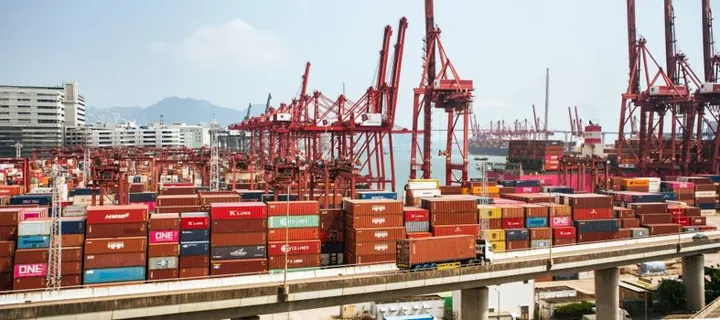
Three verifiable signals are worth tracking. Second, watch the FOB Qingdao/Shanghai container freight index; a swing of more than USD 800 per 40'HQ versus the prior quarter usually changes whether a mixed trading-company container or a direct factory container is the lower landed-cost option. Third, track which Chinese suppliers exhibit at FHA-HoReCa Singapore, Gulf Host Dubai, and HOST Milan in 2026-2027; CORESUN and similar Suzhou factories use these shows to roll out new climate-class-T and inverter-driven models aimed at tropical and Middle East markets [S5].
Spec-level background on the components involved: linear guide, crossed roller guide, and industrial adhesive.