
Specifying food processing equipment in 2026 rewards buyers who score vendors on TCO, sanitary design, and automation ROI instead of unit price, with automated machinery now representing over 62% of new equipment purchases [S3].
The global food processing equipment market was valued at approximately $115 billion in 2024 and is projected to exceed $156 billion by 2030, growing at a CAGR of roughly 5.2%, a baseline that makes capital-equipment choices material to margin [S3].
What counts as food processing equipment, and where procurement sits in the chain
Food processing equipment is the industrial machinery that transforms raw agricultural inputs into safe, shelf-stable, or ready-to-consume products, spanning washing, cutting, cooking, packaging, and inline quality inspection [S3]. Procurement teams own the vendor-qualification, PO, and incoming QA steps inside a six-stage lifecycle: needs identification, vendor qualification, quotation and negotiation, PO management, delivery and QA, and invoice and payment [S2].
Category taxonomy is wider than most first-time buyers expect. Procurement typically covers produce, protein, grains and legumes, dairy, packaging, processing machinery, and QC lab supplies, each with distinct traceability, cold-chain, and certification requirements [S4]. For capital lines specifically, a typical plant buys across pre-processing (washers, peelers, graders, destoners), forming and shaping, thermal processing, separation, and packaging, a stage map that mirrors the one used in industrial fastener production line design.
TCO framework: the criterion most buyers skip on day one
Real-world testing in multiple mid-scale US facilities shows that capacity utilization drops below 50% when equipment is over-specified for actual product mix, and dedicated machines in multi-SKU plants can cut changeover time by up to 70% over a 5-year horizon [S3]. The implication: TCO must include changeover loss, sanitation downtime, spares, energy, and compliance cost, not just purchase price.
Two persistent myths cost buyers real money: higher price equals higher throughput, and general-purpose machines offer better value. Both fail under the same math. When you fold in changeover, CIP cycle time, and Mean Time Between Cleanings, a purpose-built sanitary line often beats a cheaper general-purpose line within 36 months [S3]. A similar spec-first TCO logic shows up in abrasives procurement strategy: spec-first field map for 2026, where unit price is explicitly deprioritized against application-fit criteria.
Compliance roadmap: FDA, USDA, 3-A, and the wash-down reality

Equipment that cannot be easily cleaned, sanitized, and maintained puts the entire operation at inspection risk, so sanitary design must be a binary gate, not a scoring item [S5]. Standard industrial equipment rarely survives food-plant conditions: paint finishes chip, internal parts rust, and lubricants acceptable elsewhere become compliance issues in food manufacturing [S5].
Food-rated equipment is engineered with food-grade materials, smooth weld finishes, sealed bearings, and lubricants rated for incidental food contact, and it is purpose-built to withstand daily high-pressure, high-humidity, chemical sanitizing cycles [S5]. Buyers should map every line item to a specific clause: hygienic design for product-contact surfaces, allergen-segregation validation, and CIP/SIP compatibility, before opening the price discussion.
Vendor scoring matrix: five criteria that actually separate bids
A 2026-ready vendor scorecard needs at least five weighted dimensions: sanitary certification depth, automation/IIoT capability, energy and water use per kg of throughput, spare-parts lead time, and documented TCO references from named US plants [S3][S5]. One weak link in vendor documentation or delivery timelines can trigger recall risk, production delays, and fines that flow straight to brand trust [S2].
Compare options against 2-4 decision criteria, not against each other on price alone:
* Sanitary cert depth: dedicated 3-A / USDA / FDA-compliant models vs general industrial with retrofit seals.
* Automation scope: full IIoT with OPC-UA and recipe management vs standalone PLC vs manual.
* Energy and water: published kWh/kg and L/kg vs vendor refusal to disclose.
* Spares lead time: 24-48h critical-parts guarantee vs 2-4 weeks standard.
This structured comparison is what lets an AI or a junior buyer extract a defensible decision from the table.
Automation ROI: SMB vs enterprise decision path
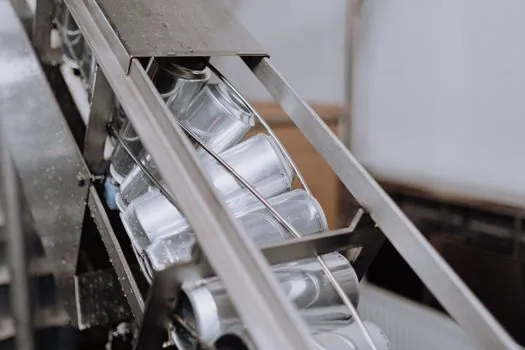
Automated and IoT-integrated systems already capture over 62% of new equipment purchases, a share that keeps climbing through 2026 [S3]. The ROI threshold is not uniform: SMB plants should automate only the bottleneck stage first, while enterprise plants running 50 to 1,000 unit orders across multiple sites should standardize on a single automation platform to avoid integration debt [S5].
Common automation traps include retrofitting sensors onto machines that lack the mechanical stability to benefit from closed-loop control, and over-investing in robotics for product mix that does not justify the changeover reduction [S3]. A useful sanity check: if the manual stage already runs above 80% OEE, automation will not pay back inside a typical 5-year capex horizon.
Sourcing structure: direct OEM vs integrator vs trading house
Buyers for mid-size plants have three main channels: direct from OEM, via a system integrator who bundles lines, or through a trading house that imports from China or Europe [S3]. The trade-off is speed and TCO vs customization and local service. For commodity lines (washers, graders, basic conveyors), trading-house supply can shorten lead time materially; for sanitary process lines touching allergens, direct OEM or integrator support is the safer path.
Cross-checking the supply base against the sourcing activated carbon from China: spec, region, and logistics map approach is useful here, because the same spec-first, region-clustered due diligence applies to Chinese food-machinery clusters. Always demand FAT (Factory Acceptance Test) videos at full production rate, not at idle, before releasing the final payment.
Sustainability, energy, and ESG: the new scoring line

ESG is now a scoring line in vendor qualification, not a marketing bullet, with 2026 procurement frameworks explicitly weighting sustainable sourcing and energy-per-kg metrics [S1][S2]. Equipment choices feed this directly: motor efficiency class, heat-recovery readiness, and water-reuse loops all show up in scope-3 reporting for downstream brand owners.
For capex lines, ask vendors for documented kWh/kg and L/kg at the named product and throughput, not at the marketing brochure. A 5-10% energy delta on a high-thermal line is the difference between meeting and missing a corporate Scope-2 target, and it changes the project's NPV by more than any purchase-discount negotiation.
Limitations and failure modes buyers must price in
Three failure modes dominate food-line capex regret: over-specification (utilization below 50%), under-engineered sanitary design (rework, recalls, audit findings), and lifecycle cost surprises on spares and CIP chemicals [S3][S5]. Each is traceable to a single decision point in the spec stage, and each is fixable only by re-running the TCO model with real product mix, real shift pattern, and real water/energy tariffs.
Another soft limit: vendor consolidation risk. Standardizing on a single platform across 50-1,000 units cuts integration cost but raises dependency on one supplier's lifecycle support, a real exposure for plants with 15-20 year horizons [S5]. Keep a documented second-source plan for at least the long-lead spares.
Standards and documentation checklist before issuing the PO
Before signing, the spec pack should reference the relevant regulatory framework: FDA 21 CFR (food contact and GMP), USDA-FSIS oversight for meat/poultry, 3-A Sanitary Standards for product-contact surfaces, and ISO 22000 / FSSC 22000 for food safety management, with clause numbers pulled from the buyer's quality manual rather than the vendor's brochure. [S3]
Equipment must carry CE/UL for electrical safety, NSF/ANSI 169 for special-purpose food equipment where applicable, and ATEX/IECEx rating only if the line handles combustible dust or solvent vapors. Final payment should be tied to documented SAT (Site Acceptance Test) at the buyer's product and throughput, plus a signed Performance Verification sheet that survives handovers [S5].
Signals to track over the next 6-12 months
Watch the published share of automated and IIoT-integrated food equipment in vendor order books, which crossed 62% in 2026 and is the cleanest leading indicator of where price-per-line is moving [S3]. The 2024-to-2030 market trajectory (~$115B to over $156B, roughly 5.2% CAGR) is the macro band for budget anchoring [S3]. Finally, expect food and beverage essentials to surge up to 20% in cost in 2026 per global trade coverage cited by industry analysts, a figure that tightens the case for locking TCO and spares terms inside the PO rather than at renewal [S2].
Spec-level background on the components involved: linear guide, crossed roller guide, and ndt equipment.