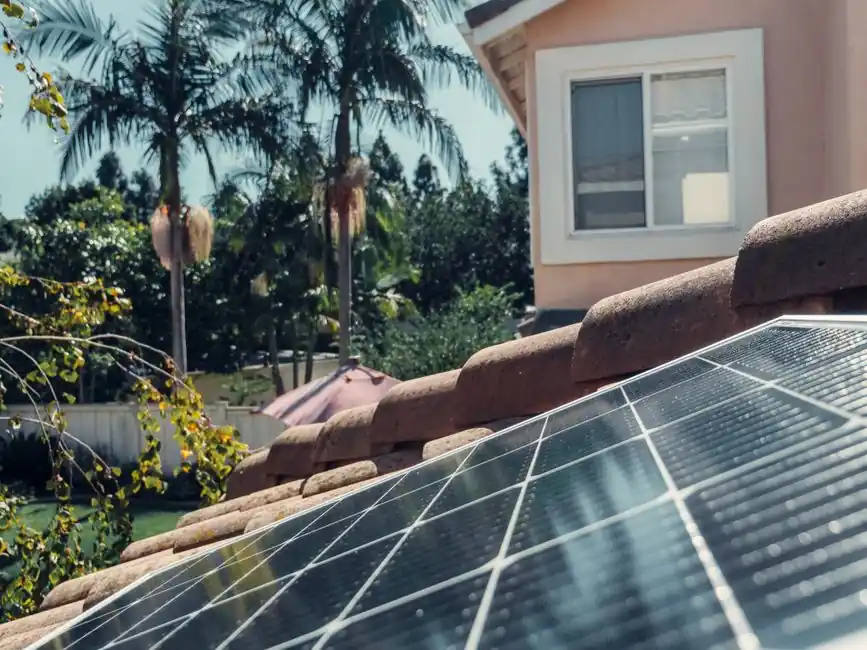
China produces roughly 97% of global silicon wafers, and its 2025 PV module exports reached RMB 580 billion, making Chinese factories the default upstream source for any importer of monocrystalline, TOPCon, or bifacial modules [S4].
For buyers in 2026, the practical question is no longer whether to source from China but how to match module technology, certification scope, and channel markup to the product you actually sell, because the supplier field is crowded and uneven and a counterfeit TÜV/IEC report can seize a whole container at the destination port [S4].
Module Technologies and What the 2026 Mix Looks Like
N-type TOPCon modules grew 62.3% year-over-year to become the single largest export category in 2025, taking roughly 44.7% of China's module export value, while standard P-type monocrystalline held about 31.5%, polycrystalline fell to 16.2%, and special flexible/balcony panels occupied 7.6% [S4]. Tier 1 manufacturers such as JinkoSolar now lead with N-type TOPCon modules aimed at utility-scale and commercial projects, while vertically integrated makers including Yangtze Solar (5W to 700W range, mono/poly/bifacial/BIPV/flexible) cover broader wattage and form-factor needs [S3].
For rooftop residential, off-grid, and OEM/private-label work, the relevant cell technologies are still monocrystalline (PERC and the newer TOPCon) and a long tail of poly and flexible formats; the export shift means that poly supply is contracting and TOPCon capacity is what factories are allocating to new orders [S4]. Buyers specifying poly for cost-sensitive African off-grid projects should confirm the line is still running, not just listed in a catalogue [S2][S4].
Certifications, Grade-A Cells, and the Counterfeit Problem
Around 61% of customs detentions tied to solar shipments involve fake or misrepresented certificates, so verifying that the IEC/TÜV certificate is held by the brand or the factory, covers your exact model number, and is issued by a scheme the production site is registered under is the single highest-value check before a deposit moves [S4]. Good factory disclosure on certificates names the holder, the model, the standard, and the producing site, while a supplier who will not name the cell brand and grade is choosing on price every reorder [S2].
Grade A, B, and C modules can look identical until an electroluminescence (EL) scanner reveals internal cracks, so a third-party pre-shipment inspection with EL imaging and a flash test is the practical way to confirm a "580W" panel is actually a 580W panel, and not a 520W unit with a re-rated label [S2][S4]. A 25-year power output guarantee and 15-year product warranty are standard among major Chinese module makers such as Anern, with lithium batteries typically backed 5 years and inverters 1 to 5 years depending on model [S3].
Factory Type, Channel Markup, and Who Should Buy Where
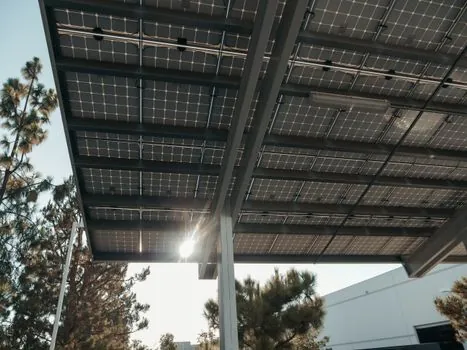
The factories topping "biggest manufacturer" lists (JinkoSolar, LONGi, Trina, Canadian Solar) are built around project volumes, standard packaging, and their own brand, which makes them a poor fit for a few hundred pieces in a buyer's own carton design; mid-size consumer-panel makers taking shorter runs and custom packaging are the better match for portable, folding, flexible, balcony, and small home SKUs [S2][S4]. The same logic of "match factory to product" is why a DP transmitter supplier map and a Sourcing Solar Inverters from China: Spec, Cert, and Supplier Map read like companion references: instrument and inverter categories face the identical problem of tier-1 names being wrong for low-MOQ OEM buyers.
Channel markup matters more than the panel price: direct Tier 1 factory purchase adds 0% but pushes vetting, certification, and logistics to the buyer, while local sourcing agents and trading companies add layers of overhead in exchange for supplier screening, language support, and consolidation; the right channel depends on order size, destination language requirements, and the buyer's internal capacity to audit IEC/TÜV paperwork [S4]. For OEM/ODM work, vertically integrated makers such as Guangzhou Anern (ISO 9001, CE, TUV, FCC, RoHS, SGS; exports to 200+ countries) and WHC Solar confirm both custom branding and custom design runs, with payment typically T/T 30% deposit plus balance before shipment and L/C accepted for large orders [S3].
Comparing the Main Buying Options
Direct relationships with the large Tier 1 module makers run on container volumes, standard packaging, and the factory's own brand, which is a poor fit for a few hundred pieces in a buyer's carton design, while mid-size consumer panel factories take smaller order sizes and custom packaging [S2]. Tier 1 makers such as JinkoSolar and Yangtze Solar sit in column one, vertically integrated system makers such as Anern, WHC Solar, and SankoPower sit in column two, and agent-mediated imports cover the rest [S3][S4].
For buyers in markets with rapid demand growth, such as European residential (up 57.2% in H1 2026) and Australian storage-plus-solar, the safest default is a Tier 1 or vertically integrated maker holding IEC/TÜV under the buyer's exact model, even if the unit cost is higher, because customs and grid-compliance risk dominates panel-price arbitrage at the container level [S3][S4]. The same scale-driven supplier logic shows up in adjacent energy categories, where Sourcing Green Hydrogen from China: 2026 Capacity, Policy and Supplier Map and Electrolyzer Procurement: Electricity Contracts Drive LCoH both find that Chinese capacity density reshapes buyer leverage on price and lead time the moment a technology crosses industrial scale.
2026 China Policy Reset and What It Means for Buyers
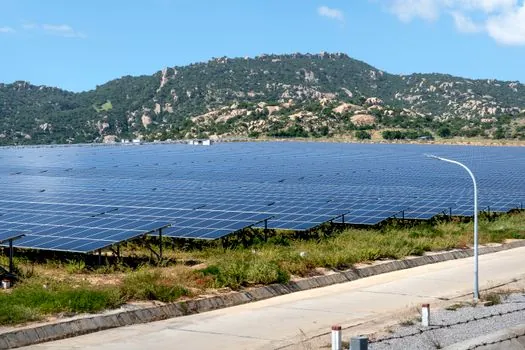
China is preparing a mandatory energy-efficiency reset for its solar manufacturing sector, a move designed to cull inefficient production capacity and effectively end the ultra-cheap PV price war that has compressed margins across the module supply chain [S5]. The practical buyer consequence is that the lowest quotes on polycrystalline and older PERC lines will become harder to honour as sub-scale capacity is forced out, while TOPCon and other N-type lines aligned with the new efficiency threshold will carry the volume [S4][S5].
For an importer, this means pricing contracts should lock wafer/cell source and module line, not just wattage and brand, because the factory rolling your panels in Q1 2026 may not be the line rolling them in Q3 once the cull takes effect [S5]. Tracking signals include the public list of certified TOPCon lines, IEC/TÜV re-issuance under new efficiency classes, and shipping manifest volumes from Jiangsu and Guangdong clusters, all of which a buyer can monitor monthly to spot supplier consolidation before it shows up in unit price [S3][S5].
Spec-level background on the components involved: linear guide, load cell, and crossed roller guide.