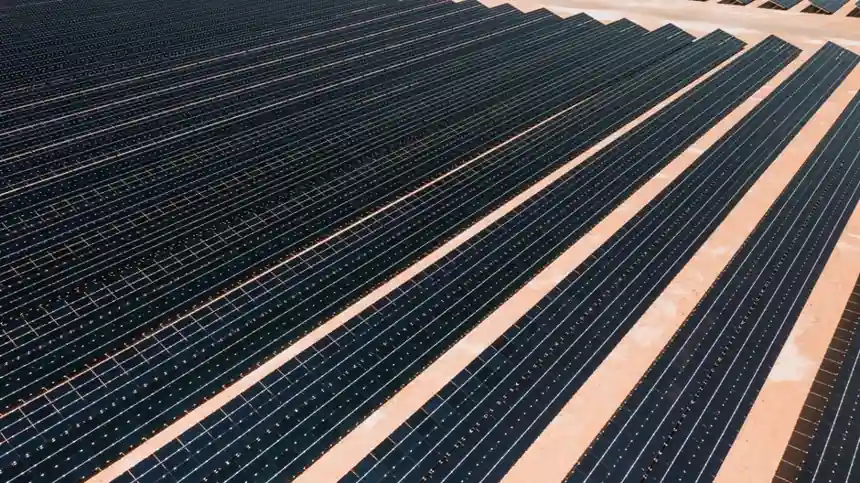
Spec-driven procurement matters: a 98% versus 95% efficient commercial inverter, as observed in 2026 buyer guidance [S3], can swing lifetime output materially on a 25-year asset.
Buying teams in 2026 must weigh four competing inputs: topology (string, micro, hybrid, central), regional compliance (UL 1741 SB in the US, EU grid codes, India IEC equivalents), FEOC/Domestic Content eligibility in the US, and a new layer of cybersecurity scrutiny aimed at Chinese-supplied inverters [S4].
Topology Comparison: String, Micro, Hybrid, Central
String inverters remain the lowest-upfront option for unshaded, uniformly oriented commercial roofs, with simple service and proven field track records [S3].
Microinverters carry a 15-30% cost premium over string units but offer panel-level MPPT, 20-25 year warranties, and resilience under partial shading [S3]. Hybrid inverters combine PV and battery conversion in one enclosure, enabling time-of-use shifting and backup power, but require careful double-sided sizing for both DC input and battery throughput. Central inverters, the workhorse of utility-scale solar parks, deliver the lowest $/W at scale but concentrate failure risk and need a dedicated equipment room. For warehousing, cold storage, and process loads that pair solar with on-site batteries, the hybrid inverter path (referenced here for its integrated energy-routing role) is increasingly the default commercial choice in 2026 wholesale channels [S1].
Selection Criteria That Actually Move the Needle
Three specifications drive 80% of procurement risk: inverter efficiency at the project's real loading, MPPT voltage window versus string design, and grid-support function set (Volt-VAR, frequency-watt, ride-through) [S3].
For commercial buyers sourcing in bulk, decision-grade criteria are: (1) CEC or Euro-weighted efficiency, with each 1% delta worth modelling over 25 years; (2) UL 1741 SB compliance for California Rule 21 and Hawaii Rule 14H grid-interactive functions, now the de-facto US spec baseline; (3) IP65/IP66 enclosure rating for rooftop deployments; (4) integrated DC disconnector and AFCI for NEC 690 rapid shutdown; and (5) a warranty with at least one extension tier to year 20 [S1][S3]. Lifecycle cost, not sticker price, is the variable that separates a defensible bulk order from a 10-year retrofit. A grid-tie inverter specification page (used here for AC output behaviour) is a useful cross-reference when validating harmonic and ride-through behaviour.
Who Hybrid Inverter Wholesale Is For, and Who It Is Not

Wholesale commercial hybrid inverters are designed for buyers running 100 kW+ projects with on-site storage, time-of-use tariffs, or weak-grid backup needs [S1].
They are a poor fit for: utility-scale ground mounts (central inverters win on $/W), small retail roofs under 30 kW (string inverters are cheaper and simpler), and projects in jurisdictions requiring fully fire-listed microinverter architectures for first responder safety. Commercial ESS tie-ins, the other half of a hybrid deployment, should be spec'd concurrently because inverter and battery BMS communication protocols (CAN, RS485, Modbus TCP) often bottleneck the system if mismatched. Buyers procuring both at once can use the BMS-side spec map to align firmware, warranty, and certification timelines before signing a hybrid inverter PO.
FEOC, Domestic Content, and the US 2026 Procurement Reality
US commercial solar procurement in 2026 is no longer a pure LCOE exercise: Domestic Content tax credit adders and FEOC (Foreign Entity of Concern) restrictions now gate which inverters are IRA-eligible, with FCC-related supply-chain documentation layered on top [S2].
Practical impact for B2B buyers: qualifying for the Domestic Content bonus requires documented US assembly of the inverter housing or subassembly, while FEOC rules block covered components from certain Chinese-headquartered entities. Procurement teams that fail to verify country-of-assembly and component origin at the SKU level risk clawback of the Investment Tax Credit. Lead times for qualifying US-assembled stock in mid-2026 were running longer than equivalent imported units, pushing some EPCs to dual-source. The compliance load also bleeds into adjacent DC-side equipment, which is why a flow-meter spec map (cited here for its parallel B2B compliance workflow) illustrates the documentation discipline now expected across solar BoMs.
EU Grid Security Turn: What It Means for Chinese Suppliers

European grid operators and US regulators tightened scrutiny of solar inverter cybersecurity, firmware provenance, and remote-access backdoors through 2025-2026, with explicit attention to Chinese-headquartered suppliers [S4].
For procurement, this translates into three new vendor-qualification questions: (1) Is firmware signed and updatable only via authenticated channels; (2) Does the inverter phone home to a cloud outside the buyer's jurisdiction, and is that traffic opt-in; and (3) Can the operator fully disable remote management for grid-security-sensitive sites. Several EU member-state tenders in 2026 began requiring IEC 62443-aligned security documentation as a pre-qualification, a threshold that disqualifies several volume Chinese models outright. Chinese OEMs responded with EU-based firmware teams and third-party SOC2 attestations, but the procurement burden of verification now sits with the buyer. A linear guide spec page (referenced here for its mechanical-compliance analogy) is a useful parallel for how Western industrial buyers now audit sub-vendor provenance.
Common Wholesale Buying Mistakes in 2026
Five recurring errors are flagged across 2026 B2B procurement guides: over-prioritizing price over lifecycle, ignoring battery-communication compatibility, choosing the wrong topology for the load profile, skipping regional certifications, and under-estimating after-sales response time [S1].
On certification specifically, US-bound projects have rejected shipments that lacked a verifiable UL 1741 SB certificate, while EU projects have rejected units without CEI 0-21 or VDE-AR-N 4105 documentation. On after-sales, hybrid inverter failures are typically diagnosed in 48 hours but parts delivery in peak 2026 demand stretched to 6 weeks, making local service-part inventory a contractual must. Bulk buyers should also pressure-test the supplier's MTBF claim against the warranty's labour coverage, a frequent gap where the part is free but the rigger's invoice is not.
Lead Time, MOQ, and What to Demand in the PO
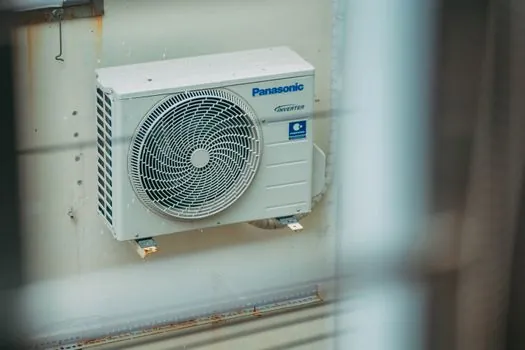
Bulk hybrid inverter orders in 2026 ran 8-14 weeks ex-works for standard 3-phase SKUs, with custom-configured ESS-coupled units pushing to 20 weeks, so the procurement clock starts at LOI, not PO [S1].
PO clauses worth standardising: firmware-locking at shipment (no auto-updates without operator consent), spare-parts commitment at 5% of order value with 5-year availability, on-site commissioning training for two buyer engineers, and a defined RMA path with named service-parts hub. Trackable signals through end-2026: UL 1741 SB enforcement tightening on rapid-shutdown functions, EU Network Code on Cybersecurity for Energy (NCE) implementation milestones, and any IRA-related guidance clarifying whether inverter firmware authorship triggers FEOC review. Projects that bundle solar with adjacent process equipment can use a crossed-roller guide spec page (referenced here for its precision-machinery procurement discipline) as a template for the same documentation depth.