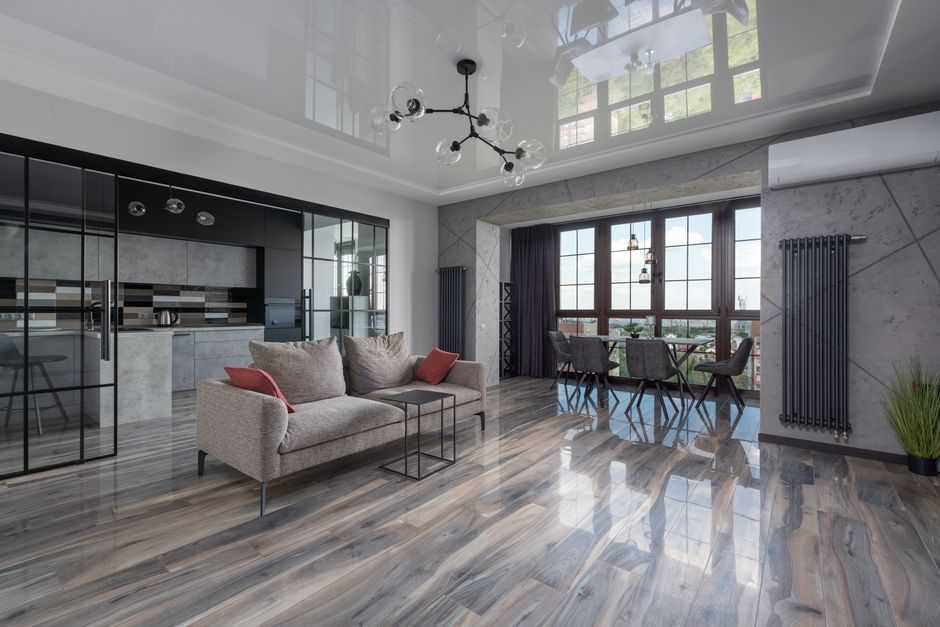
SPC (Stone Plastic Composite) flooring is a multi-layer rigid vinyl plank built on a limestone-filled PVC core, carrying wear layers between 0.3 mm and 0.50 mm, total thicknesses from 4 mm to 8 mm, and EN 16511 use-class ratings that drive the residential versus commercial split [S2][S3][S6].
The category broke out of standard LVT in the late 2010s once click-lock rigid-core production stabilised; SPC differs from WPC in core density — SPC uses a stone-polymer matrix, WPC a foamed wood-plastic core — and the rigidity delta changes subfloor tolerance, acoustic behaviour, and click-system specification [S1][S5]. For specifiers, classification decisions come down to five axes: core composition, wear-layer thickness, surface texture, locking profile, and EN 16511 use-class. Reference context for industrial flooring specification sits in the same gating family — subfloor prep, load class, and slip rating are the common gate set.
Core composition: SPC vs WPC vs rigid vinyl hybrid
SPC cores are formulated from calcium carbonate (limestone) powder, PVC resin, and stabilisers, with the SPC Rigid Core Hybrid variant in the Johnson Hardwood range stacking vinyl / SPC / vinyl-balancing layers and a 1.5 mm IXPE foam backer for a 7.5 mm finished plank carrying a 0.75 mm (30 mil) wear layer [S5]. Standard plank stock from Chinese OEM Witop Decor and the Lordparquet line uses a pure SPC core without WPC foaming, specifying 6.0 mm or 8.0 mm total thickness with 0.3 mm or 0.5 mm wear layer and an IXPE or EVA backing [S1][S6].
The composition classification breaks into three branches: pure SPC (highest density, sharpest click, hardest underfoot), WPC (foamed core, warmer, quieter, lower density — not classed as SPC in strict datasheets), and SPC hybrid (SPC structural core plus attached acoustic foam — the Watersheld style in [S5]). Material-spec routing for SPC flooring selection hinges on whether the project needs indentation resistance (pure SPC) or impact-noise damping (hybrid with IXPE/EVA).
Wear-layer grading: 0.3 mm, 0.5 mm, and 0.7 mm bands
Wear layer is the clear PVC topcoat that takes the abrasion load, and datasheets treat 0.3 mm (12 mil) and 0.5 mm (20 mil) as the two commercial benchmarks, with 0.75 mm (30 mil) reserved for heavier commercial lines like Johnson Hardwood's Watersheld SPC [S2][S5][S6]. BiForm's 6 mm plank datasheet publishes wear layer at 0.3 mm against EN ISO 24340, with scratch resistance MSR B-2 per EN 16094 and a Class DS / DIN 51130 R9-R10 slip rating — figures that anchor a residential-to-light-commercial grade [S3].
Lordparquet's spec sheet offers 0.3 mm and 0.5 mm options over 6.0 mm or 8.0 mm planks, with surface gloss split into matt (5°-8°), semi-matt (8°-12°), and glossy (18°-22°) finishes [S6].
Surface texture classification: EIR, crystal, deep wood, stone, and carpet prints
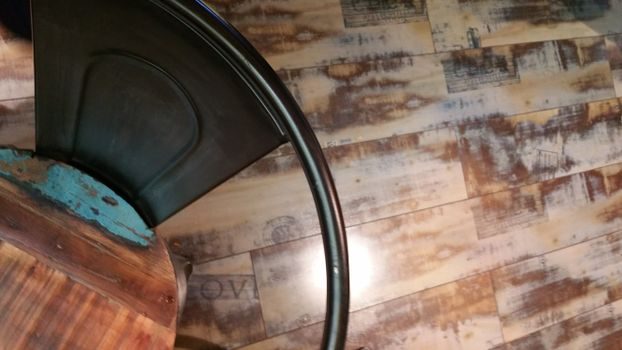
Surface texture is a parallel classification axis because it controls both aesthetics and slip rating. Ecoflors catalogues eight SPC texture families: Embossed-in-Register (EIR), Crystal Surface, BP Deep Wood, Marble Look, Micro-cement, Terrazzo, Carpet Texture, and Commercial Carpet Texture — each requiring a factory-level press matched to the wear layer to register texture depth to the printed film [S4]. EIR aligns the emboss depth to the wood-grain print so the plank reads as solid timber underfoot; crystal and marble surfaces carry a flatter, higher-gloss press and are typically specified in retail and hospitality.
Lordparquet and BiForm datasheets specify a "special deep wood" embossing as the stock profile, with the BiForm datasheet carrying a Curling value under 0.04 mm per EN 434 and Straightness at 0.04 mm/m per EN ISO 24337 — both numbers that gate a Class 34 install [S3][S6]. The texture-classification call between EIR, deep-wood, and crystal directly drives both the press specification at the factory and the slip rating at the install — so any spec sheet that lists the texture without the matching DIN 51130 R-value is incomplete.
Size, dimensional tolerance, and locking profile
Plank geometry splits into three OEM stock sizes: 6 inch × 48 inch (144 × 1209 mm), 7 inch × 48 inch (180 × 1230 mm), and 9 inch × 48 inch (219 × 1209 mm) in the Lordparquet catalogue, with thickness options of 6.0 mm or 8.0 mm and 100% virgin material specified across the line [S6]. BiForm ships 180 × 1220 × 6 mm planks at 8 planks per pack, 1.76 m² per pack, with Squareness at 0.10 mm per EN ISO 24337 and Overall Thickness confirmed at 6 mm per EN ISO 24346 [S3]. Area Floors' palletisation spec on the ORIGINALS datasheet — 27,498.33 kg, 3,304.53 m², 30 pallets per 44-pack shipment — is the freight-math baseline used by EU importers for container loading [S2].
Locking systems across the OEM datasheets cited are click-lock (fold-down or angling) rather than glue-down; the Witop Decor catalogue calls out "click-and-lock system for quick, easy installation" as a stock feature [S1]. The click profile drives subfloor flatness tolerance — typically 3 mm over 2 m for Class 34 SPC — and is the gating spec when an SPC install sits over an existing industrial flooring substrate rather than a fresh screed. Herringbone and chevron installs in the Ecoflors range require factory-level dimensional accuracy to execute, and the datasheet flags them as a separate spec class from standard plank [S4].
EN 16511 use-class mapping: residential, light commercial, heavy commercial
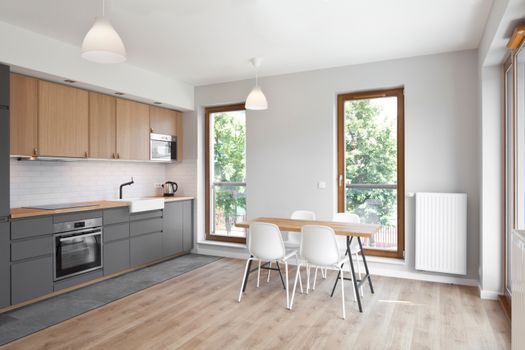
EN 16511 is the European classification standard that gates SPC flooring into use-classes 23 (residential heavy), 31 (commercial light), 32 (commercial moderate), 33 (commercial heavy), and 34 (commercial very heavy); the Area Floors ORIGINALS datasheet publishes both columns as Class 34 for groups 1, 2, and 3 [S2]. The BiForm datasheet ties its 0.3 mm wear-layer plank to a 20-year residential warranty and a 7-year commercial warranty, with the 7-year commercial line anchored on Class 33 / Class 34 grading and a Critical Radiant Flux ≥ 8 kW per EN 13501-1 [S3].
For spec-driven decisions, the class-to-wear-layer map is: 0.3 mm → Class 31-32 (residential heavy / light commercial), 0.5 mm → Class 33-34 (commercial heavy / very heavy), 0.7 mm+ (30 mil) → Class 34+ (heavy commercial, healthcare, light industrial) [S2][S3][S5]. Witop Decor's published application field covers residences, offices, retail, medical institutions, schools, museums, hotels, factories, warehouses, and transport interiors — and that scope is only achievable across the line if SKU selection matches the wear layer to the use-class [S1]. When the project is healthcare or laboratory, the formaldehyde result (BiForm: E1 — none detected) and the stain/chemical resistance result (EN 423, no effect after 2 hours) become the gate, not the wear layer alone [S3].
Backing and acoustic options: IXPE, EVA, and cork
Backing classification splits into three branches: attached IXPE foam (1.5 mm typical in the Watersheld hybrid [S5]), attached EVA foam, or no backing (pure SPC, requires separate underlayment at install) [S1][S6]. The Witop Decor description and Lordparquet datasheet both list IXPE and EVA as the factory-attached options, with the choice driven by acoustic target (IXPE typically higher density, better impact-noise reduction) and underfloor heating compatibility (EVA tends to be specified where radiant heat is present) [S1][S6].
The 7.5 mm Johnson Hardwood SPC with 1.5 mm IXPE foam is a hybrid: the SPC structural core handles the wear load while the foam delivers IIC / STC acoustic targets that a pure 6 mm plank cannot reach without a separate underlay [S5]. For comparison with broader substrate practice, the install-prep gate list — moisture barrier, flatness tolerance, acclimation period — is laid out in a flooring-installation reference that pairs with this SPC spec.
Standards, fire, slip, and chemical resistance gates
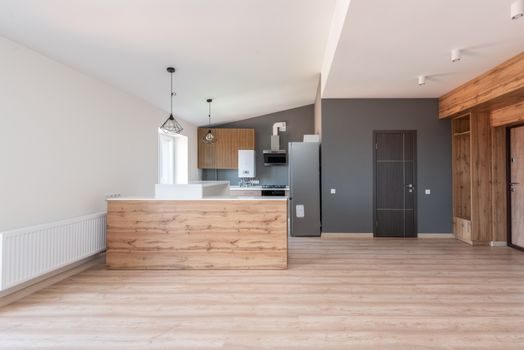
The standards that pin the datasheet numbers are EN ISO 24346 (thickness), EN ISO 24340 (wear layer), EN ISO 24337 (squareness and straightness), EN 434 (curling), EN 16094 (scratch), EN 425 (castor chair), EN 13893 / DIN 51130 (slip), EN 423 (stain and chemical), EN 13501-1 (fire), EN ISO 105-B02 (colour fastness), and ISO 4760:2022 (waterproof) [S2][S3]. Fire behaviour per EN 13501-1 with Critical Radiant Flux ≥ 8 kW is the minimum bar cited in the BiForm datasheet for commercial spec; the formaldehyde result (E1, none detected) gates medical and educational projects [S3].
Slip rating is published as Class DS (EN 13893) plus DIN 51130 R9 to R10 on BiForm — a residential-to-light-commercial band — and projects specifying R11 or higher (commercial kitchens, ramps, wet areas) need a separate slip-resistant surface treatment, not just an SPC plank [S3]. Cast chair test (EN 425) passes cited in [S3] anchor the office-furniture spec; colour fastness Grade 6 per EN ISO 105-B02 covers window-side and atrium installs [S3]. Spec-driven sourcing for SPC flooring types ultimately reduces to a five-axis checklist — core, wear layer, texture, locking, use-class — with the EN standards above as the audit trail.
Trackable next signal: confirm EN 16511 revision status for Class 34 thresholds before specifying 0.3 mm planks into heavy-commercial use; cross-check the 0.5 mm / Class 34 stock-vs-project volume with the OEM's palletisation spec (Area Floors publishes 3,304.53 m² per 30-pallet container for freight math) before locking a supply contract [S2].
Spec-level background on the components involved: pressure transmitter.