
Industrial flooring specification is a stress-mode problem first and a material problem second: chemical attack, thermal cycling, point load, abrasion, slip risk, and hygiene grade each eliminate certain chemistries before color or brand enters the conversation [S3][S4].
Across the UK contractor market, the active resin families in 2026 are MMA (methyl methacrylate), epoxy, and polyurethane (PU) screed, with vinyl composite tile (VCT), seamless sheet vinyl, and rubber tile still dominating light-commercial and healthcare footprints [S1][S3][S4]. A single floor in a food plant routinely uses two systems: a PU screed in the wet process area and an MMA topcoat in the cold-store corridor where cure temperature drops below 5 °C [S3].
System-by-system comparison on four decision criteria
MMA resin cures in 1-2 hours at -10 °C and reaches full chemical resistance inside 24 h, which makes it the default for cold stores, breweries, and 24/7 retrofit food lines where shutdown windows are measured in shifts rather than weeks [S3]. Epoxy systems offer higher compressive strength (typically 60-80 N/mm² for a 4 mm self-leveling build) and better aesthetic control, but cure stalls below 10 °C and full chemical resistance needs 7 days at 20 °C, a constraint that knocks them out of most cold-chain projects [S3][S4].
PU screed (typically 6-9 mm troweled) is the workhorse for wet food, dairy, and pharmaceutical processing because it tolerates thermal shock from steam cleaning up to 90 °C and resists organic acids (lactic, citric) that blister standard epoxy [S3][S4]. VCT and luxury vinyl tile (LVT) remain lowest installed-cost (often $3-7 per ft² installed) and dominate offices, schools, and healthcare corridors where static load is light and chemical exposure is incidental; their failure mode is point impact and caster damage rather than chemical attack [S1]. A direct comparison against four decision gates:
1) Cure/temperature window: MMA -10 °C to +30 °C, 1-2 h walk-on / epoxy +10 °C to +25 °C, 24 h walk-on, 7 d full cure / PU screed +5 °C to +25 °C, 8-12 h walk-on / VCT 18-29 °C glue set, 24-48 h before rolling loads [S3][S4].
2) Chemical resistance: PU screed best against organic acid and hot water / MMA best against sugars, alcohols, and caustics once fully cured / epoxy vulnerable to lactic and acetic acid above 40 °C / VCT limited to routine sanitizers [S3].
3) Compressive strength: 4 mm self-leveling epoxy 60-80 N/mm² / PU screed 50-65 N/mm² / MMA 70-90 N/mm² / VCT 25-35 N/mm² [S3].
4) Typical installed cost (2026 UK reference): MMA £60-110/m², PU screed £45-85/m², epoxy £35-70/m², VCT £25-45/m² supplied-and-laid [S3][S4]. For a spec map of similar process-engineering decisions, see this linear guide selection primer for the selection-gate thinking that translates across equipment types.
Substrate prep gates that decide 80% of service life
Concrete substrate must be tested for moisture before any resin goes down: a calibrated in-situ RH test (ASTM F2170 equivalent) reading above 75% RH means a moisture-tolerant primer or a surface DPM is mandatory, and readings above 92% RH typically force a return-to-spec on the slab before installation can proceed [S4].
Tensile pull-off strength of the prepared slab is the third gate: resin-system manufacturers typically require a minimum 1.5 N/mm² (cohesive failure in concrete, not at the bond line) before the warranty is valid; results below that number mean a primer, deeper abrasion, or a remedial screed is needed before the build-up goes on [S4]. Impact Flooring and similar UK contractors cite delamination, cracking, and unplanned downtime as the three dominant failure signatures seen when these three gates (moisture, profile, pull-off) are skipped, and they recommend documenting every test result in the handover file so the SPC flooring spec layer or resin build-up is traceable to substrate evidence [S4].
Installation sequence: from survey to handover
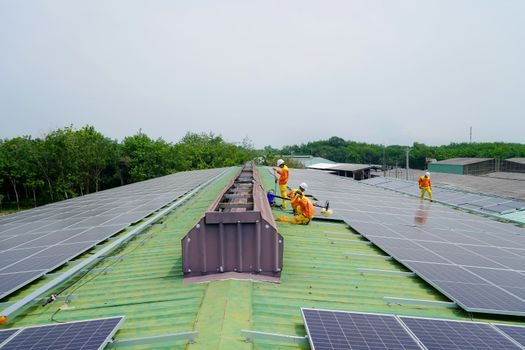
A defensible installation sequence runs: (1) site survey with moisture mapping, (2) mechanical preparation to target CSP, (3) crack treatment using a flexible filler or routed-and-filled detail, (4) primer matched to substrate porosity, (5) body coat to specified DFT (dry film thickness), (6) broadcast or topcoat with anti-slip aggregate if specified, (7) cure window respected before trafficking, and (8) documented handover with test certificates [S3][S4]. MMA systems compress this into a single shift because each layer cures inside two hours, while epoxy and PU need overnight cure between primer, body, and top coats; sequencing the trades around that cure window is what protects a 6 mm PU screed from amine blush or from foot traffic that imprints the soft coat [S3].
For a food-grade kitchen like the Ascot Racecourse refurbishment carried out by Degafloor and CT Flooring, the same eight steps were followed across a 9-month phased program, with the outdoor terrace and back-of-house kitchen both finished in MMA for fast return-to-service, then handed over with HACCP International Food Safety Certification on completion [S3]. Anti-slip aggregate loading is typically 0.3-0.8 kg/m² for a wet-process zone targeting an R11 or R12 slip rating, and the same Pendulum Test Value (PTV) ≥ 36 in wet conditions is the acceptance number written into the QA file [S3][S4].
Failure modes and when to repair versus replace
Localized blisters in an epoxy floor under 50 mm diameter with intact primer are repairable by grinding, re-priming, and re-coating the affected bay; if the blister area exceeds 10% of the floor or the bond test shows adhesive failure to concrete, the floor must be taken back to bare substrate and rebuilt — spot patches will fail again at the same interface [S4]. Cracking wider than 1.5 mm, with vertical movement between the two sides, points to slab movement rather than a coating failure and must be referred back to the structural engineer before any resin repair is attempted [S4].
PU screeds in hot wash-down areas typically show surface erosion at 5-7 years; a re-topcoat of compatible PU is acceptable if DFT still exceeds 4 mm and pull-off remains above 1.5 N/mm², but once aggregate shows through and the screed drops below 3 mm, full replacement is the cheaper option. VCT floors do not blister, but they scuff, gouge, and lose finish — a recoat and buff every 2-3 years extends life to 15+ years, while a full tear-out becomes economic once more than 25% of tiles are damaged or the underlying adhesive has failed [S1][S4].
Standards, certifications, and sourcing signals
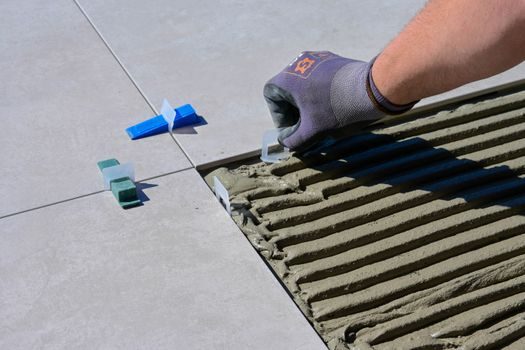
HACCP International certification is the de-facto food-safety evidence asked for by food and beverage clients in 2026, and MMA and PU systems carrying that mark must be installed by a manufacturer-trained Approved Installer for the certificate to be valid [S3]. Slip resistance is referenced against the pendulum test (PTV ≥ 36 wet for commercial kitchens) and the German R-class ramp test (R10-R13), both of which should appear as named values on the system's technical datasheet, not as a generic "anti-slip" claim [S3][S4].
For process-engineering buyers tracking material scope, the industrial adhesive selection primer covers the polymer chemistry that underpins both PU and MMA primers and the bond-strength test gates that mirror the 1.5 N/mm² floor pull-off number. Installation contractors in 2026 typically retain third-party moisture and pull-off evidence in the handover pack, and any specifier working on a food, pharma, or chemical plant should reject any quote that does not include the test-method and CSP references named in writing [S3][S4].
Who this guide is for — and who it is not for
This guide is for project engineers, facility managers, and EPC specifiers writing a flooring clause for a working industrial space — a wet-process food plant, a chemical bund, a warehouse with forklift traffic, a brewery, a pharma cleanroom anteroom, or a cold store [S3][S4]. It is not for residential refurbishment, decorative retail, or heritage timber floors, where substrate chemistry, vapor control, and traffic loading follow different rules and where the active systems are engineered wood, laminate, or refinished hardwood rather than resin screeds [S1][S2].
For a deeper dive on the equipment-spec selection thinking that drives resin-system choices, the industrial borescope selection map walks through how to use failure-mode mapping to drive a parts spec, the same logic that drives a flooring clause. Track in 2026: HACCP-certified MMA systems expanding in UK cold-chain retrofits and PU screed thickness creeping from 6 mm to 9 mm in breweries to extend hot-wash life past 10 years [S3][S4].
This topic is covered further in Harmonic Drive Reducer: Spec Wins, Failure Modes, and Fit-Gate Checklist.