
Industrial flooring decisions made on $/m² installed price alone routinely underestimate 10-30 year lifecycle cost by 30-200% once substrate repair, joint re-seal, chemical-resistant topcoat renewal, and production downtime are booked to the system [S1][S3]. A Total Cost of Ownership model for flooring must capture acquisition, install, maintenance, energy/downtime, and end-of-life disposal as a single amortised stack, not a procurement spreadsheet line item.
The driver set is well documented in industrial TCO literature: predictive-maintenance TCO work integrates reliability simulation with cost analysis to compare alternatives [S1], supplier-selection TCO models include quality, logistics, non-compliance, and after-sales costs beyond purchase price [S3], and broader TCO frameworks evaluate 3-5 year windows including acquisition and annual operating cost [S6]. Flooring is a 20-40 year asset, so the same logic simply extends the time horizon and increases the weight of maintenance/downtime lines.
What counts inside a flooring TCO stack
A defensible industrial-flooring TCO bundles five cost lines: substrate preparation and moisture mitigation; material + install per m²; joint treatment and edge terminations; scheduled maintenance, recoat, and joint reseal; production loss during cure windows and future repairs [S1][S3]. Substrate prep commonly runs 15-35% of installed cost on refurbishment of old concrete and is the single largest hidden line when buyers compare new-build quotes head-to-head [S1].
Lifecycle models also book "cost of non-quality" — failed adhesion, osmotic blistering, chemical attack — at the supplier-selection stage, not as a post-hoc warranty claim [S3]. The same TCO logic used in automotive OEM supplier scoring (transport, non-quality, late delivery, after-sales) maps directly to flooring: a cheaper resin system that fails an ISO 22196 bacterial-resistance test or an EN 13501-1 fire-class requirement will cost more in rework and downtime than a correctly specified system on day one.
Selection criteria that actually move the lifecycle number
Five criteria drive the TCO delta between systems: mechanical load class (point load, fork-truck wheel type, abrasion), chemical exposure matrix (acids, alkalis, solvents, fuels), thermal cycling and temperature exposure, hygiene/slip requirements, and install window. Resin selection — epoxy, polyurethane, polyurethane-concrete, vinyl ester, or MMA — is downstream of these five, not a starting preference. [S1]
Epoxy systems deliver high compressive strength and broad chemical resistance at moderate cost and are widely used in electronics, pharma dry areas, and warehousing. Polyurethane and PU-concrete systems add thermal-shock tolerance and bridge dynamic cracks; PU-concrete is the default for hot washdown in food & beverage and for kitchens, with continuous temperature resistance typically quoted around -40 °C to +120 °C depending on formulation. Vinyl ester covers the most aggressive chemical cells (sulfuric, hydrofluoric, bleach at elevated temperatures) at a higher material cost. MMA (methyl methacrylate) is the only realistic option when a 2-4 hour full-cure return-to-service is mandatory — cold rooms, freezer floors, or production lines that cannot absorb a 7-day epoxy cure [S1].
For heavy mechanical abuse, dry-shake quartz and metallic aggregates are embedded into the base slab or resurfacer, raising surface compressive strength and abrasion resistance. Where dust suppression and ESD control are required, conductive or static-dissipative topcoats are added — and that is where it is worth reading the industrial flooring reference rather than relying on a generic data sheet.
Side-by-side: resin systems on the four criteria that move price

On a typical 2,000 m² process-area floor, the cost stack sorts roughly as follows. Epoxy (2-3 mm build, broadcast quartz): mid-range material cost, 5-7 day install, 8-15 year first-coat life, good chemical resistance, limited thermal-shock tolerance. Polyurethane (2-4 mm self-levelling): 20-40% higher material cost, similar install, 10-20 year life, better crack-bridging and thermal cycling, weaker against strong acids. PU-concrete (6-12 mm trowelled): 50-100% higher material cost, longer install, 15-25 year life, the best hot-washdown and thermal-shock option, harder to overcoat later. MMA (3-6 mm): 30-60% higher material cost than epoxy, 2-4 hour cure, 8-12 year life, strong odour during install requiring isolation, and the only credible answer when downtime is the dominant cost line. [S1]
Specifying on these four criteria — chemical exposure, thermal cycling, downtime tolerance, and traffic — removes roughly 80% of the wrong-system risk before price is even discussed. For buyers comparing SPC flooring for offices against resin for plants, the TCO numbers are not comparable at all: SPC belongs in light-commercial interiors, not fork-truck and chemical-service process areas.
Who industrial resin flooring is for — and who should not specify it
Resin flooring earns its premium on any floor seeing fork-truck traffic, chemical splash, hot washdown, or hygienic-wall-to-floor coving — in other words, food & beverage plants, pharma manufacturing, electronics and battery dry rooms, chemical processing, logistics hubs with pallet-rack loading, and automotive assembly. The capital premium over polished concrete or tiles is recovered through reduced joint maintenance, easier washdown, and longer intervals between full refurbishments. [S1]
Industrial resin is the wrong answer for: light-commercial offices, retail interiors, residential, and any wet area not exposed to chemicals (tiled wet rooms remain cheaper and adequate). It is also the wrong answer where the concrete substrate cannot be brought to specification — moisture-vapour transmission above the resin system's tolerance, dynamic cracks wider than the system's elongation class, or oil-contaminated slabs without shot-blasting and re-test. For slab-side preparation methodology and the Vapour / bond-test workflow, the industrial adhesive reference covers primer and moisture-mitigation choices that directly drive flooring TCO.
Hidden cost lines that flip the winner

Three cost lines are systematically under-counted in flooring RFQs. First, downtime during install and future recoat — for a $50M/yr plant running 250 days/yr, each lost day is roughly $200,000 of gross margin, which makes an MMA system at 3x material cost a 12-month payback if the alternative loses 10 production days. Second, joint maintenance — PU and epoxy systems need joint re-seal on a 3-7 year cycle depending on traffic and chemical exposure, and that line must be amortised. Third, end-of-life removal — a poorly specified system that fails bond or chemical attack can require abrasive blasting back to bare concrete before re-install, adding $15-30/m² to a refurbishment. [S1]
Energy and cleaning are smaller but non-zero.
Procurement gates that protect TCO on the buy
A TCO-protective RFQ for industrial flooring fixes four things before price is asked. (1) Substrate condition and moisture-vapour transmission — by test method, not by age of slab. (2) Chemical and thermal exposure matrix — by zone, with concentration and frequency. (3) Traffic and load class — static, dynamic, point, with the specific wheel/foot type. (4) Install window and return-to-service requirement — including any phase handover. Vendors who do not site-visit before quoting should be de-scored on the TCO evaluation [S1][S3].
Reference standards that should be named on the data sheet, not paraphrased: EN 13813 (resin screed material properties), EN 13501-1 (fire class), ISO 22196 or JIS Z 2801 (antimicrobial efficacy where claimed), ASTM D4060 or Taber (abrasion), and slip-rating per EN 13036-4 / R-class. Do not accept "equivalent to" without the test method and result. For buyers also managing other long-life plant assets, the same TCO methodology applies to explosion-proof electrical packages and anti-static equipment — the cost-stack logic is identical, the equipment classes differ.
Failure modes the spec must close out
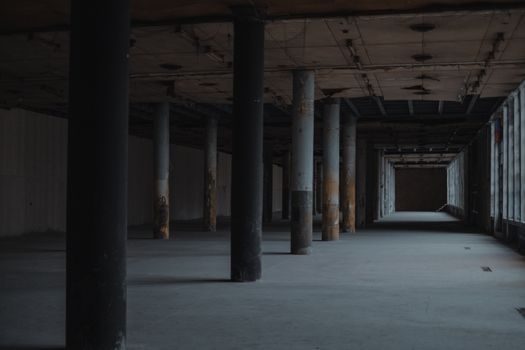
The four most expensive flooring failures, in order of rework cost: osmotic blistering from unmitigated substrate moisture-vapour transmission; delamination at the substrate interface from inadequate surface preparation; chemical attack from a zone mapped to the wrong resin family; and thermal-shock cracking at steam-clean or hot-spill zones where epoxy was specified instead of PU-concrete. Each of these is preventable with a substrate survey and chemical matrix before the first data sheet is requested, and each is 5-20x more expensive to remediate than to prevent [S1].
Buyers who need a parallel TCO example in a different asset class can compare against the stretch film TCO breakdown or the harmonic drive reducer TCO — the methodology is shared, the cost drivers are not. For plant owners also specifying floors adjacent to vibration-sensitive metrology, the layout discipline used in multistage pump maintenance access pairs with resin-flooring coving to keep service bays drainable and cleanable.
The next decision gate is a substrate survey and chemical/thermal matrix per zone, not a sample-board visit. Two trackable signals to watch: resin-system suppliers publishing bonded warranty terms linked to substrate prep specification (rather than generic "installed to manufacturer instructions"), and EN 13813 data sheets that report abrasion loss in mm³ per Taber cycle rather than a qualitative "high/medium/low" rating.