
BASF SE held over 9.4% of the global specialty chemicals market in 2025, anchoring a top-five group that includes Dow Inc., Evonik Industries, Shin-Etsu and Lanxess [S7].
Market sizing varies by source: Precedence Research values the 2025 specialty chemicals market at USD 940.72 billion and projects USD 1377.32 billion by 2035 at a 3.54% CAGR [S1]; The Business Research Company reports USD 791.27 billion in 2025 growing to USD 1018.16 billion by 2030 at 5.1% CAGR [S4]; Future Market Insights sees USD 1.4 trillion in 2025 reaching USD 2.2 trillion by 2035 at 5.0% CAGR [S2].
Top manufacturers and share concentration in 2025
The leaderboard is dominated by integrated chemical majors. MarketsandMarkets names BASF SE, Dow Inc., Nouryon, Lanxess AG and Evonik Industries among the most prominent players as of June 2026 [S3]. Future Market Insights lists BASF, Akzo Nobel, Bayer, Eastman Chemical, Dow, Solvay, Chemtura, DuPont, Albemarle, Clariant, Chevron Phillips, Ashland, Huntsman, INEOS, Evonik and Syngenta as key competitors in its 2025 segmentation [S2]. GMI's top-five concentration places BASF above 9.4% with the rest of the leading group well below single digits each [S7].
Akzo Nobel, Eastman and Bayer carry the strongest product-overlap with paints, coatings and agrochemical intermediates, while Shin-Etsu's share is anchored in semiconductor-grade silicones and photoresist chemistries that feed directly into advanced fabs [S2][S3]. The combined share of the top five remains under 25% of the global market, leaving the long tail of mid-cap specialty producers to compete on formulation and application-specific differentiation [S7].
Segment shares: agrochemicals, coatings, and construction chemicals
Agrochemicals represented the single largest product sub-segment in 2025 at 18.6% of the specialty chemicals market [S2]. Coatings and paints absorbed 25-30% of specialty chemical volumes through resins, additives and pigments serving industrial, automotive and architectural end-uses, while adhesives and sealants took 18-22% via specialty polymers and curing agents [S2].
Construction and infrastructure chemicals captured 28% of product share and 31% of end-use share in Precedence Research's 2025 breakdown, reflecting how concrete admixtures, sealants and surface treatments have grown alongside urbanization in Asia Pacific, which itself held 41.05% of the global market in 2025 [S1]. Personal care and cosmetics pulled 12-15% on emulsifier and surfactant demand, with pharmaceuticals at 8-10% for intermediates and excipients [S2].
Regional distribution: Asia Pacific dominance and North American recovery
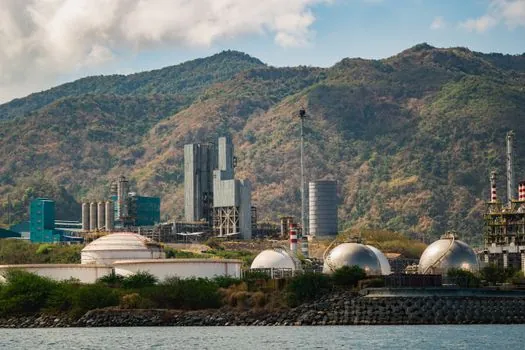
Asia Pacific commanded 41.05% of the global specialty chemicals market in 2025, the largest regional block and the fastest-growing [S1]. The Business Research Company confirms Asia Pacific as both the largest and the fastest-growing region in its 2026 outlook [S4]. Precedence Research flags North America as the next significant growth pocket, with Europe trailing on mature-volume, high-regulation demand [S1].
Future Market Insights singles out North America, Asia Pacific and Europe as the three key growth regions, with expansion in emerging markets and specialty polymers driving the 2026 to 2030 leg of the curve [S2]. Direct sales remained the dominant go-to-market at 67% of 2025 volume, with liquid-form products leading form share at 45% [S1].
Product-type breakdown and forecast to 2030
The Business Research Company segments the market into agrochemicals, dyes and pigments, construction chemicals, specialty polymers, textile chemicals, surfactants, functional ingredients and water treatments, with form split across solid, liquid and powder [S4]. Liquid products held 45% form share in 2025, powder and solid the remainder [S1].
End-use demand splits into industrial, construction, cosmetics and personal care, pharmaceutical, electrical and electronics, and mining and oilfield [S4]. Fortune Business Insights sizes the market at USD 757.98 billion in 2025 rising to USD 796.84 billion in 2026 and USD 1167.22 billion by 2034 [S8], while Persistence Market Research projects USD 795.0 billion in 2026 to USD 1111.2 billion by 2033 at 4.9% CAGR [S9]. Technavio forecasts an absolute increment of USD 381922.2 million from 2026 to 2030 at 6.3% CAGR [S6].
Manufacturer comparison: three decision-relevant criteria

Selection of a specialty chemical supplier is driven by portfolio breadth, regulatory depth, and regional manufacturing footprint, and the 2025 leaderboard separates cleanly on these axes. BASF scores highest on portfolio breadth across coatings, additives, agricultural and electronic chemicals [S3][S7]. Evonik and Dow pair broad portfolios with deep regulatory compliance capabilities for pharmaceutical excipients and food-grade applications [S3]. Shin-Etsu and Lanxess lead on regional manufacturing footprint in Asia and Europe respectively, with Shin-Etsu's silicones capacity concentrated near semiconductor fabs in Japan, Taiwan and the US [S2]. Nouryon, Clariant and Solvay compete on application-specific differentiation in surfactants, performance additives and polymer chemistries rather than scale [S3].
Process engineers sourcing raw inputs for pressure transmitter calibration gases, flow meter cleaning solvents, or industrial valve seal-compatible lubricants should weigh which manufacturer holds the relevant material certification, since a single ISO or ASTM grade can rule a vendor in or out regardless of share. Agrochemical-heavy producers (Bayer, Syngenta, Dow) dominate herbicide and pesticide intermediates; Evonik and Clariant are the practical go-to for cosmetic-grade surfactants; and Shin-Etsu, Dow and BASF anchor the electronic-chemicals supply for wafer fabs and pressure sensor manufacturing lines [S2][S3].
AI integration, sustainability, and 2026 supply-side signals
AI-driven formulation tools and machine-learning process control are now standard in R&D and production across the leading manufacturers, with Evonik and Dow publicly cited as having trimmed costs and improved reliability through AI-based supply chain analytics [S1]. The specialty chemicals market is also being reshaped by the rise of green and bio-based chemistries, where regulatory pressure on agrochemicals and coatings is opening the door for sustainable alternatives [S1][S3].
Precedence Research sees the AI efficiency layer as a primary mechanism for cost reduction across the USD 940.72 billion 2025 base [S1], and Technavio's 6.3% CAGR through 2030 implies that growth will be volume-driven by EV materials, semiconductor manufacturing, and water treatment demand rather than by pricing [S6]. For related commodity tracking, the recent [aluminum ingot producer ranking](aluminum-ingot-producer-capacity-outlook.html) provides a useful parallel on how share concentration in adjacent metals markets is being reported through 2026.
Trackable signals to watch: the 2027 BASF annual report for any portfolio divestments in agricultural solutions, GMI's next refresh of its top-five share table, and any revision to the 5.1% to 6.3% CAGR band that would signal an acceleration or break in the post-2026 specialty chemicals trajectory [S4][S6][S7].
See also our earlier report, High-Temp Concrete Release Failures: Chemistry, Thresholds, Fixes.