
Eight 2026 market outlooks for the global specialty chemicals sector converge on a 2026 base between $796.84B [S8] and $834.97B [S2], with a 2030 endpoint between $1,018.16B [S2] and $1,167.22B [S8], and a 2026-2030 CAGR band of 5.1-6.3% depending on the analyst's coverage scope [S1][S2][S3][S8].
The wider-cast Research Nester study extends the trajectory to $1.43 trillion by 2036 from a 2025 base of $940.72B [S4], while Wissen Research projects a 2025-2030 climb from $782B to $1,059B at 5.2% CAGR [S3]. For procurement and capacity-planning teams, the relevant decision is not which headline number is correct but which segmentation (product type, end-user, technology, region) the chosen forecast uses, since the gaps between the eight 2026 outlooks are driven by scope, not by measurement error.
Forecast Range Across 2026 Outlooks
The eight published 2026-2030 outlooks frame a tight band. Technavio sizes the 2025-2030 incremental opportunity at USD 381.92B at 6.3% CAGR [S1], while The Business Research Company (TBRC) reports 5.5% growth from $791.27B (2025) to $834.97B (2026) and 5.1% CAGR to $1,018.16B by 2030 [S2][S5]. Knowledge Sourcing extends to 2031 at 4.9% CAGR and a $1,116.7B endpoint [S6]; Fortune Business Insights lands at $1,167.22B by 2034 from a $796.84B 2026 base [S8]; Wissen Research sits in the middle at $1,059B by 2030 from a $782B 2025 base [S3]; Frost & Sullivan isolates the MENA submarket for 2025-2030 [S7].
The practical takeaway for specifiers: the 2030 global value is best treated as a $1,018B-$1,167B corridor, with a 5.1-6.3% CAGR band, and any forecast beyond that envelope should be checked for definitional inflation (e.g. inclusion of commodity intermediates, agro-fertilizers, or downstream formulated products).
Segment Composition: Where the Growth Concentrates
Across the four segmentation taxonomies in the source set, agrochemicals, plasticizers, performance coatings, and bio-based/sustainable chemistries are repeatedly named as the largest or fastest-growing buckets. Technavio's 2024 baseline puts the agrochemicals end-user at USD 209.56B and flags plasticizers as the leading type by revenue [S1]; TBRC's 2026 product-type split lists agrochemicals, dyes and pigments, construction chemicals, specialty polymers, textile chemicals, surfactants, functional ingredients, and water treatments as the eight core product types [S2].
For the engineer, the segment cut that matters operationally is the technology axis. Technavio groups the technology stack into four families: traditional chemical synthesis platforms, bio-based production technologies, advanced manufacturing platforms, and circular chemistry technologies [S1]. The shift between these families is what drives raw-material, capex, and pressure transmitter / flow meter / industrial valve specification choices on a new plant. A traditional synthesis line running on naphtha-cracker feed will spec very differently from a bio-based or circular-chemistry train on fermentation, electrolysis, or chemolysis feed.
End-Use Pull: EV, Semiconductors, Water Treatment, Coatings
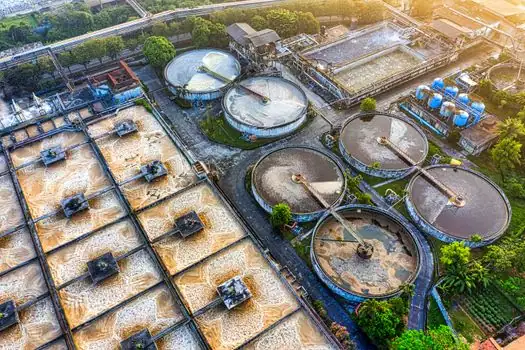
TBRC names electric-vehicle materials demand, semiconductor manufacturing growth, water-treatment needs, bio-based chemical innovation, and advanced construction chemicals as the five forecast-period drivers [S2][S5]. Wissen Research adds automotive, construction, electronics, agriculture, and personal care as the end-uses pulling performance grades [S3]. Research Nester's 2026-2036 taxonomy sharpens this into application-level nodes: semiconductor fabrication (photolithography, etching), display manufacturing (OLED materials), battery manufacturing (cathode, anode), hydrogen production and storage (membranes, catalysts, absorbents), telecom infrastructure (optical-fiber coatings, high-frequency polymers), advanced mobility (EV materials, lightweight composites, thermal-management chemicals), and aerospace and defence (adhesives, propellants) [S4].
The recurring operational implication: each of these nodes demands tighter process control than commodity chemistry, and the boundary between process instrumentation and chemical formulation is where the next capex cycle is concentrated. Semiconductor fabs and battery plants in particular spec pressure sensor density orders of magnitude higher per square metre than a legacy chlor-alkali unit, with corresponding demand for HART, Foundation Fieldbus, and Ethernet-APL I/O. Process control on a fermentation or electrolysis train for bio-based surfactants adds pH, dissolved oxygen, and conductivity loops that did not exist on a naphtha-fed line, and those signals feed the same PLC and servo-motor layer that runs the rest of the plant.
Regional Concentration: APAC, MENA, and the Capex Map
APAC dominates every 2026 outlook in the set. Technavio assigns APAC 63% of forecast-period growth [S1]; TBRC identifies Asia-Pacific as both the largest and fastest-growing region in its 2026-2030 outlook [S2]; Wissen Research names China and India specifically as the regional growth engines [S3]. Frost & Sullivan's 2025-2030 study isolates MENA as a separate growth opportunity, reflecting downstream-integrated petrochemical capacity in Saudi Arabia, the UAE, and Egypt [S7].
For a specifier outside APAC, the regional concentration matters for two reasons: (1) most incremental capacity additions over 2026-2030 will be commissioned in jurisdictions with stricter Chinese GB, Indian BIS, and GCC GSO conformity requirements than older EU/US plants, and (2) supply-chain resilience planning should weight APAC and MENA exposure explicitly, since both the raw-material feed and the formulated-product customer base are increasingly co-located there.
Decision Criteria: Picking the Right Forecast Number

When an internal capacity plan or board memo needs a single 2030 number, the four-line comparison below extracts the criteria that actually move the result. The decision rule is: match the segmentation cut of the forecast to the question being asked, not to the highest or lowest headline. [S3]
1. Forecast horizon: TBRC 5 years (2026-2030) at 5.1% [S2]; Technavio 5 years (2025-2030) at 6.3% [S1]; Research Nester 10 years (2026-2036) at higher implied CAGR [S4]; Knowledge Sourcing 5 years to 2031 at 4.9% [S6]. 2. Base year: 2025 base of $782B [S3], $791.27B [S2][S5], or $796.84B [S8]; 2024 base of $940.72B [S4]. 3. Scope: TBRC and Technavio limit the basket to effect chemicals (agrochemicals, dyes, surfactants, polymers, water treatment); Research Nester explicitly extends to semiconductor, battery, hydrogen, and telecom nodes [S4]. 4. Geography: global aggregate [S1][S2][S3][S4][S5][S6][S8] versus MENA-only [S7]. The 2030 endpoint tracks these four criteria almost linearly.
The same criteria apply to a specialty-chemicals specifier evaluating new capacity: a fermentation-based surfactant line is sized against the bio-based/circular-chemistry sub-segment, not against the all-encompassing $1.0T+ headline, and its unit economics depend on the price spread between petrochemical and bio-based feedstocks within that narrower scope.
Constraints: Feedstock, Regulation, Energy
Wissen Research flags four hard constraints that will compress realised growth below the 5.1-6.3% CAGR band if they tighten: volatility in petrochemical feedstock and raw-material prices, stringent environmental and emission regulations, high R&D and product-development costs for specialised formulations, and supply-chain disruptions and dependence on global trade networks [S3]. TBRC adds energy cost and logistics to the same list [S2].
These constraints are not symmetric across the four technology families. A traditional chemical synthesis platform is most exposed to naphtha, ethane, propane, butane, and wood feedstock price cycles [S2]; a bio-based production platform is exposed to agricultural feedstock, fermentation capex, and enzyme cost; an advanced manufacturing platform is exposed to electricity and semiconductor-grade utility cost; a circular chemistry platform is exposed to waste-stream collection logistics and recycled-feed purity. Process safety and industrial valve spec on each family therefore diverge, and the right protective-instrumentation set is a function of the technology family, not the headline market size.
Cross-Reference: Standards, Sourcing, and Spec Hygiene

For a 2026 capex committee, three signals are worth tracking over the next 12 months: (1) the publication cadence of the MENA specialty chemicals forecast updates from Frost & Sullivan, which is the only 2026 outlook in the set isolating that sub-market [S7]; (2) any revision to Research Nester's 2026-2036 segmentation into semiconductor, battery, hydrogen, and telecom nodes, which is the only taxonomy in the set that breaks the basket down to the application level a process engineer can act on [S4]; (3) the Wissen Research 2025-2030 view, which is the only 2026 outlook in the set that names petrochemical feedstock volatility, environmental regulation, and supply-chain disruption as named constraints rather than as generic "risks" [S3].
Engineers sizing new process trains against these forecasts should anchor on the 2030 corridor of $1,018B (TBRC, conservative) to $1,167B (Fortune, extended), pick the segmentation cut that matches the unit (fermentation line vs. cracker derivative, not the headline), and re-validate the chosen number against at least one of the three non-overlapping taxonomies: Technavio's end-user/type/technology/geography grid [S1], TBRC's product-type/form/end-use grid [S2], or Research Nester's end-user-application/region grid [S4].
Related analysis: Two-Hand Control Selection for Chemical Plant Machinery: EN 574, EN ISO 13849, and.