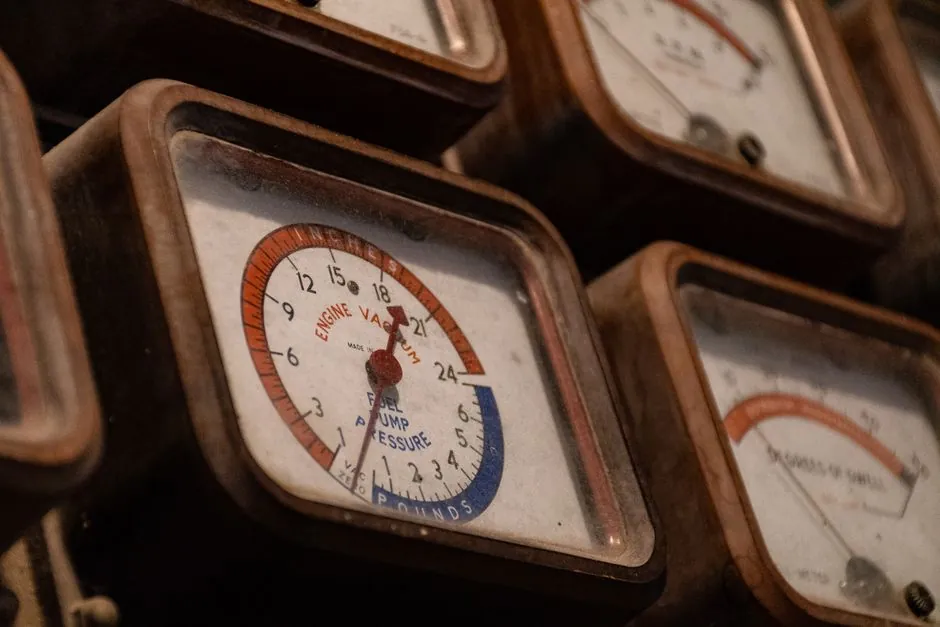
An enclosure-built lux meter is a calibrated photopic sensor, not a panel light, and the RFQ line must define the photometric class, the illuminance target, the verification method, and the documentation pack (IES, DIALux, EN 12464-1 reference) before the panel-builder can quote a real number [S1][S2].
Most RFQ rejections on enclosure lighting come from a buyer writing "interior LED, 500 lux" and nothing else. The supplier has to assume sensor class, range, accuracy, and acceptance-test protocol, then loads margin. The fix is to write the lux spec the way you would write a pressure transmitter line: with range, accuracy, standard, and proof of reading.
What a Lux Meter on an Enclosure RFQ Actually Buys You
A panel-mounted lux meter is a photometric sensor package: a silicon photodiode with a CIE V(λ) photopic filter, a cosine-corrected diffuser on the front face, and a 4-20 mA or 0-10 V output scaled to the illuminance range you specify. Class B per the relevant CIE standard requires a spectral response tolerance of f1' < 6% and a cosine response f2 within ±2% over 0-90 deg; Class A tightens f1' to 3% and f2 to ±1% [S1].
The sensor must read the maintained illuminance at the working plane, not the peak value at the lamp, and it must be located so the operator's body or the door swing does not shadow the diffuser during the FAT walk-around. Most suppliers will requote if the RFQ only says "500 lux interior" with no plane height, no sensor location, and no acceptance test window [S1][S3].
Illuminance Targets: EN 12464-1 vs the Cheat Sheet
EN 12464-1 sets maintained illuminance at the task plane for indoor work, and the relevant entries for an electrical-enclosure build sit in a tight band: 300-500 lx for general electrical assembly, 500-750 lx for panel wiring and detail reading, and 200 lx for general warehouse or low-activity areas where the enclosure is being staged [S1][S2]. Maintained means the design target holds after lamp aging and dirt accumulation, not on the day the panel is switched on.
For reference, the same standard puts precision assembly at 750-1,000 lx, fine inspection at 1,500-2,000 lx, and emergency escape routes at 10 lx minimum. Industrial guidance for process control rooms lands around 300 lx, with up to ~750 lx for detailed task work [S5]. A useful RFQ carries one target number per work zone, not a single "500 lx" across the whole build, because panel wiring and switchgear inspection carry different values under EN 12464-1 Table 5.3 [S1].
RFQ Line-Item: What You Must Write, Field by Field
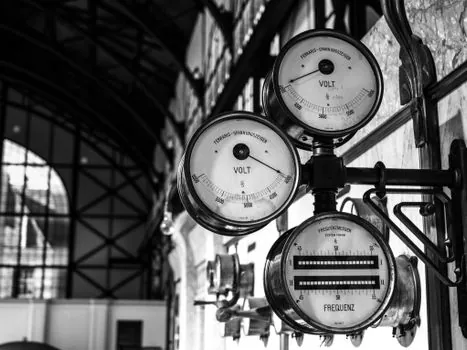
Scope: panel interior working plane (lx), aisle/face-of-panel plane (lx), control-desk plane (lx), escape route (lx). For each, declare the EN 12464-1 or local reference (IESNA RP-1 in North America, GB 50034 in China), the maintained value, and the LLF (Light Loss Factor) you have applied, typically 0.7-0.8 for an LED-lit enclosure with annual cleaning [S1].
Sensor: photometric class (CIE Class A or B), spectral range 380-780 nm with f1' tolerance, cosine correction f2 over 0-90 deg, measurement range 0-200,000 lx for general industrial use, accuracy ±3% of reading or better, operating temperature 0-50 deg C minimum, IP rating at the diffuser face (IP54 for interior, IP65 if hosed-down), and output (4-20 mA, 0-10 V, or IO-Link). Add the cable length, the gland size, and the panel-instrumentation channel it terminates into.
Documentation: IES photometric file for the luminaire, DIALux EVO compatibility, EN 12464-1 compliance table per zone, the LU/LDC curve data, CRI/Ra for the LED, UGR if office-adjacent, and a copy of the manufacturer's calibration certificate traceable to a national lab (NIST, NPL, PTB, NIM). Without these, the luminaire cannot be specified in DIALux and the engineer cannot count it in the maintained-lux calculation [S2].
Acceptance Test: The Step That Catches the Mistakes
Design illuminance rarely matches the installed value, and the gap is rarely a math error. The typical culprits are inflated Coefficient of Utilization (CU) numbers, a textbook Light Loss Factor (LLF) instead of the actual maintenance schedule, and no post-install reading because the contractor signed off before the door seals were fitted [S1].
Write the FAT/SAT clause with a calibrated, traceable lux meter held at the task plane, at least 5 points per zone (corners and centre), with the door open and closed. Acceptance band is typically target lx minus 10% to target lx plus 20% to allow for luminaire bin spread; a reading below the minus 10% line triggers a lamp-count or luminaire-position revision at the supplier's cost, not the buyer's. A typical rule of thumb is fixture spacing not exceeding 1.5 times the effective ceiling height above the working plane [S1].
Standards, Ranges, and the Numbers You Cannot Skip
EN 12464-1 governs indoor maintained illuminance at the task plane; EN 1838 governs emergency escape lighting at 10 lx minimum; CIE publications define sensor spectral response and cosine correction; ISO 11064 covers ergonomic layout including sightlines; IEC 60204-1 governs the electrical equipment of machines including panel internals; and Machinery Regulation (EU) 2023/1230 replaces the Machinery Directive from January 20, 2027, with transitional provisions, so any panel delivered into the EU after that date should be reviewed against the new instrument [S1][S5].
Typical maintained values: 300-500 lx general office, 500-750 lx CAD/technical drawing, 750-1,000 lx precision assembly, 1,500-2,000 lx fine inspection, 1,000 lx operating theatre general, 10,000-100,000 lx surgical field under HTM 08-03, 10,000 lx clinical light therapy. For enclosure-build work, the most common target is 500 lx at the wiring plane with 200 lx on the aisle face [S1][S5].
Common RFQ Mistakes That Force a Requote
Writing "interior LED, 500 lux" with no plane height, no sensor class, and no acceptance test makes the supplier assume Class B silicon, 0-50,000 lx range, ±5% accuracy, and an SAT window of one reading at switch-on. The supplier adds margin, and the buyer's expected price doubles. The fix is one extra paragraph [S1][S2].
Skipping the IES file and DIALux plugin is the most expensive single omission: a Polish LED manufacturer tracked 80% of lost RFQs to missing photometric data, and an 188% RFQ-volume lift in 9 months after publishing 38 IES files with DIALux support content [S2]. Specifying a sensor without cosine correction, or accepting f1' > 8%, breaks the comparison against any other reading in the facility and invalidates the EN 12464-1 maintained-lux check. The relevant cross-disciplinary reading on a related programmable DC power supply certification checklist shows the same pattern: missing field definitions force a requote cycle that adds two to four weeks to the panel build.
For a structured comparison of panel-instrumentation choices across enclosure builds, the signal calibrator compatibility reference and the broader electrical measurement encyclopedia page show how sensor-class, range, and traceable calibration drive the same RFQ structure for a 4-20 mA loop as they do for a photopic sensor.
Final Checklist Before You Send the RFQ
One maintained-lux value per zone, with the EN 12464-1 or IESNA RP-1 reference cited. One photometric class for the sensor (CIE Class A or B) with f1', f2, and accuracy stated. One measurement range that brackets the maximum expected reading (0-200,000 lx is a safe default for mixed indoor/outdoor use). One LLF number, one CU assumption, and one acceptance band. One documentation pack: IES file, DIALux plugin, calibration certificate with national-lab traceability, CRI/Ra, UGR if office-adjacent. [S1]
Track the next signal at the supplier kickoff: confirm the supplier's photometric file actually opens in DIALux EVO without a missing-LDC error, and confirm the cosine-corrected diffuser sits at least 50 mm clear of any door frame or cable entry. Both are the first signs the sensor will read the task plane, not the ceiling, at the FAT.