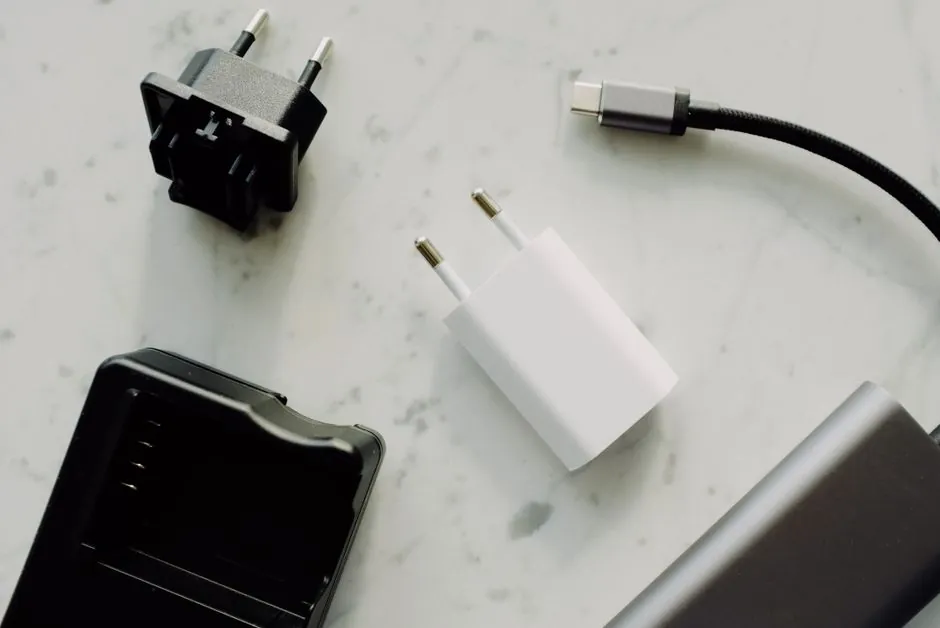
Programmable DC power supplies specified for high-temperature assembly lines, including reflow, wave solder, and hot-test stations, must clear four distinct evidence layers: electrical safety, EMC, environmental endurance, and process-specific calibration. A documented checklist against IEC 61010-1, UL 508, and IEC 60068-2-2 prevents late-stage audit failures when a panel goes through UL or CE marking review [S1][S3].
The power class drives the audit path. Bench units from 50 W to 1 kW dominate ATE and burn-in racks, while slim 10 W to 100 W DIN-rail models feed PLCs, sensors, and HMIs on the same assembly line; both classes must show evidence of efficiency, isolation, and thermal derating in the supplier's datasheet and test report [S1][S2][S3].
Layer 1: Electrical Safety Evidence and CB/UL Scheme Acceptance
Safety evidence starts with IEC 61010-1 for measurement and laboratory equipment, with a CB Test Certificate accepted by most national schemes as the baseline for the EU, China, and ASEAN audits. For a power supply that ends up wired into an industrial control panel, UL 508 (US) and cUL (Canada) listing is the usual second-pair requirement, while EN 62368-1 covers AV/ICT-style SELV outputs common in 24 V DIN-rail families [S3].
Reinforced insulation at 4000 V AC is the published benchmark for SELV compliance in the TPS-DR series, and procurement teams should require the test house name, report number, and standard edition in the supplier's certificate of compliance. Anything weaker, such as 2500 V AC basic insulation on a 24 V SELV rail, is a red flag during a factory audit [S3].
For the wider programmable category, remote-sense terminals, over-voltage protection (OVP), and over-current protection (OCP) trip curves belong in the same evidence pack; suppliers typically document these in a "Safety, EMC, and Environmental Compliance" appendix of the datasheet, alongside any SCR crowbar or fold-back behaviour [S1].
Layer 2: EMC and Harmonics Documentation
EMC evidence covers both emissions and immunity, with EN 61000-6-2 (industrial immunity) and EN 61000-6-4 (industrial emissions) being the most common pair for a programmable DC power supply. For a unit connected to the public mains, EN 61000-3-2 power-factor and harmonic-current compliance is mandatory above 75 W input, and active-PFC designs are the accepted engineering solution rather than a marketing feature [S3].
The supplier's DoC must list every harmonised standard tested, the test house's accreditation number (e.g. A2LA or DAkkS), and the report date within the last three years. A DoC that references only "EN 61000 family" without a part number and edition is incomplete and will be rejected by a notified-body review [S3].
For units installed near variable-frequency drives or welding inverters, surge and burst immunity per IEC 61000-4-4 and IEC 61000-4-5 should be requested separately; these are not always included in a generic DoC and are the first items flagged on a high-temperature line where long cable runs and shared busbars dominate [S3].
Layer 3: Thermal Endurance Under IEC 60068-2-2 Dry Heat
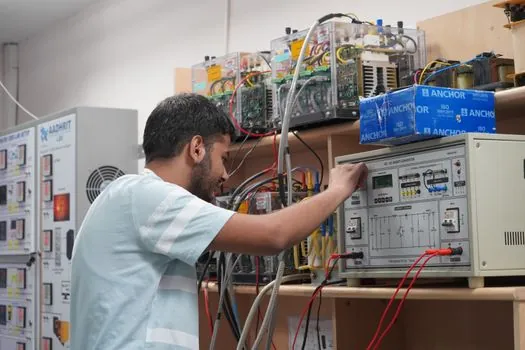
Thermal endurance is where most certification packs fail, because datasheets usually quote a 0 to 50 °C operating range without showing the IEC 60068-2-2 dry-heat derating curve. For high-temperature industrial environments, the supply must show continuous full-load operation at the worst-case ambient with manufacturer-stated thermal performance data and any applicable derating specifications, since industrial DIN rail power supply selection requires documented thermal behavior and load characteristics beyond output voltage and rated power.
Independent proof requires a third-party test report that states the chamber temperature, dwell time (commonly 16 h or 96 h per IEC 60068-2-2 Test B), and any observed drift in output voltage or current. A self-declared "operating temperature: -20 to 70 °C" line on page 1 of the datasheet, without a derating chart, is not equivalent evidence for an environmental audit [S2].
Efficiency is the second thermal lever: a 93% efficient resonant (LLC) design dissipates roughly 7 W at 100 W output, while an 85% efficient unit at the same load dumps 15 W, doubling the internal temperature rise for the same heatsink. That 8 W delta is enough to push a borderline component past its junction limit inside a sealed reflow-side cabinet, and is the most common root cause of premature failure on high-temperature lines [S3].
Layer 4: Process Calibration, Sense Leads, and Output Accuracy
Process calibration is the layer procurement teams overlook until the first audit observation. Programmable supplies used as burn-in sources need 4-wire remote sensing to compensate for the voltage drop in long load leads, with a documented sense-lead impedance budget and a maximum compensation voltage (typically 1-2 V) in the datasheet [S1].
Output accuracy is governed by the programming resolution and read-back accuracy, both of which should appear in the supplier's calibration certificate traceable to NIST or NPL. A 0.1 mV / 0.01 mA resolution class, as published for the IT6100B series at 86 W to 1200 W, is the reference benchmark for reflow and burn-in; anything coarser will be visible in a 24-hour stability test on sensitive loads [S8].
For PXI-class ATE supplies, the 3-channel NI PXI-4110 at 20 V / 1 A per channel is a useful baseline for traceability, with each channel calibrated at the factory and re-calibration intervals of 12 months as a typical recommendation. The calibration lab's scope of accreditation (ISO 17025) must cover the voltage and current ranges actually used, not just "DC power" generically [S6].
Selection Criteria: Bench vs DIN-Rail vs PXI
Three programmable DC architectures compete on a high-temperature assembly line, and the certificate pack is what separates a defensible purchase from a rework incident. The decision criteria worth scoring are: power class, footprint, efficiency at typical load, and audit evidence depth. [S2]
Bench supplies in the 50 W to 1 kW range (e.g. IT6100B at 86 W to 1200 W with 0.1 mV / 0.01 mA resolution) are the right fit for burn-in racks and ATE stands where output stability and OVP/OCP programmability dominate, and where the supplier's safety and EMC dossier is usually the most complete [S1][S8].
Slim DIN-rail models in the 10 W to 100 W class, such as the TPS-DR series at up to 93% efficiency with 23 mm width on the 30 W variant, are the right fit for PLC, sensor, and HMI backplanes inside the same line, and they win on panel density and SELV evidence [S2][S3].
PXI/PXIe modules like the 3-channel 20 V / 1 A PXI-4110 (starting at $4,288) are the right fit for in-line functional test where the supply must slot into the same chassis as DMMs and switch matrices, and where the calibration certificate covers the channels as a system rather than a standalone box [S6].
Common Audit Failures and How to Spot Them
Four failure modes account for most of the audit findings on programmable DC power supply certifications. The first is a DoC that lists standards without an edition year, which a notified body will reject because the harmonised list is keyed to specific OJEU dates; the fix is to require the supplier to send the DoC PDF and verify the standard editions on EN 61000-6-2/-6-4 and EN 61000-3-2 against the OJEU for the product's CE year [S3].
The second is a missing or generic derating chart, where the supplier quotes an operating range but no load-versus-temperature curve. Procurement should request the IEC 60068-2-2 test report, confirm the chamber temperature and dwell time, and compare the result against the worst-case ambient inside the actual cabinet on the line [S2][S3].
The third is a remote-sense misconfiguration, where the sense leads are left un-terminated at the load and the supply runs in local-sense mode, giving the false impression of regulation accuracy. The checklist item is a wiring drawing showing the sense pair terminated at the load terminals, with a maximum compensation voltage respected [S1].
The fourth is a calibration certificate that is out of scope, where the lab is ISO 17025 accredited for "DC voltage" but not for the current range the supply is actually programmed to. Procurement should match the certificate's scope of accreditation to the supply's working range, and flag any range extension as a re-calibration request [S6].
Standards Mapping at a Glance
The standards map for a programmable DC power supply on a high-temperature assembly line converges on five documents. IEC 61010-1 covers the unit's electrical safety; UL 508 or cUL covers the North American panel-listing path; EN 62368-1 covers SELV outputs where the supply feeds AV/ICT-style loads; EN 61000-6-2/-6-4 and EN 61000-3-2 cover EMC and harmonics; and IEC 60068-2-2 covers the dry-heat endurance evidence that closes the thermal loop [S1][S2][S3].
The certificate pack should also reference the factory's quality system, typically ISO 9001, and the calibration lab's ISO 17025 scope, with both accreditation numbers verifiable on the issuing body's online directory. A reference to a safety certification matrix in the supplier's portal is a useful cross-check, while the dc power supply and switching power supply reference pages give baseline definitions of the topologies involved [S1][S3].
The power supply reference page covers the broader category architecture, and the industrial UPS page is worth a look if the line has any ride-through requirement during burn-in. For locked-down cable entries and panel sealing in a high-ambient cabinet, the locking assembly page covers the mechanical side.
Close the loop on procurement by issuing a single audit-ready folder that contains the DoC, the CB and UL certificates, the IEC 60068-2-2 test report, the EMC test report, the ISO 17025 calibration certificate, and a one-page derating chart. Any supplier that cannot produce the first three items on request is not yet ready to ship to a high-temperature assembly line; any supplier that can is the one to shortlist for the next quarterly audit. For a parallel selection workflow on adjacent process kit, the RFQ spec for outdoor micro-ohmmeter walkthrough applies the same evidence-first discipline to a different instrument class.