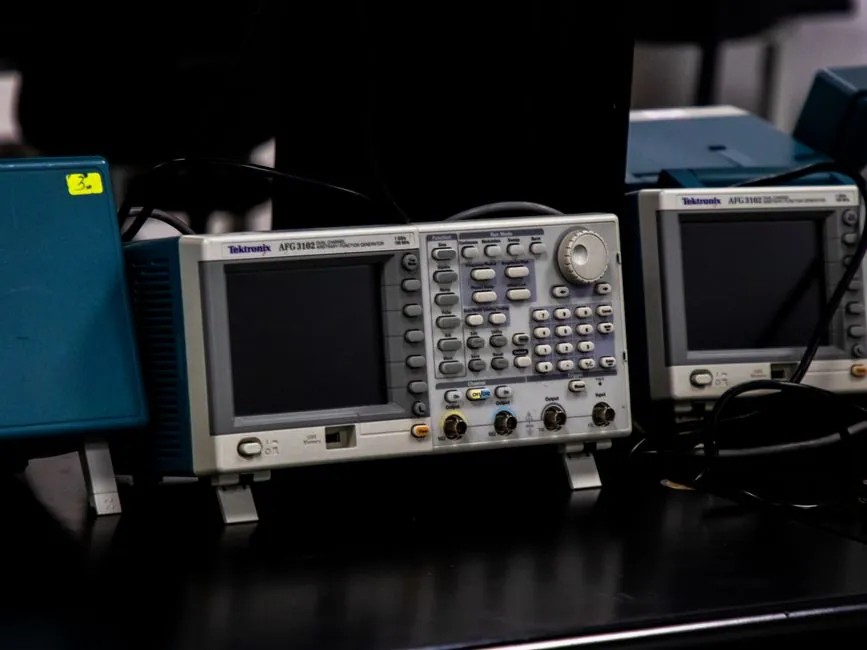
A signal calibrator is only as accurate as its weakest corroded joint: a field unit that reads correctly on the bench and then drifts 2-5% inside six months on a chloride-rich platform has failed the loop, even if the certificate is dated last Tuesday.
Specifying for corrosive service therefore means stacking four independent compatibility layers, namely enclosure/IP rating, gasket and O-ring chemistry, internal shunt-resistor temperature coefficient, and an ISO/IEC 17025 calibration interval that survives the site atmosphere, with each layer written into the purchase document rather than left to the supplier's standard build.
Enclosure and Sealing: IP66/IP67 versus IP54 in Salt and Acid Mist
Field instrumentation in chemical, offshore, and wastewater service lives inside an atmosphere that routinely contains Cl⁻, H₂S, SO₂, and NH₃, so the calibrator housing has to hold back both liquid splash and fine mist, which is why IP66 (powerful jets) and IP67 (temporary immersion to 1 m for 30 min) are the two ratings that consistently survive 12-month field intervals on coastal and platform decks [S2].
IP54 (splash only) housings let salt-laden mist reach the PCB through convection cycling, and once chloride deposits form on the input terminals the effective shunt resistance drifts by 0.1-0.3% over a six-month window, which is large enough to push a 4-20 mA loop past the typical ±0.05% valve deadband cited in process-control handbooks. Pair the IP rating with 316L stainless or hard-anodized aluminum, not painted carbon steel, because the rating only protects what the gasket actually seals. For deeper guidance on enclosure layering and gasketed service entries the signal calibrator reference page lays out the standard boundary conditions.
Gasket and Wetted-Material Chemistry: NACE MR0175, EPDM, FKM, FFKM
Gasket selection is the single compatibility decision most procurement documents leave blank, and it is the one that decides whether a calibrator survives a sour-service hydrocarbon atmosphere or delaminates inside a year. NACE MR0175 / ISO 15156 restricts the materials that can contact H₂S-bearing media, and that restriction extends by industry practice to the test-gas fittings and pressure-port O-rings on the calibrator itself rather than only to the wetted side of the connected transmitter [S2].
EPDM handles steam, CIP fluids, and most inorganic acids up to about 150 °C but fails in mineral oil and hydrocarbon service; FKM (Viton-class) covers hydrocarbons to roughly 200 °C but swells in amines and strong bases; FFKM (Kalrez/Chemraz) covers the full pH 0-14 range and 200-300 °C but costs 10-20x an EPDM seal. A common field shortcut is to specify "FFKM or equivalent peroxide-cured" only on the process-port O-ring, leaving the battery cover and keypad seals in EPDM, which is acceptable if those seals are truly outside the wetted envelope. The selection logic and material/temperature trade-offs are documented on the loop calibrator page for cross-reference.
Internal Shunt Stability: TCR, Burden Voltage, and the 4-20 mA Budget
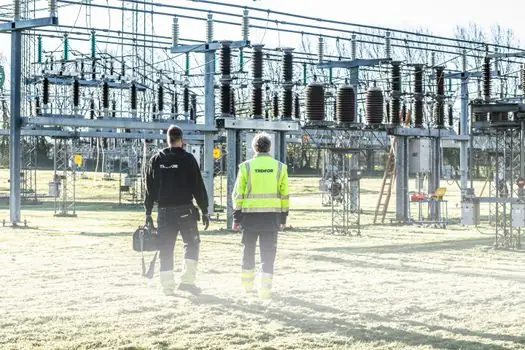
Inside the calibrator the resistor that converts loop current into a measurable voltage is the part most exposed to thermal and chemical aging, and its temperature coefficient of resistance (TCR) is what determines whether the unit holds its 4-20 mA accuracy across a -10 to +50 °C site swing. ISO/IEC 17025-accredited calibrations of process calibrators demand a precision internal shunt characterized by an exceptionally low TCR so that the as-left burden-voltage error does not eat the measurement budget [S1].
The trade-off between accuracy, burden, and source impedance is treated in more depth on the decade resistance box reference page.
Calibration Interval and Drift Budget under Corrosive Loading
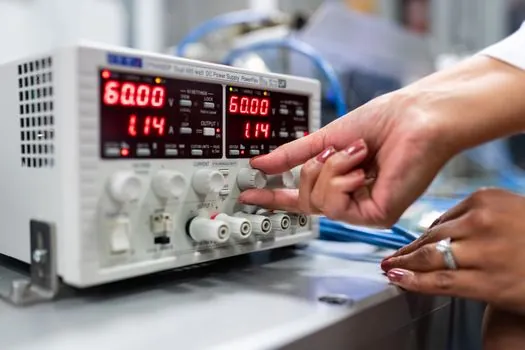
The 12-month ISO/IEC 17025 calibration interval that is standard for handheld process calibrators [S1] is only valid when the operating environment stays inside the OEM's published temperature, humidity, and corrosive-class envelope; once a unit spends six months on a sour-gas platform the field drift can exceed the as-found tolerance band, and the recommended response is to shorten the interval rather than to widen the acceptance band.
A workable drift budget for a corrosive-site signal calibrator looks like: ±0.02% of reading from the NIST-traceable reference, plus ±0.03% from the unit's 12-month drift, plus ±0.05% allowed for the highest expected on-site temperature excursion, which sums to a ±0.10% end-to-end loop uncertainty that still sits inside a 4-20 mA control valve's ±0.5% typical deadband. Safety-critical instruments may require more frequent calibration than the 12-month default, and the standard "12-month" interval should be re-tightened to 6 months on chloride-rich or H₂S-bearing sites [S2]. For readers cross-checking the test-method and signal-path numbers, the insulation resistance tester reference covers the adjacent high-impedance measurement chain.
Comparison Matrix: Calibrator Build Levels for Corrosive Service
The three configurations a process engineer actually has to choose between can be lined up against the four decision criteria that govern corrosive-site survival: enclosure sealing, wetted-seal chemistry, internal shunt TCR, and calibration interval. [S1]
A commodity handheld (IP54, EPDM seals, 100 ppm/°C shunt, 12-month interval) is acceptable for control rooms and analyzer shelters where the atmosphere is conditioned; a mid-tier industrial unit (IP66, FKM seals, 25-50 ppm/°C foil shunt, 12-month interval) is the workhorse for refineries, chemical plants, and offshore decks; a fully hardened sour-service unit (IP67, FFKM on process ports plus EPDM on non-wetted covers, 5-10 ppm/°C hermetic foil shunt, 6-month interval with on-site ISO/IEC 17025 traceability) is the right call for upstream sour gas, chlor-alkali, and offshore production platforms where H₂S, Cl⁻, and salt mist co-exist [S1][S2]. Procurement language should pin all four cells of the matrix to specific values rather than to "industrial grade" or "suitable for service," because those phrases are consistently interpreted in the field as the cheapest configuration that ships.
Integration Pitfalls that Pass the Datasheet but Fail on Site
The failure modes that escape a paper specification review are almost always mechanical or procedural, not electrical: a calibrator with the right IP rating but its pressure-port fitting pointed upward collects condensate and corrodes the NPT thread; a unit with FFKM O-rings but a vented battery cover lets H₂S diffuse into the PCB compartment; and a NIST-traceable certificate dated 11 months ago that is invalidated by six weeks of un-powered storage in a salt-air warehouse, because humidity cycles through the case even with the power off [S2].
Two more integration checks worth writing into the commissioning procedure: verify that the calibrator's signal cable is routed in a separate conduit from VFD power cables (the published rule for signal-path integrity [S2]), and verify that the test-gas or test-pressure medium is on the calibrator's wetted-material list rather than assumed compatible. For a cross-vendor view of how the same compatibility logic plays out in adjacent process instruments, the Marine Pillow Block Bearing Selection: 316 SS vs Ductile Iron vs Thermoplastic reference applies the same material/environment matrix to mechanical hardware, and the Clamp meter compatibility with temperature limit requirements: 0 to 40 °C envelope, CAT reference applies the same envelope/rating logic to a different portable instrument category.
Standards and Sourcing Discipline
Three documents anchor a defensible specification: ISO/IEC 17025 for the calibration method and the ANAB-accredited certificate, NACE MR0175 / ISO 15156 for wetted-material limits in H₂S service, and IEC 60529 (the IP-code standard) for the enclosure rating itself, while IEC 61010-1 governs the safety requirements that sit underneath the loop-measurement function. None of these are interchangeable, and none of them substitute for writing the four matrix cells above into the purchase order. [S1]
The next trackable signal is the publication of the 2026-2027 revision of NACE MR0175, which is expected to tighten the cold-worked 316L hardness limit in subsea clamping applications and would therefore change the material call-out for any calibrator that uses 316L in a load-bearing pressure port. The second signal is the spread of Ethernet-APL and IO-Link field instrumentation, both of which carry data and power on the same pair and change the burden-voltage budget a calibrator must present on the live loop; any unit purchased in 2026 for a greenfield plant should be verified to support 4-20 mA with HART on the analog segment without disrupting an adjacent APL segment.