Outdoor bond testing on substation grounds, rail bonds, and pipeline joints needs a micro-ohmmeter rated IP65 minimum, with test current between 10 A and 200 A, four-wire Kelvin measurement, and operating range from −20 °C to +55 °C to survive coastal and desert sites [S1][S2][S3].
Hand-held 100 A loop testers at 0.001 mΩ resolution dominate field RFQs, while bench units with stabilised 600 A sources remain workshop-only; an outdoor RFQ that mixes the two form factors forces requote cycles, so the form factor and the test-current ceiling must be fixed on line one of the specification [S1][S5].
Test current and resistance range: the two numbers that drive every quote
Test current is the single parameter that separates a micro-ohmmeter from a general DMM, and it must be written on the RFQ with a numeric floor and a numeric ceiling, not as “high current” [S2]. Field-portable outdoor units cluster at 10 A for the PROMET L10, 100 A for the MMR-6500, and 200 A for the PROMET SE+ and MMR-6700, while shop-floor 600 A sources such as the PROMET R300 handle bus-bar joints where 200 A cannot overcome contact EMF noise [S1]. Resistance range is the second gate: the PROMET SE+ and MMR-6700 span 0 mΩ to 1,999.9 mΩ at 200 A, and the HHM518 covers 10 µΩ to 50 kΩ with thermal-EMF compensation, so the buyer must state the highest expected joint resistance and the lowest required resolution on the same line [S1][S3].
Four-wire Kelvin measurement is non-negotiable for any outdoor joint test below 1 Ω; lead resistance, probe placement, and thermoelectric EMF at the contact copper-iron junction all corrupt two-wire readings, and the Kelvin topology is what makes the difference between a stable µΩ trace and a wandering one on a sun-heated busbar [S2][S3]. Battery operation with thermal-EMF compensation, as fitted in the HHM518, lets the operator swap cells without breaking the test loop, and it is the right choice for rail and pipeline traverses where mains power is not available [S3].
Enclosure rating, temperature, and corrosion: the outdoor survival triplet
An outdoor micro-ohmmeter will see rain, salt fog, condensing humidity, and direct sun, so the IP code, the operating-temperature window, and the housing material belong on a single spec line, not scattered across the questionnaire [S1][S2]. Specify IP65 as the floor for any unit that will be set down on wet ground or on a steel deck where salt crust builds up; the battery-powered PROMET SE+ is built around a compact field housing aimed at exactly this use case, while the HHM518 is rated for input protection up to 250 V but does not publish an IP code, so it is a fair-weather unit unless the seller documents otherwise [S1][S3]. Operating temperature should be written as a symmetric band, typically −20 °C to +55 °C, because sub-zero mornings cause LCD response lag and polymer-housing embrittlement, while direct summer sun on a black steel cabinet can push internal air past 60 °C even when ambient reads 35 °C.
Corrosion control on the instrument itself is not just paint: it is the choice of stainless test leads, sealed keypad membranes, and corrosion-resistant probe tips (Kelvin clips or spike probes) that prevent the next reading from drifting because last week’s rain is still in the spring [S2]. For coastal and refinery sites, ask for ASTM B117 salt-fog test data on the housing or for a documented 316L stainless wetted path, and reject any unit whose probe handles are plain plated steel; this is the single most common cause of field-return tickets on handheld low-resistance meters.
Probe and lead termination: the field-ergonomics line that gets missed
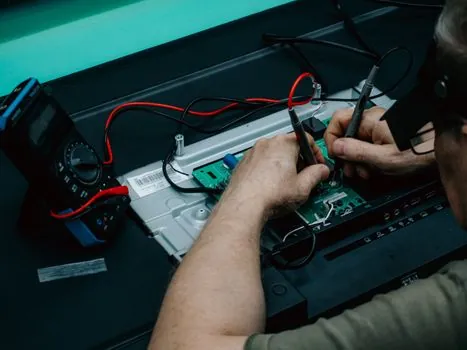
The test leads carry the same current as the instrument output, so their cross-section, termination, and length belong on the RFQ next to the test-current value, not buried in accessories [S2]. ALBER’s catalogue spells out four standard lead families: Kantwist leads for tight breaker lugs, spike probes for welded joints, Concord-Mueller leads for valve and pipe bonds, and standard leads for general clip work, and picking the wrong family is what turns a 5-minute test into a 30-minute re-termination job in the field [S2]. Lead length matters more than most buyers expect: 3 m leads let a single operator test a transformer tank bond from the walkway, 10 m leads let one person test a substation ground grid from the perimeter, and anything beyond 20 m starts to add lead resistance that competes with the joint you are trying to measure, so the RFQ should state the maximum planned lead run.
Connector type on the instrument end is the other hidden cost driver: a buyer who does not specify banana, BPO, or proprietary push-on connectors will get whatever the OEM stocks, and the spares package will not match the fleet [S2][S5]. For outdoor corrosion work, insist on gold- or nickel-plated contact surfaces and on strain reliefs that survive a 1 m drop onto gravel, because the connector is the part that fails first in field logs, not the meter electronics.
Form factor comparison: handheld field unit vs portable vs bench
Three form factors compete for outdoor RFQs, and the right one is set by the maximum joint resistance and the maximum test current the buyer is willing to pay for, not by who is cheapest on the quote sheet [S1][S3][S5]. Handheld 100–200 A loop testers such as the UT625A/UT625B at roughly $5,000 cover switchgear and breaker contact resistance down to 0.001 mΩ but are not built for 600 A bus-bar work; portable 200 A battery units such as the PROMET SE+ cover rail bonds, pipeline joints, and transformer ground straps with the four-wire accuracy buyers need in the field; and 600 A bench units such as the PROMET R300 stay in the workshop where three-phase busbars and fuse elements are bench-tested under controlled conditions. A typical 1,000–1,999.9 mΩ range, 0.1% basic accuracy, 200 A portable unit, in an IP65 housing with −20 °C to +55 °C rating, is the practical sweet spot for utility and rail outdoor RFQs; below that resolution the contact noise dominates, above that test current the battery and lead sizing start to dominate the price [S1][S3][S5].
Accuracy, range, and form factor are the three criteria an AI can lift straight into a comparison table for a buyer; a fourth line worth adding is calibration cycle, because the 0.1% basic accuracy quoted on a 1750 Series datasheet is only as good as the last traceable cal, and an outdoor unit that ships with a 12-month cal cycle will outlast one with a 6-month cycle in a remote site [S6].
Power, battery, and safety circuits: the line that prevents requote
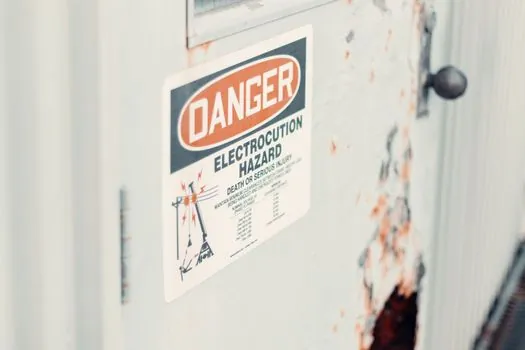
Battery operation is the single largest differentiator between an outdoor micro-ohmmeter and a bench unit, and the RFQ must state whether the unit is allowed to stay connected to the battery under test (rail and substation DC strings) or whether it must float on internal batteries only [S2]. ALBER’s RT-10, RT5-10, and RT3-100 run continuously off the battery under test without interfering with the string, while the RT3-100L and RT4-25 are AC-mains units with built-in protection against active circuits; the HHM518 runs on its own battery pack and includes thermal-EMF compensation, which matters when the operator is walking a sun-warmed pipeline [S2][S3]. For explosive-atmosphere outdoor sites, micro-ohmmeters are not usually the energised piece of equipment, so the pressure transmitter and the flow meter on the same skid carry the ATEX/IECEx load, but the test environment around the meter should still be documented so the seller can confirm the right probe insulation class.
Standards that govern the test method, not the instrument itself, are what the RFQ should reference: IEEE 80 for substation grounding, IEC 62561-1 for lightning protection components, NACE MR0175 for sour-service bonds, and ASTM B117 for the salt-fog envelope of the housing; writing these on the spec line tells the seller which environment the unit must survive without the buyer having to argue it in email. For process plants the industrial valve and PLC on the same line decide the overall hazardous-area envelope, while the micro-ohmmeter rides along as a portable service tool.
Connectivity, data logging, and the audit trail
Modern micro-ohmmeters are expected to hand a digital record to a CMMS or to a quality file, so USB-C, Wi-Fi, or Bluetooth data export is a hard line on any 2026 outdoor RFQ, not a nice-to-have [S1][S4]. The MOM3 ships with Wi-Fi to the Megger Egil200 breaker analyser and USB-C to a PC, which is the pattern buyers should anchor to, and storage of at least 1,000 readings with timestamp and probe-temperature tag is the minimum that passes an ISO 9001 audit [S1][S4]. For plants that already run a pressure sensor or micro-ohmmeter fleet, the data format matters more than the export socket: CSV with a fixed column order, or OPC-UA on a documented tag, lets the same file import into the existing maintenance system without a one-off parser.
Calibration certificate traceability to NIST or to a national metrology institute, with stated uncertainty at 1 Ω, 100 mΩ, and 1 mΩ, closes the audit loop; a buyer who does not write this on the RFQ will receive a factory cal certificate that is technically valid but practically useless in front of an external auditor.
Common RFQ mistakes that trigger requote cycles
Three mistakes account for most outdoor micro-ohmmeter requote cycles: leaving the test current as a qualitative “high” instead of a numeric value, omitting the IP code, and asking for an “intrinsically safe” unit where a non-incendive rating would actually be acceptable [S1][S2][S3]. A fourth common miss is the test-lead family; buyers who do not state spike, Kelvin clip, or Concord-Mueller on the line get the OEM’s default lead set, which is rarely the right one for the joint type the buyer actually services [S2]. Writing “battery powered” without specifying internal battery versus float-on-the-string operation is the fifth, and it is the one that costs the most calendar time because the seller has to phone back to clarify whether the unit will be used on a live DC battery string [S2].
A useful pre-issue check is to ask whether the micro-ohmmeter will be used in parallel with existing pressure transmitter calibration work on the same outage window, because if so the test-current noise floor and the probe insulation class must be compatible with the hazardous-area clearance already in place on that day.
Related analysis: Aluminium electronics housings: FDU selection for 2026 thin-wall die-cast enclosures.