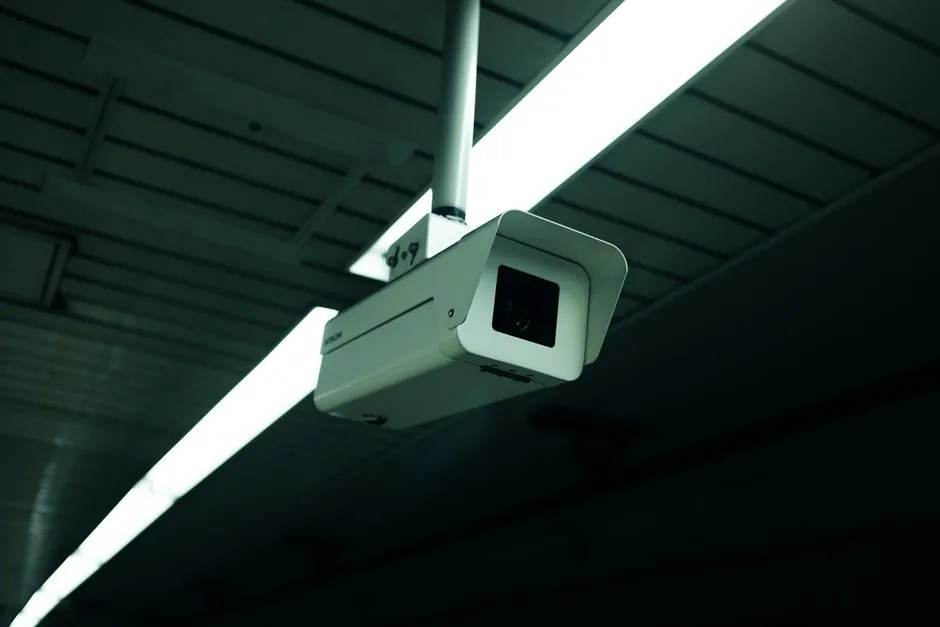
Explosion-proof cameras specified for oil and gas must combine ATEX Zone 1 or Class I Division 1 certification, 316L stainless steel or GRP housings, IP66 to IP68 sealing, and 2MP to 8MP imagers, and they typically operate across a -40°C to +60°C ambient band on refineries, drilling platforms, and pipelines [S3].
Selection splits into two distinct engineering problems: hazardous-area fixed installs inside the process plant battery limits, and solar-autonomous mobile units at unmanned wellheads, compressor stations, and pipeline rights-of-way. Each path carries a different certification, power, and connectivity envelope, and mixing the two specs is the most common procurement error in this segment [S1][S4].
Hazardous-area certification scope: ATEX, IECEx, and NEC/CEC
ATEX Zone 1 and IECEx certified cameras are tested to contain ignition of surrounding hydrocarbon atmospheres, and dual-certified ATEX/IECEx units are now the default specification for new European and Asia-Pacific refinery builds [S3].
For North American projects, UL-listed Class I Division 1 groups C and D (or the newer Class I Zone 1 AEx d IIB T6 marking under the NEC) is the governing requirement, and the same camera cannot be assumed compliant across both regimes without an explicit dual label on the nameplate [S3]. Temperature class T6 (85°C surface limit) is the common ceiling for hydrocarbon-rich process areas, while T4 or T5 is acceptable on flare tips and fired-equipment interfaces where ambient is higher.
For remote pipeline and wellhead sites where gas groups are undefined, IECEx Zone 2 or Class I Division 2 stainless housings are usually sufficient and substantially cheaper, but they must not be substituted into Zone 1 process-unit perimeters [S1][S3].
Mechanical build: 316L stainless, GRP, IP rating, and thermal
316L stainless steel or glass-reinforced polyester (GRP) housings are the two accepted materials for hydrocarbon-exposed cameras, with 316L preferred on offshore platforms where salt-spray chloride attack is the dominant failure mode [S3].
Ingress protection should be specified at IP66 minimum for onshore refinery and tank-farm duty, and IP67 or IP68 for offshore splash zones, deck-wash areas, and submerged-sumpless manhole covers; the S3 buyer guide ranks IP68 as the practical ceiling for explosion-proof housings used in 2025 [S3]. For general industrial dust and water-jet exposure, IP66 confirms the enclosure is dust-tight and protected against high-pressure water jets, which is the typical baseline on a process plant floor [S5].
Thermal imaging (typically 384x288 or 640x480 uncooled vanadium-oxide microbolometer at 8-14 micrometre response) is now standard on perimeter and flare-stack lines because it cuts through hydrocarbon vapour, steam, and total darkness, with bispectral PTZ units combining a visible 2MP to 4MP sensor and a thermal channel in one explosion-proof dome [S1].
Imaging, optics, and low-light performance
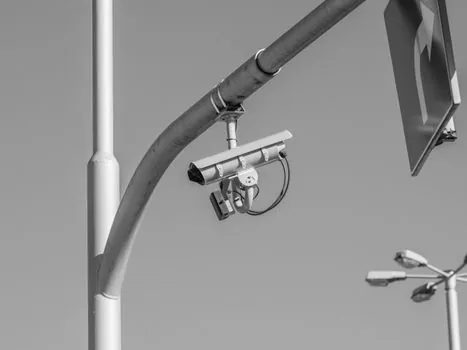
Modern hazardous-area cameras ship with 2MP to 8MP visible-light sensors paired with motorized 4.4-88 mm or similar varifocal optics, and long-range IR illuminators rated for 100 m to 200 m of night detection on tank-farm and perimeter applications [S1][S3].
PTZ explosion-proof domes are preferred for flare stacks, process unit corners, and tank-farm overview positions, while fixed bullet housings are used for choke-manifold, wellhead, and ESD-valve close-ups where aim stability outweighs the need for steering [S1]. For 24/7 manufacturing and process operations, low-light sensitivity below 0.01 lux in colour and 0 lux with IR active is the practical baseline for capturing incident-grade footage in unlit process alleys [S5].
On offshore platforms and FPSOs, vibration-rated mounts and image-stabilised optics are required because camera shake from the helideck, drilling derrick, and marine motion degrades both detection range and analytic accuracy.
Remote-site architecture: solar, cellular, and verified response
Remote wellheads and pipeline rights-of-way almost never have grid power or hardwired internet, so solar-autonomous trailers with cellular LTE/5G backhaul, onboard NVR storage of 2 TB to 8 TB, and a 30-day retention buffer have become the dominant architecture since 2024 [S4].
A single compressor station can yield several hundred pounds of copper in a single theft event, which is why remote units are paired with AI-based video analytics for intrusion, loitering, and line-cross detection to filter nuisance alerts before they reach a monitoring centre [S4].
Verified-video response (where a remote operator confirms a real intrusion via the live feed before dispatching law enforcement) is the standard operating model for unmanned sites in the lower 48 US, because audio-only or PIR-only alarms are filtered out by most police departments as unverified [S4]. For broader surveillance camera selection criteria in industrial settings, the same power, optics, and analytics logic applies, scaled to the available infrastructure.
Comparison matrix: three camera classes for oil and gas duty
The table below lines up the three camera classes typically bid on an oil and gas project against the four criteria that drive specification: [S1]
Class A, explosion-proof fixed/PTZ for Zone 1 process areas: certification ATEX/IECEx Zone 1 + Class I Div 1, housing 316L stainless or GRP, ingress IP66 to IP68, imaging 2MP to 8MP visible plus optional 640x480 thermal, best fit for refineries, offshore process modules, and LNG liquefaction trains [S1][S3].
Class B, industrial outdoor fixed/PTZ for Zone 2 and Div 2: certification IECEx Zone 2 or UL Class I Div 2, housing powder-coated aluminium or 304 stainless, ingress IP66 minimum, imaging 4MP to 8MP with IR to 100-200 m, best fit for tank farms, loading racks, and pipeline compressor stations inside the fence line [S1][S5].
Class C, solar-autonomous mobile trailer: certification typically IP66 housing on a non-hazardous-area trailer, power 200 W to 400 W solar with battery bank sized for 5 to 7 days autonomy, backhaul LTE/5G cellular with 2 TB to 8 TB onboard NVR, best fit for unmanned wellheads, pipeline rights-of-way, and construction-phase turnarounds [S4].
On the four decision criteria, certification breadth favours Class A, unit cost favours Class C, deployment speed favours Class C, and image quality in a process upset favours Class A with thermal. Mixing classes within a single facility is normal; mixing them on a single purchase order without per-unit hazardous-area classification drawings is the procurement mistake that holds up commissioning.
Common selection failures and procurement pitfalls
Specifying IP66 on a Zone 1 requirement is a common failure, because IP rating only describes dust and water ingress, while ATEX/IECEx certification is what governs ignition containment, and the two are independent and both required [S3][S5].
Substituting a Zone 2 or Division 2 housing into a Zone 1 rated process unit to save cost is the second most common failure, and it shows up on punch-list walks when the nameplate marking does not match the area classification drawing. On the analytics side, deploying AI-based intrusion detection on a camera whose low-light sensitivity is above 0.1 lux produces nuisance alerts at dusk and erodes operator trust within weeks, so low-light spec must be written into the camera data sheet, not assumed from the marketing brochure [S4][S5].
For integrated security architecture across the wider plant, video should be tied into the same PSIM or VMS that handles access control and perimeter intrusion, so that an alarm from a Class C remote unit and an event from a Class A process camera appear on a single operator timeline.
Two signals to track over the next two quarters: the rollout of ONVIF Profile M-compliant analytics metadata on Zone 1 cameras (which would let thermal and visible channels share a single event stream), and the increasing number of US operators requiring verified-video response language written directly into the camera procurement spec, not just the monitoring contract [S1][S4].
Component reference pages worth checking: industrial gas.
For related coverage, see Firefighting warning sign selection: ISO 7010 categories, extinguisher-class pairing.