
A bill of materials is a structured, hierarchical list of every raw material, subassembly, and part required to manufacture one unit of a product, together with the quantity of each item and the data fields needed to procure, build, and cost it [S1][S2].
The standard BOM schema is built around seven core data fields: part number, part name, quantity, unit of measure (UoM), procurement type, reference designator, and cost per unit; engineering teams add revision, lifecycle state, alternates, and compliance flags to support change control and audit [S2][S5].
Definition and Scope: What a BOM Actually Contains
A BOM is the authoritative record of all raw materials, components, parts, subassemblies, and quantities needed to manufacture, construct, or repair a product, often described as the product's "recipe" or "blueprint" [S5]. It is hierarchical: the top level is the finished product, the next level down lists subassemblies, and the leaf level holds the individual parts and raw materials with their per-assembly quantities [S1][S3].
The scope is broader than a parts list. A complete BOM also carries instructions for procuring and using the materials, links to production routings and cycle times, waste factors, and work-center data required to produce the finished item, so it acts as a central data hub that connects engineering, procurement, inventory, and production planning [S1][S3][S4]. Modern implementations treat the BOM as a multi-view, configuration-controlled product model inside PLM, not a single spreadsheet, with explosion and implosion displays plus a flattened parts list view used by purchasing [S5].
The Seven Core BOM Data Fields
The minimum data set in a manufacturing-grade BOM is seven fields, and every downstream system (MRP, ERP, costing, audit) reads from these columns directly [S2][S5].
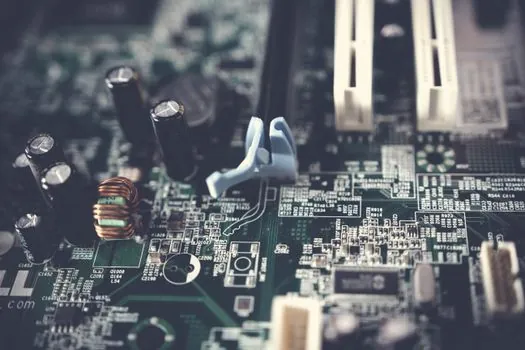
<strong>1. Part Number.</strong> A unique identifier per item; best practice is a non-intelligent part number with no embedded description, so it survives renames and supplier changes [S5]. <strong>2. Part Name and Description.</strong> A short human-readable name plus a longer description to disambiguate similar parts, e.g. a M6x20 hex bolt Zn-plated versus a M6x20 hex bolt A2-70 stainless [S2][S5]. <strong>3. Quantity.</strong> The number of units of this line required to build one parent assembly; this is the field that drives the BOM explosion and total purchased quantity [S3][S5]. <strong>4. Unit of Measure (UoM).</strong> Specifies how the part is used or purchased: "each," "meters," "kg," "liters," or "feet" [S2][S5]. <strong>5. Procurement Type.</strong> "Make," "buy," or "off-the-shelf," which routes the line to the right planner in MRP [S2][S5]. <strong>6. Reference Designators.</strong> For PCBA work, codes like R1, C5, U3 mark where each component sits on the board; this is the field the pick-and-place and inspection stations actually consume [S2][S5]. <strong>7. Cost per Unit.</strong> Standard cost, last-purchased cost, or both; rolling this column up the parent-child tree gives the rolled-up product cost [S1][S2][S5].
Beyond the Seven: Extended Fields for Engineering and Compliance
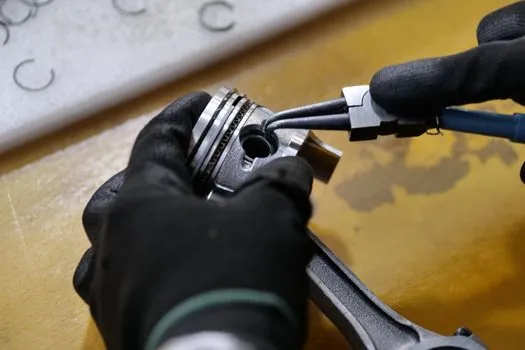
Most real BOMs carry additional fields that turn a parts list into a controlled product model: revision or version, lifecycle state ("In Design," "In Production," "Obsolete"), approved alternates or substitutes, and attachments (drawings, datasheets, work instructions) [S5]. Compliance and sustainability data is now a standard column set, with RoHS, REACH, and conflict-mineral declarations plus carbon-footprint inputs flowing into the same record [S5].
For a flow meter or a pressure transmitter, the same seven fields still apply, but the "extended" tier usually adds calibration certificates, material traceability (e.g. NACE MR0175 compliance for sour service), and per-unit serial number ranges, because those fields are read by the quality system and by the customer's incoming-goods inspection, not just by the planner [S4][S5].
Types of BOM: Engineering, Manufacturing, and Service Views
Three BOM views dominate industrial practice and they answer three different questions: "what does the design need?", "what does the factory need to build it?", and "what does the field tech need to fix it?" [S2][S3][S5].
By structure, BOMs are also classified as single-level (one flat list, no subassemblies) versus multi-level indented (parent-child hierarchy with subassemblies), and the multi-level indented form is the default in modern PLM and ERP systems [S3][S5].
BOM Explosion vs. BOM Flattening
BOM explosion walks down the indented tree, multiplying each child's quantity by the parent's quantity at every level, to give the total raw demand for every part given a planned production quantity of the top-level assembly [S3][S5]. BOM flattening does the explosion once and presents the result as a single-level list, one row per unique part number, with the rolled-up total quantity, which is the format purchasing and external suppliers actually want [S3][S5].
This distinction matters in spec-driven sourcing. When a shaft key is used in three different subassemblies of the same gearbox, the indented BOM shows it three times at its three subassembly parents, but the flattened list collapses it to one line with the summed total quantity, which is the number you put on the purchase order [S5].
Who Creates and Maintains the BOM
Engineering typically owns the EBOM inside PLM, manufacturing engineering owns the MBOM inside ERP/MES, and service engineering owns the sBOM, but the three views must be linked through a common digital thread so a design change in the EBOM cascades into the MBOM and sBOM without manual re-entry [S4][S5].
BOM accuracy depends on disciplined change control: formal change requests, controlled access, audit trails, and a regular BOM audit cycle against the as-built product, because the cost of an inaccurate BOM shows up as line stops, rework, last-minute substitutions, and lost knowledge when experienced employees leave [S3][S7]. Dedicated BOM or ERP modules are now standard even for small manufacturers, because the marginal effort of a structured BOM is much smaller than the cost of a single missed part on a complex build [S3][S5].
Cross-Industry Use Cases and Failure Modes
Aerospace and defense use the BOM to manage complex assemblies, traceability, and regulatory compliance in tightly controlled programs; transportation and mobility use it to support just-in-time manufacturing and to track electric and ADAS subsystems part by part; industrial equipment builders use it to standardize variants across product families [S4]. The same seven-field schema is what makes a lighting equipment and electric lamps catalog cross-reference to a lamps and light fittings catalog, and it is the same schema that a construction machinery and equipment OEM uses to roll up cost across an excavator platform.
Common failure modes are well documented: phantom parts on the MBOM that are consumed in build but never appear on the EBOM; one-to-many part number drift where the same physical part exists under three part numbers; missing alternates that turn a single line shortage into a full line stop; and no revision field, which makes it impossible to tell which drawing a build actually used [S3][S5][S7]. For a lithium-ion cell bill of materials: spec-first breakdown of cathode, anode, the same schema applies, but the procurement type column is dominated by "buy" with tight CoC requirements, and the compliance column carries UN 38.3 transport classification alongside RoHS. Comparable spec-first BOM discipline shows up in Pharmaceutical Equipment Procurement: TCO, GxP, and Supplier Strategy for 2026, where the BOM is the system of record for GxP-relevant component qualification.
Two trackable signals for the next planning window: (1) wider adoption of PLM-side configurator rules that auto-generate an MBOM and sBOM from a single EBOM, removing the manual sync step, and (2) extension of the standard BOM schema with a digital product passport column set (recycled-content share, repair-score, carbon per part) as Right-to-Repair and ESPR reporting requirements harden in 2026 [S4][S5].