
A 2026 buying decision for a sputtering target is driven first by chemistry, then by purity, grain structure, bonding and end-use spec — the quote on the RFQ is the last filter, not the first [S2][S3].
As of 2026-07-02, the global supply base spans US catalogue houses (American Elements), Chinese specialty producers (Konfoong Materials, Loyaltarget, MAT-CN, Xiamen Zhongli) and reagent-grade distributors (Leyan, ChemicalBook) offering the same families — Al, W, Cr, Ti, Se, Cu — at different purity bands, formats and MOQs [S1][S2][S3][S6][S7][S8][S9].
Define the Use Case Before the Quote
Sputtering-target specification is application-driven: semiconductor metallization, decorative coating, photovoltaic absorber, or aerospace surface treatment each have a different spec floor [S1][S2][S5].
For through-silicon via (TSV) metallization, the binding document is ASTM F3166-2016, "Standard Specification for High-Purity Titanium Sputtering Target Used for Through-Silicon Vias (TSV) Metallization," which fixes the chemistry, grain and purity envelope a Ti target must meet to be accepted by an OSAT or foundry [S5]. Decorative-film shops can step down to lower purity Cr rod targets with an FOB China price band of US$25–100/kg at 1 kg MOQ, as listed on Made-in-China.com for chrome rod targets [S4]. The cost delta between a 99.9% and a 99.999% (5N) aluminum target — both offered in the same 76.2 mm × 6.35 mm disc format — is typically 3–10× per kilogram, but the deposition rate, particle count and film resistivity shift at the same time, so the cheaper part often fails an integrated tool's qualification [S3].
Purity Grades and What Each Actually Means
Purity is the single largest cost lever on a target, and the published grades — 99.9% (3N), 99.99% (4N), 99.999% (5N), with 6N reserved for advanced-node logic — are quoted "metals basis" unless otherwise stated [S3][S9].
A 99.999% aluminum disc in 76.2 mm (3.0 in) diameter × 6.35 mm (0.250 in) thickness is a standard catalogue SKU across reagent and specialty houses and ships with a lot certificate showing individual trace metal impurities in ppm [S3]. Tungsten targets in the same 76.2 mm × 6.35 mm disc format, CAS 7440-33-7, are stocked at 3N5–4N5 typical for diffusion-barrier and gate work, and Leyan's listing of the part number shows the same dimensional envelope the industry uses for R&D-scale deposition [S9]. Konfoong Materials specifically calls out "high-purity Cu and co-Cu" target capability for the semiconductor interconnect stack, with selectable grain orientations matched to the customer's sputter tool geometry [S2]. American Elements lists selenium (Se) sputtering targets in its catalogue, available in purities from 99% to 99.9999% (CAS 7782-49-2), priced via request quote [S1].
Material Family Selection Matrix
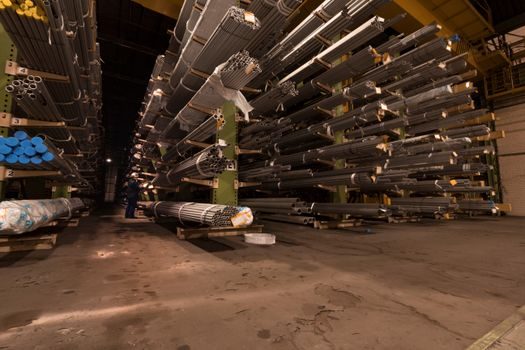
The decision tree in 2026 is: pick the metal or compound first, then the purity band, then the bond, then the format — every step narrows the vendor pool by an order of magnitude [S1][S2][S3][S4][S5][S9].
A useful comparison for sourcing engineers is to line the major families up against the four criteria that actually drive yield and tool uptime:
• Aluminum (Al, 99.999%): low melt point, high deposition rate, used for interconnect and reflective film; common in 76.2 mm × 6.35 mm R&D discs and 300 mm production planar/round targets [S3]. • Tungsten (W, CAS 7440-33-7): high density (~19.3 g/cm³), used for diffusion barriers and gate electrodes; stocked in the same 76.2 mm disc form factor for process development [S9]. • Chromium (Cr, 99.5%–99.9% typical for decorative rod): corrosion- and wear-resistant, supplied as Cr rod targets for architectural and tool-coating lines at US$25–100/kg, 1 kg MOQ [S4]. • Titanium (Ti, ASTM F3166 grade): the controlled-spec option for semiconductor TSV metallization, where chemistry and grain are locked by the standard [S5]. • Copper (Cu, 5N and co-Cu): interconnect metal with engineered grain orientation and "long-life target + ring" assemblies designed to extend campaign life between target changes [S2]. Selenium (Se): sputtering target grade, available from American Elements as a catalogue item in purities from 99% to 99.9999% (CAS 7782-49-2), priced via request quote [S1].
Bonding, Format and Tool Fit
Bonding — diffusion, indium, elastomer, or the increasingly common "long-life target + ring" monoblock — decides how the target is cooled and how long it runs between changes [S2].
Konfoong's 2026-06-30 catalogue pitch is "ability to provide customers with different types of customised long life targets and rings," explicitly tied to "different grain orientations for different customer sputtering requirements" [S2]. That is the right spec to lock in first: a planar target on a circular magnetron with a copper backing plate is a different part than a rotatable target on a cylindrical cathode, and the bond/backing design is what prevents cracking under the 5–25 kW/m² power densities used in production [S2]. Xiamen Zhongli positions itself as "one of the largest film material manufacturers in China, specializing in target plating material, nano material and vaporized plating material" — useful when the RFQ also needs evaporation materials from the same vendor to consolidate the Bill of Materials [S8].
Vendor Tiers and What Each Is Good For

Three tiers cover 2026 sourcing: US/EU catalogue houses, Chinese specialty producers, and reagent distributors — each with different MOQs, lead times and certification depth [S1][S2][S3][S6][S7][S8][S9].
US catalogue (American Elements): broadest chemistry coverage, individual tech data sheets, lot certificates; appropriate for aerospace and R&D where American Elements' own AeroMat 2026 technical presence (June 3, West Palm Beach) signals an active applications team [S1]. Chinese specialty producers (Konfoong Materials, MAT-CN, Loyaltarget, Xiamen Zhongli): strong in Cu, Al, Ti, and compound targets with customization on grain, bonding and long-life ring assemblies; minimum-order quantities often start at 1 kg for standard formats and scale to 50–500 kg for production lots [S2][S6][S7][S8]. Reagent distributors (ChemicalBook, Leyan): small-format R&D discs at 76.2 mm × 6.35 mm in 99.999% metals basis for Al and W (CAS 7440-33-7), shipped with a basic CoA — the right channel for lab qualification, not for a 300 mm fab's 24/7 campaign [S3][S9].
Cost Levers, MOQs and Total Landed Cost
The visible unit price is dominated by purity and material, not by machining — a Cr rod at US$25–100/kg versus a 5N Al disc where the same disc geometry can carry a 3–10× multiplier is the right order of magnitude to budget against [S3][S4].
Add the four hidden levers: (1) bond and backing plate cost, often 20–60% of the target unit price on long-life Cu and Ti assemblies [S2]; (2) grain-orientation engineering for high-rate sputter tools, which is a paid NRE step on the Konfoong quote, not a free option [S2]; (3) certification depth — a basic CoA is fine for decorative work, but TSV metallization requires the ASTM F3166 chemistry/grain package and may require a customer witness coupon run [S5]; (4) shipping and import — tungsten targets are dense (~19.3 g/cm³) and air-freight a 50 kg lot at a meaningful surcharge, while Cr rod at the same mass is much cheaper to move [S4][S9]. For adjacent process-equipment budgeting, the same landed-cost logic — spec lever, MOQ, freight, certification — applies to other vacuum or thin-film-adjacent capital items such as sputtering targets, using the same cost-stack discipline for different equipment families [S4, S6].
Quality Signals and Failure Modes to Watch

The failure modes that get targets returned in 2026 are not exotic — they are purity drift, density shortfall, grain misspecification, and bond delamination [S2][S3][S5].
Check the lot certificate against the format actually shipped: a 5N Al disc quoted at 76.2 mm × 6.35 mm with measured density ≥2.70 g/cm³ is the spec; a part delivered under-size or with density <2.69 g/cm³ will sputter erratically and contaminate the chamber [S3]. For Cu and Ti semiconductor use, grain orientation must be reported — the customer sputtering requirement varies between (111)-textured and randomized polycrystalline, and Konfoong's 2026 datasheet specifically lists "different grain orientations for different customer sputtering requirements" as a controlled variable [S2]. For TSV, ASTM F3166-2016 is the document to call out on the PO; without it, the part is a generic Ti disc, not a TSV-grade target [S5]. For W, density and the absence of tungsten-carbide inclusions at the bond interface are the practical concerns at the 76.2 mm disc format Leyan ships (CAS 7440-33-7) [S9].
Action Plan for a 2026 RFQ
Build the RFQ around five fields and the vendor short-list becomes obvious: (1) chemistry and CAS, (2) purity with metals-basis or assay basis called out, (3) format and dimensional tolerance, (4) bond/backing and grain, (5) the governing spec — ASTM F3166 for TSV Ti, internal spec for Cu interconnect, decorative spec for Cr rod [S2][S3][S4][S5][S9].
Trackable signals for the next buying cycle: American Elements' AeroMat 2026 presence (West Palm Beach, June 3, 2026) is a public datapoint that US catalogue houses are leaning into aerospace surface-engineering accounts alongside their semiconductor business [S1]; Konfoong's continued marketing of "long life targets and rings" suggests the rotatable-monoblock architecture is being pushed as a service-life upgrade, not a premium [S2]; and the steady re-listing of the 76.2 mm × 6.35 mm 5N Al and W disc format across multiple vendors indicates it remains the de facto R&D-geometry standard entering the second half of 2026 [S3][S9].
For component-level specifications, see linear guide, and crossed roller guide.