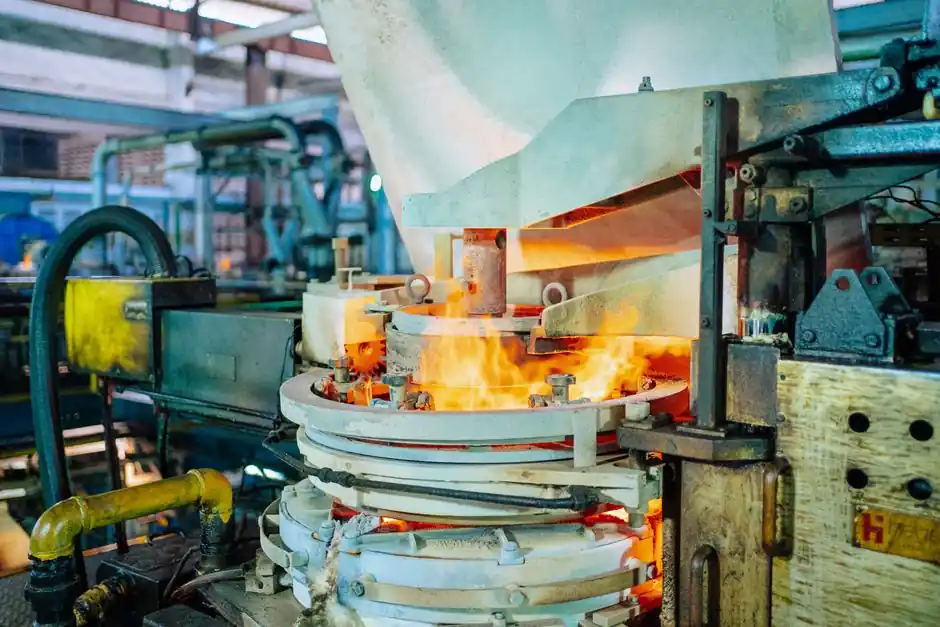
Aluminum held 57% of North American automotive die casting share in 2025, and the US aluminum die casting market reached $10.49B in 2025 with EV components driving 9.65% CAGR growth [S3]. Magnesium is the fastest-growing alloy segment at 8.25% CAGR through 2031, pulled by EV and aerospace lightweighting programs [S3].
Procurement teams in automotive, EV, aerospace, defense, electronics, and medical device sectors now have a wider supplier pool than five years ago, but machine tonnage, certification depth, and post-casting service capability vary widely. The selection framework below distills what separates a fit-for-purpose die casting partner from a sub-tier shop.
What a Die Casting Die Supplier Actually Delivers
A die casting die supplier provides more than the steel tooling: it delivers the engineered cavity geometry, cooling channel layout, ejector system, and trim die that define cycle time, dimensional repeatability, and surface finish. Die casting itself forces molten metal under high pressure into a reusable hardened steel mold cavity, producing complex, near-net-shape components with tight tolerances at volumes few other casting methods can match [S3][S5].
The die is the single largest tooling investment in any high-pressure program. Foundries running 250T to 1,600T clamp machines, such as Le Sueur Incorporated's 12-machine fleet spanning 250-ton to 1,600-ton Buhler and Prince presses, design dies around squeeze-pin and vacuum-assist systems to control shrinkage porosity and gas porosity in pressure-tight components [S4]. The reference catalog of die types and die-design considerations is covered in the die casting die encyclopedia entry, which links die geometry decisions to alloy behavior and machine tonnage. For a process-level view of how the die sits inside the machine, the die casting machine encyclopedia page maps clamp force, shot sleeve volume, and injection velocity to part weight and alloy.
Certifications That Actually Matter for Regulated Programs
IATF 16949:2016 and ISO 9001:2015 registrations are non-negotiable for automotive Tier 1 and OEM sourcing; without them, the supplier is functionally locked out of structural, safety-critical, and powertrain programs [S3]. Le Sueur Incorporated's quality management system is registered to ISO 9001:2015 and includes Visi-Trak process monitoring, MAGMA casting simulation, digital and computed radiography, and complete metallurgical and NDT laboratories [S4].
Defense and aerospace buyers add NADCAP for heat treatment and special processes, while medical programs require ISO 13485 on top of ISO 9001. Forged-in traceability, PPAP/APQP documentation flow, and material certificates with full chemistry and mechanical test data are baseline expectations at any tier-1 shop. Buyers should verify the certification scope matches the part classification: an ISO 9001 registration does not automatically cover IATF 16949 automotive scope, and vice versa.
Alloy Capability and Machine Tonnage Fit
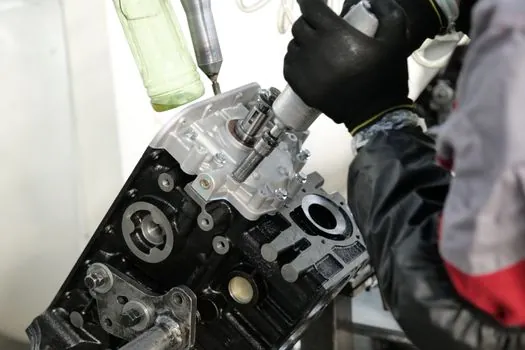
Common die casting alloys are aluminum, zinc, magnesium, copper, lead, tin, and bronze, though steel is generally forged rather than die cast due to strength and durability limits [S5]. Among the dominant alloys, aluminum 360, 380, 390, and 413 are the workhorses for structural and pressure-tight applications; zinc serves small, intricate parts with tight tolerances; magnesium is specified where minimum mass is the design driver [S4][S5].
Machine tonnage range is a stronger fit indicator than company age. A shop covering 60T to 2,500T clamp capacity can run anything from a 50-gram zinc connector to a multi-kilogram automotive structural casting; a single-tonnage shop cannot [S3]. A useful comparison framework when shortlisting three or four finalists:
Selection criterion 1, alloy coverage: does the shop run aluminum plus zinc and/or magnesium, or only one alloy family. Selection criterion 2, tonnage range: minimum clamp tonnage at least 30% above your heaviest projected part, and maximum tonnage at least 20% above your largest part weight. Selection criterion 3, in-house secondary operations: CNC machining, finishing, and assembly on the same site cut lead time and reduce shipping damage. Selection criterion 4, certification scope: IATF 16949:2016 for automotive, ISO 13485 for medical, NADCAP for aerospace special processes. Selection criterion 5, process controls: documented vacuum-assist, squeeze-pin, real-time shot monitoring, and MAGMA or similar flow simulation.
For context on the equipment side, the aluminum die casting machine encyclopedia entry covers cold-chamber cell layouts typical of 800T and above structural programs, while the gravity die casting machine encyclopedia page maps the lower-pressure alternative used for prototypes and short runs.
Real Use Cases by Industry Vertical
Automotive remains the largest die casting sector at 83% of OEM demand, driven by engine blocks, transmission cases, steering columns, and the rapid migration to large-format structural EV body and battery housings [S3]. Aluminum Die Cast Co. (ADC) supplies military, aerospace, medical, automotive, and marine programs, with in-house tooling, casting, CNC machining, and finishing since 1950 [S1].
Electronics depends on magnesium die castings for high-precision housings, EMI enclosures, and small connectors; zinc dominates cabinet hardware, door handles, and decorative trim where surface finish matters more than mass [S5]. Aerospace and defense pull thin-wall structural aluminum and magnesium parts with full traceability and NADCAP-credentialed supply chains. Medical device enclosures, where cosmetic surface and dimensional repeatability matter, are a growing fit for multi-slide and conventional cold-chamber cells with vacuum assist.
Limitations and Common Failure Modes
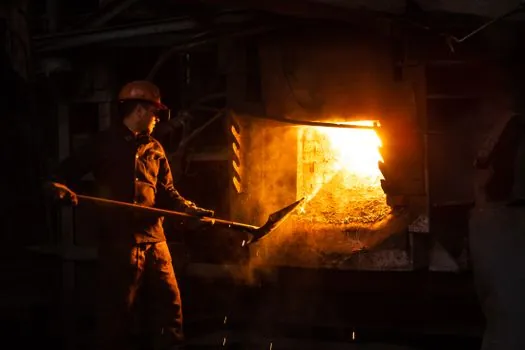
Die cast parts may contain microscopic fractures or irregular grain flow patterns because the process does not produce the uniform molecular structure of forging or extrusion, which makes them more vulnerable to stress, corrosion, or high temperatures without secondary strengthening [S5]. Shrinkage porosity in heavy-mass or isolated areas is the dominant leak-path failure mode in pressure-tight castings, addressed by squeeze-pin displacement during the semi-solid cooling window and by vacuum assist during injection [S4].
Upfront tooling investment is higher than sand or investment casting, so high-pressure die casting is typically used only for higher-volume applications where the per-part amortization pays back [S4]. Buyers should also confirm ejector pin mark locations, draft angles, and parting line access before tooling kickoff, because late changes to die geometry after sample T1 are expensive. For a wider view of how die casting compares to alternative metal forming routes, the die casting process encyclopedia entry covers the trade-offs against sand, investment, and permanent mold casting.
Supplier Shortlist Snapshot
Dynacast operates a global precision die casting network across aluminum, zinc, and magnesium, with multi-slide, hot-chamber, cold-chamber, and Thixomolding technologies, plus engineering, secondary operations, and surface finishes as in-house services [S2]. ADC has been in continuous operation since 1950 with RFQ-driven tooling, casting, CNC machining, and finishing in California [S1].
Gibbs Die Casting, headquartered in Henderson, Kentucky, is one of North America's largest high-pressure aluminum die casting suppliers, founded in 1965 and focused on automotive OEM and Tier 1 structural and safety-critical components [S3]. Other named players in the US shortlist include Pace Industries, Ryobi Die Casting USA, Dura/Shiloh, Empire Die Casting, and RCM Industries, the last of which supplies finished aluminum die cast parts to top manufacturing companies [S3][S6]. Le Sueur Incorporated rounds out the shortlist with 12 die casting machines from 250T to 1,600T, in-house design, and proprietary squeeze-pin technology [S4].
Verifiable Signals to Track Next

Track IATF 16949:2016 surveillance audit dates and NADCAP special-process re-accreditation windows on each finalist; lapses are a leading indicator of program risk. Confirm 2026 capacity additions in the 800T to 2,500T clamp range, because the structural EV segment is pulling the largest tonnage slots hardest. Magnesium alloy growth at 8.25% CAGR through 2031 is a structural shift, not a cyclical blip, so shops adding magnesium-capable cold-chamber cells in 2026 deserve priority on the shortlist [S3].
For related spec-first procurement frameworks outside the die casting universe, see the industrial fastener suppliers 2026 shortlist and the air compressor procurement spec-gate guide.