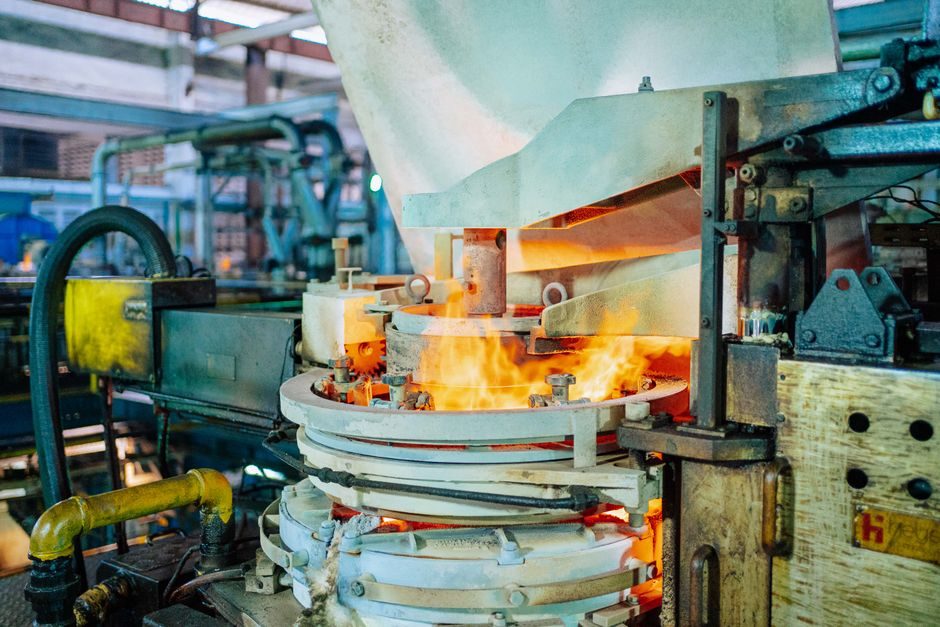
Lighting fixture housings and heat sinks split cleanly into two process lanes: aluminum heat sinks 3-5 mm thick, where squeeze casting eliminates shrinkage porosity and delivers pressure-tight, heat-dissipating bodies, and thin-wall decorative trim, where high-pressure die casting on a cold-chamber die casting machine remains the higher-throughput choice [S6][S2].
For OEM specifiers, the decision turns on three measurable numbers: minimum wall thickness, alloy family, and acceptable porosity class under NADCA Product Specification Standards for Die Castings (2015) [S3]. Heat-sink bodies that must pass thermal-cycling tests or carry LED driver cavities are the canonical squeeze-cast use case; thin die-cast trim, reflectors, and bezels are not.
Process Boundary: Squeeze Casting vs HPDC for Fixtures
Squeeze casting, also called liquid metal forging, pours molten metal into a preheated die and applies pressure that is held through solidification, so shrinkage porosity is essentially eliminated [S2][S6]. Because the cavity fills slowly rather than being injected at high velocity, squeeze castings are normally thicker-walled, with a minimum of 0.12-0.20 in (3-5 mm), so the liquid aluminum does not freeze before the cavity is full [S6].
High-pressure die casting (HPDC) injects molten aluminum, zinc, or magnesium into a steel die at high speed and pressure; cycle times are short, and complex net-shape features under 3 mm are routine [S2]. For aluminum lighting parts specifically, the cold-chamber process is the default because aluminum's melt temperature sits above the 650 °C threshold that separates hot-chamber and cold-chamber machine classes [S1].
The boundary for fixture work is therefore simple: walls ≥ 3 mm plus a need for pressure-tight, low-porosity, heat-treatable bodies point at a squeeze casting machine; walls < 3 mm or high cosmetic surface class point at HPDC on a die casting machine.
Alloy and Wall-Thickness Gates
Aluminum squeeze casting centres on aluminum-based alloys prized for strength-to-weight ratio, corrosion resistance, and thermal conductivity, but the process depends on precise alloy selection and strict melt-temperature management [S7]. For lighting heat sinks, common feedstock families include AlSi9Cu3, AlSi12, and A356-class alloys, all of which are routinely squeeze-cast in industrial production [S7].
Zinc and magnesium are normally cast on hot-chamber HPDC machines because their melting points sit below the 650 °C threshold; brass can be cast on cold-chamber or squeeze equipment [S1]. For most outdoor or architectural lighting, this rules zinc out for corrosion reasons and keeps the process window on aluminum cold-chamber HPDC or aluminum squeeze casting.
Wall-thickness rules of thumb align with NADCA design guidance: avoid drastic wall-thickness changes and isolated thick sections, because localised hot spots drive shrink porosity [S5]. Where stiffness is needed without thick walls, rib, pocket, and U-section geometries raise section modulus without raising mass [S5]. A heat-sink body designed to these rules can be produced by either process; the deciding factor is whether the part must withstand thermal cycling at 150-200 °C without blistering, which is where squeeze casting pulls ahead.
Machine Sizing Procedure for Fixture Runs
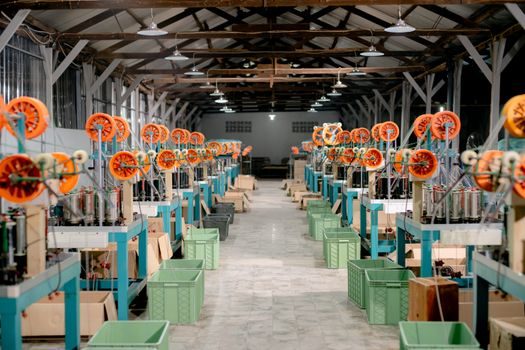
Once the process is locked to squeeze casting, machine sizing follows the same logic used for HPDC: shot weight should sit 30-40 % above the combined weight of parts (all cavities), runners, and gating; platen size must match the mould footprint derived from the cavity count; and tonnage is bumped one or two steps up from the baseline when surface finish, powder coating, or plating is required [S1].
Job parameters map to machine specifications in the same matrix as HPDC: job weight, job size, number of cavities, job material, and production quantity drive clamping force, die platen size, die height, tie-bar spacing, casting area, and motor power [S1]. For lighting heat sinks, a typical 4-cavity mould running AlSi12 at roughly 2-4 kg shot weight lands in the mid-tonnage class, often 800-1,600 kN clamping force depending on projected area.
A useful internal check: the squeeze casting machine must hold its rated pressure through full solidification of the thickest section, not just at fill. This is the operational difference that separates a true squeeze casting machine from a high-pressure die casting machine re-tasked for slow-fill work; the press frame, intensification system, and die-height control are sized for sustained tonnage, not peak injection force.
Comparison: Squeeze Casting vs HPDC vs Gravity Die Casting for Fixtures
Side-by-side, the three competing processes for aluminum lighting housings line up as follows against the four decision criteria that matter most to lighting OEMs: [S2]
1) Minimum wall thickness: HPDC handles roughly 1.5-3 mm, squeeze casting 3-5 mm, and gravity die casting roughly 3-6 mm, with HPDC winning on thin-wall decorative trim [S6].<br/>2) Porosity / pressure tightness: squeeze casting is essentially porosity-free; HPDC carries some gas porosity unless vacuum-assist is added; gravity die casting sits between, with feed-metal-dependent shrinkage [S2][S6].<br/>3) Heat-treatability: squeeze castings are routinely T6-aged for premium heat sinks; HPDC aluminum is generally limited to as-cast temper because trapped gas blisters during solution treatment.<br/>4) Cycle time / cost per part: HPDC is the fastest and cheapest at scale, squeeze casting is roughly 2-4x HPDC cycle time but delivers forged-class properties, and gravity die casting is the slowest of the three.
For lighting OEMs, this means vacuum die casting is the natural hybrid when HPDC tonnage is needed but porosity must drop, while aluminum die casting on a standard cold-chamber press remains the cost leader for cosmetic parts. The full squeeze-cast route pays back only when the fixture is a heat sink, a pressure-tight driver housing, or a structural body.
Standards, Tolerances, and What Buyers Should Require

Specifying squeeze-cast lighting parts should reference NADCA Product Specification Standards for Die Castings (2015 Edition), which lays out the production-purchasing checklist covering alloy, dimensional tolerance class, surface finish, and inspection scope [S3]. NADCA's checklist for die, semi-solid, and squeeze-casting production is the single document that aligns caster and OEM on porosity grade, machining stock, and traceability [S3].
For powder-coated or plated exterior fixtures, specify post-casting T6 heat treatment on the drawing, and require a pressure-tightness test (commonly 2 bar air-under-water or helium leak check) on 100 % of parts for driver-housing variants. Cosmetic-grade A356-T6 heat sinks routinely hit thermal conductivity in the 150-170 W/m·K range after T6, and CTE around 21 × 10⁻⁶ /°C, which keeps LED junction temperatures stable across the -40 to +85 °C operating window common in roadway and industrial luminaires.
A useful spec language block: "Squeeze cast to NADCA 2015 standards, alloy A356.0 (or AlSi9Cu3 per EN 1706), T6 temper, minimum wall 3 mm, maximum porosity Grade 2 per ASTM E505, machined mating faces to ±0.05 mm, leak rate < 1 × 10⁻⁵ mbar·L/s at 1 bar." This is the kind of spec that lets a foundry quote apples-to-apples.
Cost, Cycle, and When Not to Choose Squeeze
Squeeze casting cycle times run roughly 2-4 minutes per shot on mid-tonnage presses, compared with 30-90 seconds for cold-chamber HPDC of comparable shot weight, so the per-part cost premium is real [S2][S6]. For high-volume decorative trim under 3 mm wall, this premium is hard to justify, and a cold-chamber die casting machine is the right call.
Squeeze casting is the wrong choice when the fixture is purely cosmetic, when lead-time is under four weeks, when tooling budget is below the threshold needed for a robust preheated die system, or when the part geometry demands undercuts or slides that only HPDC's high-velocity fill can handle. The same logic also routes magnesium lighting parts to hot-chamber HPDC rather than squeeze casting, since magnesium's melt temperature and reactivity profile sit outside the standard squeeze-casting window [S1].
For deeper context on how the same selection logic plays out in higher-temperature structural parts, the spec map for squeeze casting machine selection for aerospace components walks through the alloy and tonnage gates from a different angle, while the vacuum die casting machine selection for telecom enclosures piece covers the porosity-driven hybrid route that some lighting OEMs use for thin-wall driver covers.
Track two signals over the next buying cycle: NADCA's next standards revision cadence (currently on a three-year major-revision schedule, last revised 2015) and any new low-pressure / vacuum-squeeze hybrid presses entering the 800-1,500 kN class, which would compress the cost gap between squeeze casting and HPDC for sub-4 mm wall lighting parts.