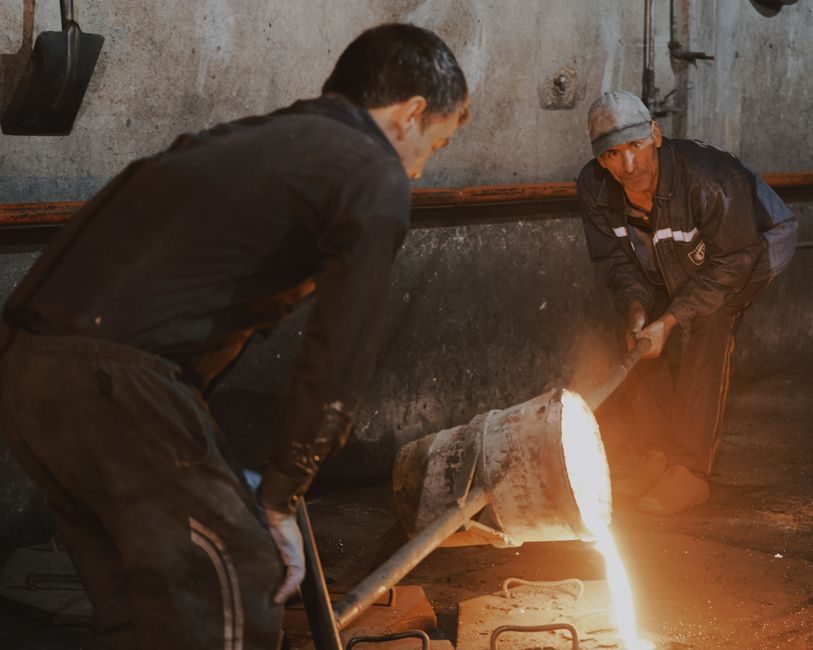
Squeeze casting machine selection is governed by three coupled numbers, not a single tonnage rating: the maximum pressing force the hydraulic press can deliver, the shot weight the sleeve-and-plunger assembly can hold, and the resulting specific pressure on the projected area of the casting at end-of-stroke [S1][S2].
Published experimental work on Al 6061-SiC composites and A390 aluminum alloy has used 25-ton hydraulic presses with squeeze pressures of 60, 90 and 120 MPa, melt superheats in the 50–150 °C window above liquidus, and die preheats held above 200 °C to suppress cold-shut and misrun defects [S3]. A mis-sized press typically shows up first as porosity above 1–2 % or as secondary dendrite arm spacing drifting outside the 15–35 µm band that marks a sound squeeze-cast part [S2].
For a buyer comparing vertical squeeze-casting presses built around brass, aluminum and composite alloys, the same selection logic applies across the catalog — for context on the broader machine class see the squeeze casting machine reference and the related aluminum die casting machine and gravity die casting machine pages.
Clamp Force, Projected Area and Specific Pressure
Specific pressure on the casting is calculated as pressing force divided by projected area, and it is the value that drives feeding and shrinkage compensation, not the bare tonnage of the press [S1]. A typical squeeze-casting run in the published literature sits between 50 MPa and 150 MPa on Al alloys, with 100 MPa widely used as a baseline for safety-critical structural parts [S2][S3].
For a part with a 300 cm² projected area, 90 MPa of specific pressure requires roughly 270 tonnes of clamp force before any packing-factor allowance; most procurement specs add a 1.2–1.4× derate to absorb pressure losses in the intensifier, die deflection and the high-pressure line [S3]. Buyers should ask for a force-vs-stroke curve at the working stroke, not just the peak rating, because intensifier pressure typically drops 10–20 % as the casting solidifies under load [S2].
Shot Weight, Sleeve Diameter and Plunger Velocity
Shot weight is bounded by sleeve volume, and sleeve volume is set by the bore and the fill length the plunger can deliver before the intensification phase starts. For Al alloys the typical fill fraction is 40–70 % of sleeve volume; for brass, the higher melt density and shorter solidification range allow fill fractions above 70 % on dedicated brass squeeze-casting machines, which is the configuration carried in the brass-focused CENS product listing [S4].
Plunger velocity during the low-speed fill phase is normally held between 0.1 and 0.5 m/s to avoid air entrapment, then switched to intensification once the cavity is 90–95 % filled; the intensification ramp itself should reach full pressure within 50–100 ms to feed solidification shrinkage effectively [S2]. On a 25-ton-class laboratory press the intensification piston is usually a separate hydraulic intensifier rather than the main ram, because the main ram cannot move fast enough to track solidification [S3].
For buyers cross-shopping high-pressure die casting alternatives, the die casting machine reference lays out where squeeze casting diverges from a conventional HPDC cycle.
Alloy-Specific Process Windows
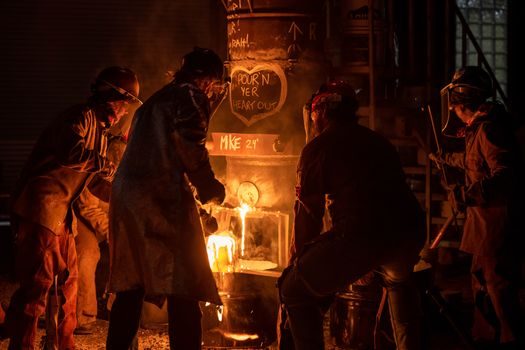
Aluminum alloys are the dominant workload: A390 hypereutectic Al-Si and Al 6061-based MMC systems have been characterized at 60–120 MPa squeeze pressure, 50–150 °C superheat above liquidus, and 200–350 °C die preheat in published parametric studies [S1][S3]. For A390, secondary dendrite arm spacing below ~25 µm and porosity below 1 % are the typical acceptance criteria, and both move with pressure more than with temperature once pressure exceeds 90 MPa [S3].
Brass and copper-alloy squeeze casting operates at higher melt temperatures (typically 900–1000 °C) and tolerates longer die-preheat windows, but the die-steel grade must be H13 or a hot-work equivalent to survive the thermal cycle; tool life on brass is often 2–3× shorter than on Al under the same specific-pressure setting [S4]. Mg-alloy squeeze casting is technically feasible but rare, because the protective atmosphere requirement (typically SF6/N2 or a newer fluorinated alternative) and the magnesium's flammability limit the press builder's options.
Defect-Driven Selection: Porosity, SDAS and Tensile Response
ANOVA-based parametric studies on Al 6061-SiC composites show that squeeze pressure is the dominant factor for ultimate tensile strength and hardness, while melt temperature and SiC weight fraction are secondary; elongation responds most strongly to melt temperature in the tested range [S1]. On A390, the response surface methodology confirms that solidification time, secondary dendrite spacing and porosity are all pressure-sensitive, with the steepest improvement between 60 and 90 MPa and diminishing returns above 100 MPa [S2][S3].
In practice, buyers who are chasing a tensile or fatigue target should size for ≥100 MPa specific pressure and verify with a porosity check on the first-off coupon; buyers who are chasing a pressure-tightness or machinability target can drop to 70–80 MPa and gain a smaller, cheaper press. The trade-off table below summarizes the four most common selection gates:
Selection gate comparison: (1) Clamp force / specific pressure — 60–150 MPa range, 100 MPa typical baseline; larger force buys porosity reduction and lower SDAS [S1][S3]. (2) Shot weight / sleeve bore — Al fill 40–70 %, brass fill up to 70 %+ [S4]. (3) Intensification response time — ≤100 ms to track solidification [S2]. (4) Die preheat and die-steel grade — H13 hot-work tool steel standard; preheat 200–350 °C for Al, 250–400 °C for brass [S3][S4].
Process Parameters That Move With the Press
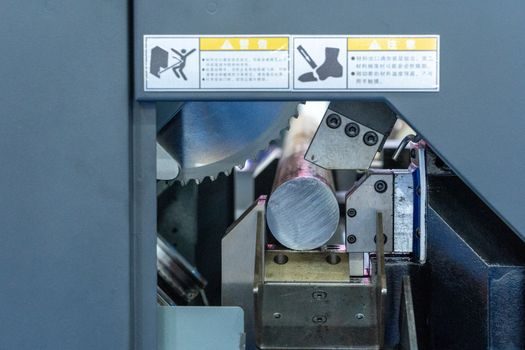
Squeeze pressure, melt superheat and die preheat form a coupled set, and moving one without the others typically degrades the casting [S2]. Holding pressure constant while raising die preheat reduces misrun risk but lengthens cycle time and shortens die life; holding die preheat constant while raising pressure tightens the dendrite arm spacing and reduces porosity linearly up to ~100 MPa [S3].
The Box-Behnken and L9 Taguchi designs in the published literature consistently rank pressure first, then melt temperature, then die preheat, for both mechanical and microstructural responses [S1][S3]. Buyers should plan a DOE on the first 30–50 shots at the new press rather than rely on the OEM's generic process sheet, because intensifier response and hydraulic stiffness vary press-to-press even within the same model line.
Press Class vs Application Fit
Laboratory and pilot presses in the 10–25 ton class are used for coupon-level work and small Al MMC components, and are the size at which the bulk of the published parametric data has been generated [S3]. Production presses for automotive structural parts and brass fittings generally start at 100 tons and scale to 800+ tons; a 200-ton press with a 250 mm sleeve bore will typically deliver 1.5–3.5 kg of Al per shot at the 100 MPa specific-pressure operating point.
For a procurement team that is also evaluating cold-chamber die casting as a comparator, the cold chamber die casting machine sizing and selection guide and the cold chamber die casting machines for oil and gas sourcing map cover the cycle-time and capital-cost trade-offs that a squeeze-casting line must beat to win the order. The adjacent squeeze casting machine selection: force, shot weight and pressure gates article complements this one with a parallel gate-by-gate checklist.
Verification, Standards and Trackable Signals
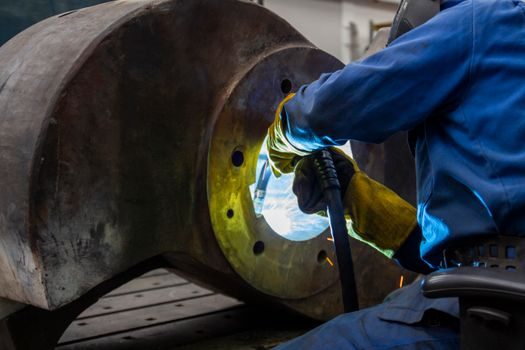
There is no single ISO or ASTM standard that fixes a squeeze-casting machine's clamp tonnage; buyers typically reference ASTM E8/E8M for the tensile coupon taken from the casting, ASTM E112 for grain-size checks, and the OEM's pressure calibration certificate for the intensifier. For a brass-specific build, the CENS supplier listing flags squeeze-casting machine for brass as a distinct catalog category, which is a useful marker that the OEM has qualified the die-steel, lubrication and shot-end package for the higher-temperature alloy [S4].