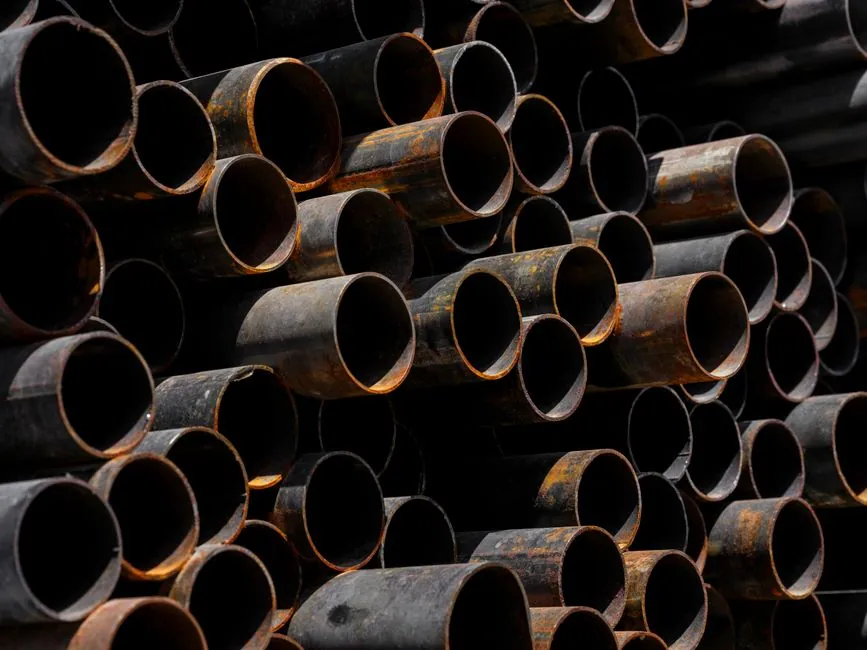
Stainless steel pipe is defined as a chromium-bearing alloy pipe containing at least 10.5% Cr, which forms a self-healing passive oxide film and delivers a typical service life of 50 years or more in neutral environments [S2][S5]. The same pipe is roughly 3 to 5 times the unit price of equivalent carbon steel pipe, a gap driven by nickel, chromium, and molybdenum alloying content [S5].
Buyers comparing stainless to carbon and galvanized options should treat stainless as a corrosion and hygiene solution first, not a cost-default structural pipe; the stainless steel pipe category covers seamless, welded, and duplex variants used in petrochemical, food, pharmaceutical, and architectural service. This guide maps the trade-offs engineers need to specify it correctly.
Core Material Definition and Grade Map
Stainless steel is a special steel made by adding chromium and other metal elements to ordinary carbon steel, with a chromium content of no less than 10.5% forming a dense chromium oxide protective film that prevents further oxidation [S2]. The 10.5% Cr floor is the formal boundary; austenitic 304/316, ferritic 430, martensitic 410, and duplex 2205 families all sit above that threshold but diverge sharply on corrosion, strength, and magnetic behaviour [S2][S8].
Duplex stainless steel pipes offer a combination of excellent corrosion resistance and high strength, roughly doubling the yield strength of standard 304/316 austenitics while keeping nickel content lower, which has driven their growth in chemical and offshore service [S8]. For a wider alloy and grade reference, see the stainless steel base material page.
Advantages: Corrosion, Temperature, Hygiene, Strength
Stainless steel pipe will not rust or corrode over time like other metal pipes, and it maintains that resistance in wet and corrosive media while staying easy to maintain [S1][S2]. The passive layer regenerates after mechanical damage, which is why hygienic lines in food, dairy, and pharmaceutical plants run almost exclusively on 304L/316L stainless with orbital welds and Ra-controlled internal finishes [S2].
Stainless can maintain stable mechanical properties at higher temperatures, so stainless steel pipes can be used to transport high temperature media or for high temperature equipment, with common application areas being boilers and high-temperature process exchangers [S2]. High tensile strength and good toughness allow the pipe to withstand greater pressure and mechanical stress, supporting high-pressure process headers and superheated steam lines [S2]. The material is also 100% recyclable, which keeps end-of-life scrap value high and supports LEED and BREEAM credits on commercial builds [S4].
Disadvantages: Cost, Welding, Thermal Conductivity, Pitting
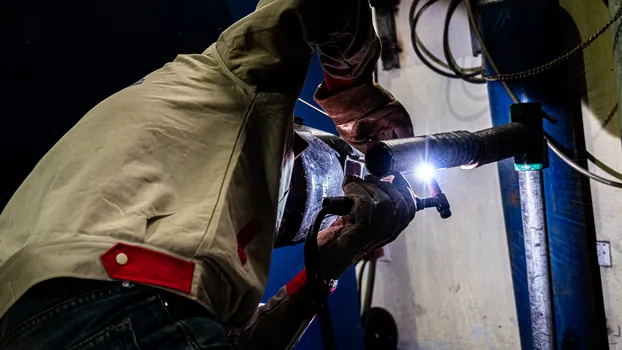
Stainless steel pipe disadvantages include high costs, potential corrosion, welding difficulty, limited thermal conductivity, and high maintenance in certain environments [S5]. The cost penalty is structural: nickel, chromium, and molybdenum plus energy-intensive refining push unit price well above carbon steel, which is why many oil and gas and construction buyers still default to carbon steel for non-corrosive service [S2][S5].
Stainless steel can still corrode in chloride-heavy environments, coastal areas, or chemical plants, where pitting and crevice attack shorten life and force coatings, upgrades to 316/904L, or premature replacement [S5]. Welding is harder than carbon steel because of the risk of sensitisation, heat-affected-zone cracking, and the need for skilled welders using matched filler metals and back-purge on austenitic grades [S2][S5]. Thermal conductivity is roughly one-third that of carbon steel, which is poor for heat-exchanger tube duty unless the design accounts for it, and the dense chromium oxide film that protects the metal also resists cutting and grinding, slowing fabrication [S2][S3].
Selection Criteria: When Stainless Beats Carbon Steel
Stainless is the correct pick when the line carries corrosive chemicals, sanitary media, or high-temperature process fluid, or when the owner wants a 50-year life with minimal recoating [S2][S5]. Carbon steel with FBE, 3LPE, or galvanising remains the right answer for buried water mains, structural casing, fire-water ring mains, and dry product conveying where the internal fluid is non-corrosive and budget dominates [S3].
For background on the carbon alternative, see steel pipe. The decision tree is short: chloride or acid exposure, temperature above ~200 degrees C, or hygienic service selects stainless; otherwise coated carbon wins on first cost, and stainless recovers the premium only when life-cycle cost, not capex, is the procurement metric [S3][S5].
Comparison: Stainless vs Seamless Carbon vs Galvanized

On corrosion resistance, stainless (10.5%+ Cr passive film) outperforms both seamless carbon steel and galvanised pipe in chloride and acidic service, while carbon steel needs painting, galvanising, or internal lining to approach similar life [S2][S3][S6]. On cost, seamless carbon is the cheapest per tonne, galvanised sits in the middle, and stainless runs 3-5x carbon, with the gap widening when nickel and molybdenum content rises [S3][S5].
On temperature, carbon steel loses strength and stability at high temperatures and may deform or oxidise above its limit, while stainless austenitics retain mechanical properties into the 800-900 degrees C range, which is why boiler and superheater tubes default to stainless or alloy [S2][S3]. On thermal conductivity, carbon steel wins, making it preferred for heat-exchanger and economiser duty unless chloride or fouling rules it out, while stainless is the default for process-side tubes in corrosive service [S3]. On fabrication, carbon is easier to cut, weld, and bend with standard equipment, while stainless demands skilled welders, back-purge on austenitic grades, and dedicated tooling [S2][S3].
Limits, Failure Modes, and Standards Discipline
The dominant in-service failure mode is pitting and crevice corrosion in chloride media, not general rust; cold-work magnetism in austenitic grades can also trip specification surprises on instruments that assume non-magnetic piping [S2][S5]. Sensitisation at 450-850 degrees C during welding or hot forming can rob austenitic stainless of intergranular corrosion resistance, which is why 304L/316L low-carbon grades are mandated for welded hygienic service [S2].
Specify to ASTM A312 for seamless and welded austenitic, A790 for seamless and welded duplex, and A403 for wrought austenitic fittings; pressure design follows ASME B31.3 for process and B31.1 for power, with NACE MR0175 mandatory for sour service above the NACE partial-pressure limits. For project economics, the upstream ferrochrome supply risk in 2026 and molybdenum upstream and downstream feeds directly into the 10.5% Cr and Mo content that defines this alloy family.
Track two signals before placing volume orders: the LME nickel and ferrochrome price spread, which sets the stainless-to-carbon price ratio, and the ASTM A312/A790 revision cycle, which historically aligns with ASME B31.3 updates every 2-3 years.