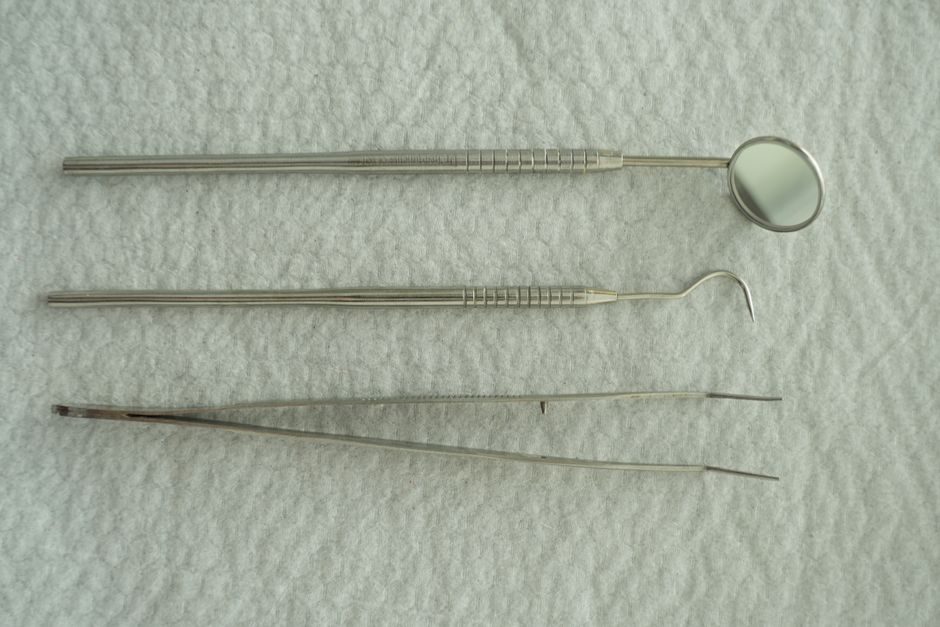
Austenitic 304/304L and 316/316L account for the bulk of medical-device stainless stock, with machinable medical-capillary tube grades (304, 304L, 304J1, 310S, 321, 316, 316L, 800, 840) explicitly listed in current Chinese capillary-tube production catalogues [S2].
For reusable surgical instruments, implants, and hypodermic assemblies, ASTM F899 and ISO 7153 govern the chemical and mechanical envelope, while ISO 5832-1 specifies the compositions acceptable for implant-grade 18Cr-14Ni-2.5Mo austenitic stainless [S6]. Devices exposed to body fluids, sterilisation chemistry, and repeated autoclaving at 121-134 °C demand the corrosion headroom of 316L over generic 304.
Why 304 vs 316L Is the First Decision
316L's 2-3 % molybdenum addition lifts pitting resistance equivalent (PREN) from roughly 18 in 304 to around 25, which is the threshold that matters once chloride-bearing fluids (saline, Ringer's lactate, bleach-based disinfectants) contact the surface [S6]. 304 still wins on raw cost and formability for non-implant hardware — trays, bed rails, sluice-room sinks — where chloride exposure is intermittent and easy to rinse.
Capillary medical tube runs that will be drawn to sub-millimetre wall thicknesses benefit from 304L or 316L because the extra-low carbon cap (≤0.030 % C versus 0.08 % in standard 304) suppresses chromium-carbide precipitation at the 600-800 °C sensitisation window during tube welding [S2]. Skipping the "L" variant on welded hypodermic stock is the most common reason for intergranular failure after three to five autoclave cycles.
Forming Method Drives the Sub-Grade Call
Tube mills running SP-12 and SP-40 precision argon-arc welding systems followed by floating-core-head drawing rely on 304L/316L coil because the post-weld anneal must recover corrosion resistance lost in the heat-affected zone [S2]. Deep-drawn surgical trays and bowls that see heavy cold work are typically specified in 305 (higher Ni for ductility) or 304DDQ — both keep the 18-20 % Cr / 8-10 % Ni envelope but trade a small amount of strength for a deeper draw.
Machined orthopaedic instruments (drill guides, reamer handles) commonly use 303 because the added sulphur (0.15-0.35 %) raises machinability roughly 60 % over 304, at the cost of a measurable drop in corrosion resistance — a trade the manufacturer accepts only on internal, non-patient-contact surfaces [S6]. For guide wires, stylets, and orthodontic archwires, Fort Wayne Metals and similar producers publish bioabsorbable Mg-Zn alloy alternatives alongside traditional 304V stainless wire, reflecting the push toward temporary implants [S4].
Surface Finish, Sterilisation, and Passivation
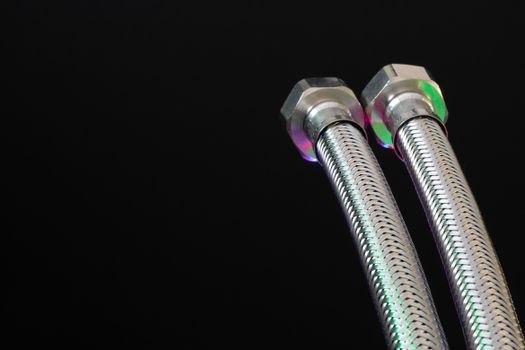
Medical devices are typically specified to an Ra ≤ 0.8 µm electropolished finish for contact surfaces, which is roughly 4× smoother than standard 2B mill finish and dramatically easier to clean of bioburden [S6]. Electropolishing strips 5-10 µm of surface metal, exposing a chromium-oxide-enriched layer that re-passivates within minutes of air exposure.
Repeat passivation is needed after any mechanical rework that breaks the surface; relying on autoclaving alone to "passivate" the steel is a common but unsupported shop-floor habit.
Grades Compared on Four Decision Criteria
For the procurement engineer the practical matrix looks like this:
- 304 / 304L — best for general hospital hardware (trays, sluice-room sinks, furniture); PREN ≈ 18; lowest cost; cannot be specified in chloride-loaded implant or long-term body-contact use [S6].
- 316 / 316L — first choice for surgical instruments, hypodermic needles, and implant-grade tubing; PREN ≈ 25 due to 2-3 % Mo; "L" mandatory on welded assemblies to avoid sensitisation [S2][S6].
- 321 / 310S — used where repeated sterilisation or high-temperature service (above 600 °C) is expected; titanium-stabilised 321 resists intergranular corrosion in welded sections exposed to cyclic heat [S2].
- 303 — reserved for machined instrument internals; not allowed on patient-contact surfaces because sulphur inclusions reduce corrosion resistance [S6].
Cross-reference to the broader construction-facing grade logic in the Stainless Steel Grade Selection Map for Construction Projects — same family, different acceptance criteria.
Supply-Chain and Regulatory Signals to Track

From 1 July 2026 the EU steel safeguard cuts duty-free stainless and carbon steel import volumes into the EU from 34.5 million tons to 18.3 million tons, with over-quota imports now hit by a 50 % tariff (up from 25 %) [S3]. Medical-grade seamless tube and precision capillary drawn in China, then re-exported through Swiss processors into the EU, sits squarely inside that quota — expect 4-8 week lead-time slippage on European hospital tenders through Q4 2026.
Swiss Steel Group's June 2026 corporate release highlights non-magnetic austenitic stainless for medical technology as a stated strategic line, alongside offshore and chemical applications [S3]. The fact that a major EU mill is publicly positioning around medical-magnetic-safety requirements is a useful leading indicator for procurement teams auditing MRI-room-compatible instrument kits.
Where 300-Series Stainless Is the Wrong Choice
For implants intended to remain in the body beyond roughly six months, cobalt-chromium alloys (ASTM F75, F799) and titanium 6Al-4V (ASTM F136) outperform 316L on fatigue endurance and nickel-ion release; 316L is still used in temporary fixation hardware (bone plates, screws) but is no longer first choice for joint replacements in 2026 practice [S6]. Magnetic-resonance suites ban ferromagnetic 400-series and standard 300-series alike on patient-contact accessories — use certified non-magnetic variants (e.g. 316N, Nitronic alloys) verified on the device's MR-conditional label.
For reusable cutting edges that must hold a wire-EDM-sharpened edge, martensitic 420 (HRC 50-55) and 440C (HRC 58-60) are the correct call; they sacrifice the 18-8 austenitic corrosion envelope but deliver the hardness that austenitic grades physically cannot reach in the annealed condition. Mixing the two families on a single instrument kit — austenitic handles, martensitic blades — is standard practice and the reason procurement lists both.
Selection Workflow Worth Running on Every Project

Start by classifying the device into one of three buckets: non-patient-contact hardware (furniture, trays, sluice-room equipment), transient-contact instruments (scalpels, forceps, needles, hypodermic tubing), or implant/long-term-body-contact (plates, screws, orthodontic wires, stent tubes) [S5][S6]. Map each bucket to a default grade — 304/304L, 316L, and 316L-or-better respectively — then check chloride exposure, sterilisation cycle count, and forming method before deviating.
For further reading on how the same 300-series family is being specified in parallel industries, the Stainless Steel Selection for Automotive Manufacturing: 2026 Grade Map walks through the forming-versus-corrosion trade-offs from an automotive perspective. Buyers sourcing fabricated hospital furniture and sluice-room stainless should also see the Stainless Steel Grade Selection Map for Construction Projects for adjacent grade logic.
For component-level specifications, see stainless steel, stainless pipe, and alloy steel.