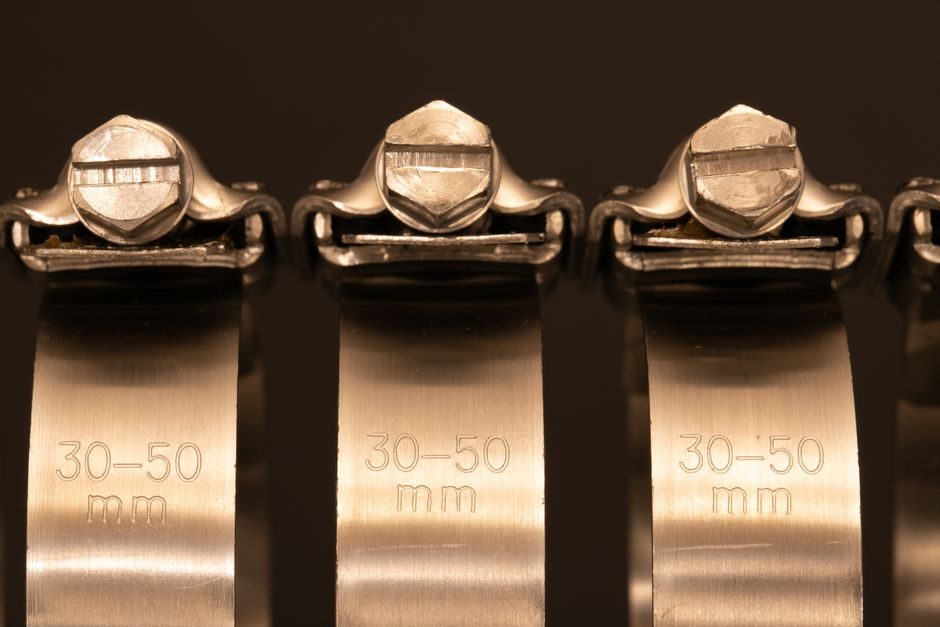
Austenitic 304, 316L and metastable 301 stainless steels remain the three workhorses specified by automotive part designers for exhaust, fuel-system, fastener and trim applications, balancing formability, weldability and corrosion resistance against the cost pressure of mass production [S2][S3].
Stainless consumption in passenger vehicles covers catalytic-converter shells and exhaust hangers (ferritic 409/439), fuel lines and tank components (304/316L), structural spring components (301/304 per JIS G4313), decorative trim (304 with specified surface finish), and increasingly, structural additively-manufactured brackets — the selection problem is matching grade, temper and finish to the corrosion plus thermal-mechanical load of each sub-system [S1][S3][S4].
What Automotive Specs Actually Demand From Stainless Steel
Automotive stainless specs begin with a corrosion class (typically 96 h neutral salt spray per ASTM B117 minimum for exterior hardware) and a mechanical class (YS, UTS, elongation, and for springs, fatigue life at a defined stress amplitude and cycle count) — both must be met by the same coil after forming, so a single property is not the optimisation target [S3].
For exhaust hot-end components, continuous operating temperatures of 600–800 °C in the manifold runner and up to 950 °C transient at the turbine outlet force designers to ferritic 409, 439 or 436 grades; for fuel and brake lines operating near ambient temperature with chloride exposure, austenitic 304 or 316L is specified [S1][S3].
For spring- and fastener-class parts (CVT rings, engine gaskets, belleville springs), metastable austenitic 301 and 304 take advantage of deformation-induced martensitic transformation (TRIP effect) to reach 1300–1800 MPa tensile class after cold rolling while retaining the formability needed for deep-draw or coining — a property combination that conventional carbon or low-alloy stainless steel cannot deliver in the same gauge [S3].
Grade-by-Grade Selection Matrix for Auto Sub-Systems
The dominant automotive grade family is the 18Cr-8Ni austenitic series (AISI 304, 304L, 316, 316L) — 304 is the default where chloride exposure is low, 316L (2–3% Mo) is specified for underbody and brake-line service, and 304L/316L are mandatory where welded assemblies must avoid sensitisation and intergranular corrosion in the HAZ after forming [S1][S2].
For exhaust systems the standard pairing is AISI 409 (12Cr-Ti) for the cold-end muffler and tailpipe, AISI 439 (18Cr-Ti) for the hot-end centre pipe and manifold, and AISI 436 (18Cr-Mo-Ti) where weld and condensate corrosion drive the upgrade — 409 is the cost baseline, 439 is the ~30% cost premium paid for thermal fatigue life, and 436 adds ~10% again for the Mo-stabilised weld zone [S4].
For fasteners, AISI 304 (A2-70 / A2-80 per ISO 3506-1) and AISI 316 (A4-70 / A4-80) cover the standard property classes 700 MPa and 800 MPa UTS; higher-strength A4-100 fasteners are produced by cold work rather than heat treatment because the austenitic phase is not hardenable by quench-and-temper [S2].
Forming, Welding and Surface-Finish Constraints
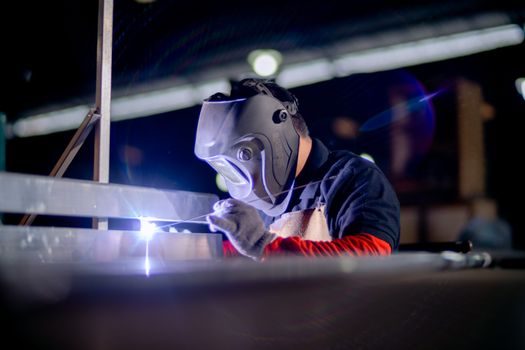
Welding autogenously (without filler) on 304L/316L eliminates the carbon-driven Cr-carbide precipitation that would otherwise sensitise the HAZ; if a filler is required, ER308L for 304/304L and ER316L for 316/316L are the standard AWS A5.9 choices, with ferrite number 4–12 controlled to avoid hot-cracking in restrained joints [S2].
Surface finish on visible trim and exhaust tips must be specified in Ra units: 2B (cold-rolled, annealed, pickled, skin-passed) lands at Ra ≤ 0.5 μm, BA (bright annealed) at Ra ≤ 0.2 μm, and No. 8 mirror at Ra ≤ 0.05 μm — all three are routinely stocked by coil distributors for OEM and aftermarket exhaust fabricators [S1][S4].
Where the 2026 Sourcing Decisions Actually Land
Mill test certificates with full chemistry and mechanicals are non-negotiable for Tier-1 automotive buyers — 50,000-ton/month producers in southern China with ISO 9001 and IATF 16949 certifications now standard-issue the MTC for every coil, with cross-section tolerance held to ±0.01 mm on precision shaped wire for high-speed stamping lines [S2].
For North American aftermarket exhaust fabricators, the supply base favours 304/304L tube in 1.2–2.0 mm wall for mandrel bending, 409 for the rear muffler section, and 316L only for marine-spec systems where chloride exposure is continuous — Timevalve's classic-car programmes in this space continue to use 304 series as the default workhorse [S4].
For OEM precision stampings and spring components, US specifiers route through dedicated tube-and-bar distributors (Eagle Stainless-type operations) that hold stock in 304, 316L and 17-4PH bar plus custom Swiss-CNC cut-to-length services — the value proposition is kitted, traceable, cut-to-tolerance blanks rather than mill-direct coil for lower-volume programmes [S1].
How This Connects to Adjacent Material Decisions
Stainless sits inside a broader automotive material spec portfolio, and the same selection logic carries across to alloy and carbon grades for chassis and suspension. For a working map of non-stainless structural and fabrication grades, the alloy-steel selection working spec map covers the complementary decision tree when corrosion and temperature load are lower. [S1]
For parts where 304/316L austenitic is over-specified (cost, weight) and carbon steel is under-specified (corrosion), the stainless steel vs carbon steel material property reference is the engineering shortcut for grade substitution — typically 409 or 439 ferritic replacing aluminised carbon in exhaust, 304 replacing coated carbon in fuel lines.
For emerging structural brackets and bionic-optimised nodes where 3D-printed metal is being piloted in low-volume programmes, the additive manufacturing materials reference covers the 316L and 17-4PH powder-grade specs that bridge into the same austenitic chemistry most auto plants already qualify.
Trackable signals through the rest of 2026: tighter IATF 16949 enforcement of MTC traceability on imported strip and wire, the gradual displacement of aluminised 409-coated carbon by 439 ferritic in hot-end exhaust under Euro 7 / China VI-b thermal-cycling tests, and continued conversion of high-strength 301/301LN from JIS to dual-certified ASTM A666 / EN 10151 sourcing in North American EV battery enclosures.