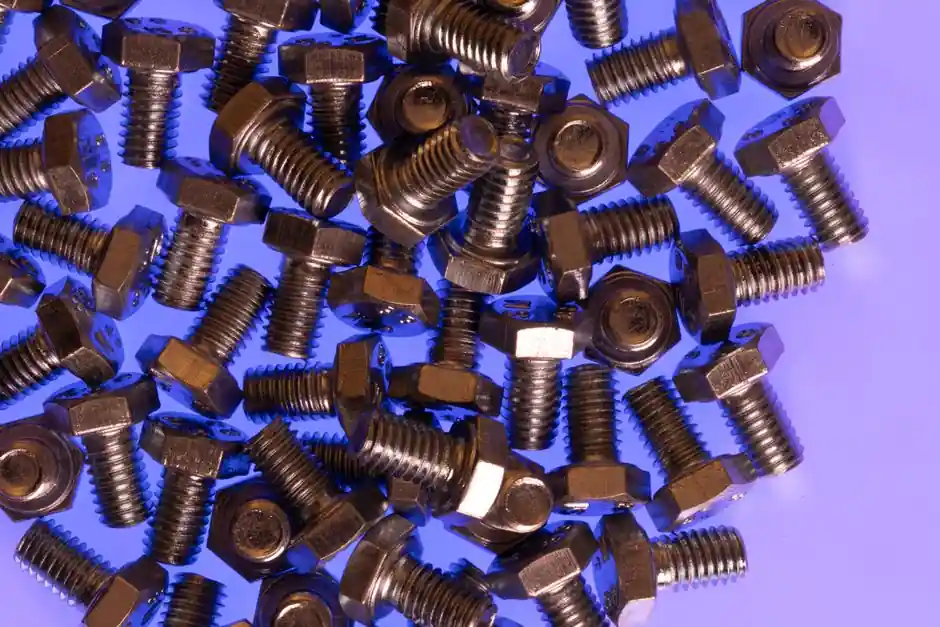
Three metallic blast media compete for the fettling deck of a high-pressure die cast cell: cast stainless cut-wire, cast zinc shot (ZA4 / HG alloys), and cast aluminum shot (319 / 2N alloys), each with a distinct hardness, density, and dust/explosion profile that maps to a different substrate and a different finishing target.
Selection is driven by four concrete variables: substrate hardness on the Knoop scale, ferrous-contamination tolerance of the part, deflashing aggressiveness required, and the ATEX dust-class of the blast cabinet. Misalignment on any one of these produces either embedded contamination, peening damage to date codes, or a Class 22 dust ignition hazard, all of which the OEM literature treats as non-negotiable failure modes.
Hardness, Density, and Substrate Match
Cast zinc shot from Transmet is supplied as a ZA4 alloy at 90 HK, with a softer HG variant at 60 HK for delicate surfaces, and its density is described as "closer to stainless steel," giving it the mass to knock off heavier flash without peening the substrate [S1][S8]. Cast aluminum shot sits at roughly 100 HK for the 319 alloy and drops to 25 HK for the 2N alloy, deliberately tuned to match the hardness of many die castings so that gasket faces and date-code stamps survive the blast [S1]. Stainless cut-wire shot runs harder and denser than either zinc or aluminum media, which is what gives it the highest kinetic-energy transfer per impact in the Ervin Test Machine comparison run by Sinto America [S2].
For zinc die castings specifically, the International Zinc Association's engineering-properties chapter specifies round aluminum shot between 0.6 and 0.8 mm as the most frequently used fettling media, with finer glass beads (0.2–0.4 mm) or angular steel grit reserved for paint-prep stages [S3]. The same chapter notes that small castings are barrel-tumbled with the shot to ensure full surface exposure, while larger parts are rotated on fixed jigs [S3].
Dust Load, Consumption, and Explosion Risk
Midvale's published figure for cast zinc shot is an "up to 80% reduction in dust" versus steel shot, attributed to the longer blasting life of the zinc particle, which translates directly into lower dust-collection loading and lower landfill disposal cost [S4]. Sinto America's aluminum-die-cast study reaches the same conclusion from the safety side: zinc abrasives carry a lower explosion sensitivity in both bulk and dust form than cast high-carbon steel, cast low-carbon steel, or cast/cut-wire stainless steel, which is why the paper recommends zinc abrasives for deburring and cleaning aluminum parts in any cabinet where dust ignition is a live risk [S2].
The same Sinto test program uses Almen strips in an Ervin Test Machine to compare kinetic-energy transfer and 100 g-sample cycle life; cut-wire shot showed higher cleaning efficiency and lower consumption than cast shot of the same chemistry, which the authors link to shorter cycle times and a lower total cost of ownership across labor, energy, maintenance, wear parts, freight, and SG&A [S2]. This is the cleanest empirical case for picking cut-wire stainless over cast stainless when the substrate will tolerate the higher hardness.
Surface Finish, Contamination, and Machine Wear
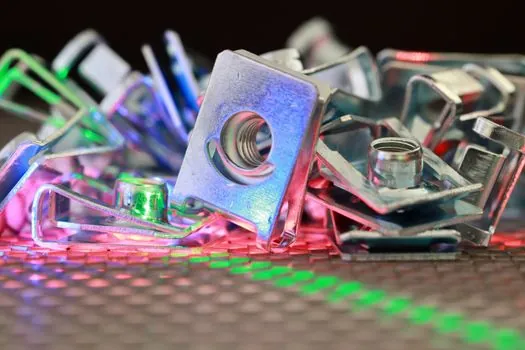
Transmet's documentation is explicit that cast aluminum and cast zinc shot leave no ferrous contamination on the part, which is the gating requirement for any non-ferrous die casting headed for a coating line or a cosmetic spec [S1]. The same source notes that cabinet and blast-wheel wear is "virtually eliminated" when switching from steel to these non-ferrous cast media, and publishes a blast wheel run past 17,000 hours on cast zinc shot with no recorded damage [S1].
Surface texture differs by media: Transmet's ZA4 cast zinc shot leaves a "very bright and evenly textured" finish, the softer HG alloy drops to an even smoother profile for applications that cannot tolerate any cut, and the 319 cast aluminum shot is the workhorse for general deburring and deflashing of light-metal castings [S1]. Mag-cast's September 2026 process note on aluminum die-castings reinforces the role of shot blasting as a cleaning, matte-finishing, and coating-prep step, and frames media choice as the primary lever for the resulting Ra and anchor profile [S7].
Decision Matrix: Stainless vs Zinc vs Aluminum Shot
Match the media to the substrate and the spec, not the other way around. For zinc-alloy die castings fettled on a zinc die casting machine, 0.6–0.8 mm round cast aluminum shot is the engineering default per the IZA reference chapter [S3]. For aluminum die casting machine cells where the cabinet is ATEX-classified for dust, cast zinc shot (ZA4, 90 HK) gives the lowest explosion sensitivity and the lowest dust load, at the cost of slower cleaning per pass than cut-wire [S2][S4]. Stainless cut-wire shot is the right pick when the highest cleaning efficiency per cycle and the lowest media consumption dominate the cost model, and when ferrous embedding into the part is acceptable or the part is itself ferrous [S2].
For ultra-delicate surfaces (gasket faces, cosmetic Class-A, laser-etched date codes), drop cast aluminum shot from the 319 alloy (100 HK) to the 2N alloy at 25 HK, or drop cast zinc from ZA4 (90 HK) to HG (60 HK) [S1]. Avoid steel and stainless media entirely on any non-ferrous die casting destined for a coating or plating line, because ferrous embedment will bleed through chromate, powder, and e-coat and fails most cosmetic specs [S1].
Cost, Cycle Time, and Tooling Context
Media choice sits downstream of alloy choice, and the alloy decision sets a 2.5x weight penalty for zinc versus aluminum on identical geometry, with a piece-price multiplier of roughly 3–4x once material cost is layered in, per General Die Casters' comparison [S5]. Neway Precision restates the same trade: zinc is heavier for the same part volume, which is a disadvantage for weight-sensitive designs and an advantage for grip and damping in hardware and plumbing fittings [S6]. Against that weight penalty, zinc delivers a hot-chamber process at roughly 800 F melt, well below the 1200+ F aluminum melt held in a cold-chamber shot sleeve, and a die-life multiplier of 3–4x over aluminum dies because the aluminum-steel soldering reaction is absent [S5].
Those numbers frame the operating envelope inside which the blast cell sits: a hot-chamber zinc cell running tight cycle times and long die life can absorb a slower, softer media, while a cold-chamber aluminum cell with heavier flash and a tougher oxide skin benefits from the higher kinetic energy of stainless cut-wire or ZA4 zinc shot. Total cost of ownership then resolves to a per-part equation of (cycle time x labor + energy) + (media consumption + dust disposal) + (machine wear + maintenance), and the Sinto test data is the cleanest published input for that equation on aluminum substrates [S2].
Standards, Safety, and Selection Signals
No single ISO or ASTM standard governs "which shot for which die casting"; the operating constraints come from the ATEX equipment directives on dust ignition in the blast cabinet, from each OEM's substrate-hardness limit, and from the customer's surface-finish spec (Ra, anchor profile, cosmetic class). For foundries running stainless steel or stainless pipe fittings through the same shot blasting machine cell as aluminum or zinc parts, the practical answer is a media swap plus a cabinet purge, not a single universal media, because ferrous contamination rules out zinc and aluminum media on the steel side and steel media contaminates the non-ferrous side. [S1]
Trackable signals to watch through Q4 2026: any new ATEX-classified dust-handling retrofit programs on aluminum die-cast cells (Sinto's safety argument remains the strongest published case for switching to zinc abrasives [S2]), and any expansion of cut-wire stainless into high-mix zinc cells where the higher per-pass cleaning efficiency offsets the higher media unit cost [S2][S4]. See also a recent squeeze casting vs die casting porosity decision guide for context on when a denser, slower shot blast is the right prep step for a higher-integrity casting.