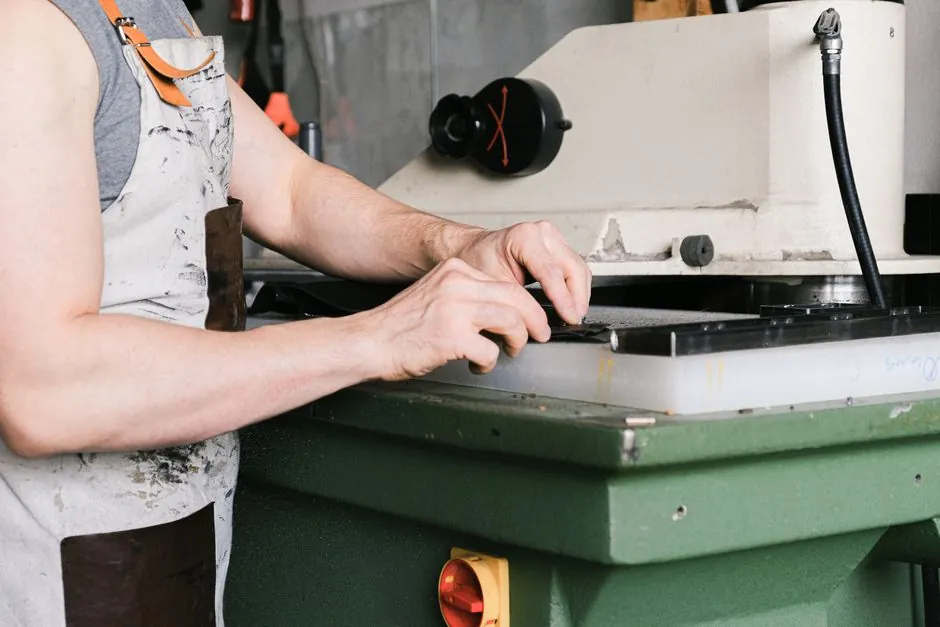
Standard catalog mold bases ship next business day on A-Series stock and within 5 business days for configurable rapid bases, against a custom mold base lead time that starts at 5 days before any machining queue is added, per PCS Company's 2020 product brief and the live DME configurator offerings [S1][S3].
The decision is rarely about steel grade, since both standard and custom paths ship in P20, 420 stainless, or aluminum, but about geometry, tonnage fit, and how much cavity machining backlog the buyer is willing to absorb before the tool can run first shots [S1][S2].
Lead Time Numbers That Actually Drive the Quote
A catalog A-Series base from DME ships next business day from in-stock inventory, with PCS Company matching that on standard off-the-shelf configurations in 32 sizes from 8 x 8 in to 24 x 35 in and 9 plate thicknesses from 7/8 in to 5-7/8 in [S1][S3]. Configurable rapid bases, where buyers only relocate or omit standard features, quote in 1 business day and ship within 5 business days, versus a special or fully custom base that begins at 5 days and then stacks additional days for every non-standard machined feature [S1].
For tooling buyers comparing two quotes that look identical on paper, the lead-time spread between a stock A-Series and a fully machined custom base routinely runs 4 to 10 weeks once electrode work, deep rib machining, and special slide interlocks are added to the critical path, which is why procurement teams at injection molders treat the base line as a schedule line, not a commodity line [S2][S4]. Standard procurement is the primary mechanism for controlling both cost and lead time in mainstream tooling, because the structural housing is bought pre-drilled, pre-finished, and dimensionally verified [S2].
Catalog Coverage: What You Get Without Drawing Anything Custom
DME's A-Series is a 7-plate stack-up (top clamp, A-plate, B-plate, support plate, ejector bar, ejector retainer, and a 3-piece housing) and is the most frequently ordered standard assembly worldwide, with over 75 trillion catalog configurations and a size envelope of 7.875 x 7.875 in to 23.75 x 35.5 in [S3]. The B-Series drops to a 5-plate "open and shut" stack by combining the top clamp and A-plate into a single A-clamping plate and beefing up the B-plate to remove the support plate on the core side, which is the right pick when cavities and cores are machined directly into the plates rather than inserted [S3].
Material choices on standard bases are deliberately narrow: No. 1, No. 3 (P20-equivalent pre-hard), and No. 7 (420 stainless) steel, plus aluminum for short-run or prototype tooling [S1][S3]. Standard machined features bundled with the catalog base include assembly screws, center holes, guided ejection, leader pins and bushings, return pins, and a stop disk in the ejector plate, all finished ground to plus or minus 0.001 in with plate-to-plate alignment held to within 0.003 in [S1]. For an engineering review of how standardized wear items stay interchangeable across tools, see the mold base encyclopedia entry.
When Custom Stops Being Optional
A custom mold base is the correct call when the part envelope exceeds catalog footprints, when slide or lifter actions force a non-standard plate count, when the tonnage requirement pushes into a press footprint outside the 24 x 35 in A-Series ceiling, or when corrosive resins such as PVC force a full upgrade to corrosion-resistant cavity and base steels [S1][S2]. PCS Company lists the custom path as a "fully mach[ined]" base built to the buyer's print, with lead time starting at 5 days before any feature-level machining backlog is added [S1].
Operationally, custom also means non-returnable under standard supplier terms, since special mold bases, special steel, and any item not shown in the catalog are flagged as non-returnable on published DME order terms [S5]. Buyers who need corrosion-resistant 420 stainless bases for medical or PVC work should confirm the stainless variant is held in the size they need, because PCS lists 420 stainless on standard bases but restricts it to limited sizes on the rapid configurable program [S1]. For shops weighing whether to fabricate the base in-house, the lead-time math is similar to custom mold fabrication lead time for one-off structures, where every extra machining operation adds a discrete queue day.
Material and Tolerance Trade-Offs: Catalog vs Custom
The comparison that drives a buyer's real decision comes down to four criteria: lead time, cost, material headroom, and geometry flexibility. Catalog bases win on the first two by a wide margin and tie on the third, since both paths ship in P20, 420 stainless, and aluminum [S1][S3][S6]. Custom bases win on the fourth, and that is the only place they should be allowed to win.
On lead time, catalog A-Series is 1 business day, catalog rapid configurable is up to 5 business days, and custom starts at 5 days plus feature queues [S1]. On cost, catalog bases benefit from bulk procurement and standard tolerances, while custom bases absorb the full NRE of the plate stack plus any special steel surcharge [S2][S4]. On material, both paths offer P20 (No. 3), 420 stainless (No. 7), and aluminum, with custom adding room for H13, S7, or full corrosion-resistant stacks when the application demands it [S1][S3]. On geometry, catalog is locked to predefined footprints and 7-plate or 5-plate architectures, while custom removes every constraint at the price of schedule and budget [S1][S3].
Decision Matrix: When to Pick Which
Pick a standard catalog A-Series when the part fits inside 23.75 x 35.5 in, the press tonnage is mainstream, and cavity/cores are inserted rather than cut directly into the A and B plates, because you get next-day shipment, plus or minus 0.001 in finishing, and pre-validated plate-to-plate alignment under 0.003 in [S1][S3]. Pick a catalog B-Series when you need an open-and-shut 5-plate tool with the cavity and core machined directly into the plates, accepting a simpler ejection system in exchange for fewer plates to maintain [S3].
Pick a rapid configurable base when you need a catalog footprint but require relocated or omitted standard features (assembly screws, center holes, guided ejection, leader pins and bushings, return pins, ejector-plate stop disk), with a 1-day quote and 5-day shipment plus free side or top lock machining and free cycle counters [S1]. Pick a custom base only when the part envelope, slide count, lifter count, or corrosion requirement physically cannot be solved inside a catalog architecture, and budget the 5-day starting lead time plus a feature queue that frequently adds 4 to 10 weeks before first sample [S1][S2]. A useful adjacent reference for shops weighing standard versus custom fabrication in a different process is the sand casting mold encyclopedia page, which covers similar make-versus-buy logic for one-off tooling structures.
What the Catalog Does Not Solve
Standard bases cannot absorb non-standard ejector layouts, integrated hot-runner manifolds requiring non-catalog port spacing, or base sizes above 24 x 35 in, and these are the three triggers that force every quote onto the custom path [S1][S2]. Once a tool crosses into custom territory, lead time variance grows because every additional machined feature, slide, or lifter sits in the same queue as every other custom job in the shop, and queue position is not a published number on any supplier site [S1][S4].
Buyers who want to harden a custom quote should ask suppliers to break out base fabrication hours, machining hours, and assembly hours as separate line items, since the mold base is typically the largest single cost in a tooling quote after cavity machining, and a black-box line item is how two quotes for the "same tool" diverge by tens of thousands of dollars [S2]. Shops that standardize on catalog bases for 80 to 90 percent of their tooling, reserving custom for the genuinely geometric outliers, consistently report shorter lead times and lower per-unit costs than shops that default to custom, because bulk procurement of standardized components captures economies of scale that in-house fabrication cannot match [S2][S4].
Track these signals through 2026: DME's online mold base configurator, listed as under maintenance on the live page, returning to service with refreshed catalog geometry [S3]; any expansion of the standard size envelope beyond 24 x 35 in, which would push more custom work back into catalog coverage; and supplier disclosures on 420 stainless and aluminum stocking for rapid bases, where availability is currently limited by size [S1]. For related make-versus-buy logic in adjacent processes, the lead screw encyclopedia entry covers how standardized motion components compress lead time in a comparable way.
Background reading: Nylon vs Acetal Center Disc: Oldham Coupling Material Decision.