The global hydrogen fuel cell market for data centers is estimated at USD 0.98 billion in 2026 and is projected to reach USD 4.64 billion by 2036 [S6].
The broader stationary hydrogen fuel cell market is forecast to grow from USD 5.9 billion in 2025 to USD 21.7 billion in 2035, a 13.9% CAGR [S4].
Market sizing and growth signals
One market estimate valued the fuel cell for data center segment at USD 175 million in 2024 and projects USD 400 million by 2030, representing a CAGR of approximately 16% for 2025–2030 [S3].
Research and Markets provides a separate 2026 estimate of USD 0.98 billion for hydrogen fuel cells used in data centers, rising to USD 4.64 billion by 2036 [S6]. These figures cover different market scopes and forecast periods, so they should not be combined as if they measured the same revenue base.
Demand is supported by the scale of data-center electricity use. The International Energy Agency figure cited in the market study placed data centers at approximately 1.5% of global electricity consumption and 460 TWh in 2022, with consumption projected to more than double by 2026 [S3]. Fuel cells are being evaluated for both backup power and, in some installations, primary power [S1][S3].
PEMFC, SOFC and system comparison
The stationary fuel cell market is dominated by PEMFC, SOFC, and PAFC technologies, with SOFCs leading in installed capacity and PEMFCs gaining traction in smaller-scale applications [S1]. SOFC systems operate at approximately 600–1,000°C and can provide combined heat and power while accepting natural gas, biogas or hydrogen, which gives them stronger utility-scale fuel flexibility [S1].
PAFC, AFC and MCFC systems remain part of the wider stationary market, but the available data-center analysis does not establish them as leading choices for this application [S1][S4]. Operators should compare startup requirements, heat utilization, fuel supply, footprint and installed cost against the specific electrical duty cycle rather than select by fuel-cell chemistry alone.
Primary-power projects reach 100 MW scale
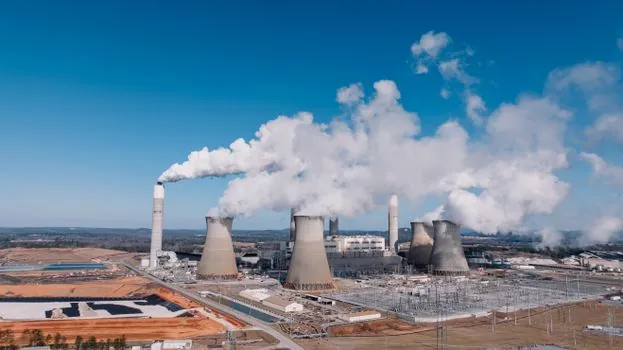
New hyperscale data centers can require continuous power loads exceeding 100 MW, while interconnection queues have delayed conventional grid access, driving interest in on-site generation [S5]. A July 2025 memorandum of understanding between Fuel Cell Energy and Inuverse covered exploration of up to 100 MW for an AI data center in Daegu, South Korea [S5].
A March 2025 collaboration covering a potential 360 MW pipeline used waste methane and natural gas as the stated fuels, bringing the combined potential data-center pipeline cited for Fuel Cell Energy to 460 MW [S5]. This is a project pipeline, not 460 MW of operating capacity, and the disclosed figures are specific to the cited agreements.
Stationary deployments can be organized as on-site, off-site, turnkey or customized installations, with data centers listed among the relevant end uses [S4]. That modular structure supports direct comparison with conventional backup generation and grid interconnection, including delivery speed, redundancy and operating fuel logistics.
Backup power remains the strongest fit
This makes the technology most suitable for data centers with firm power requirements, restricted grid access or sustainability targets that make diesel operation difficult to justify.
Operators evaluating a digital multimeter should also verify fuel-cell output quality, but electrical measurement alone does not establish fuel availability or system redundancy. A valid comparison must include stack replacement strategy, hydrogen supply, maintenance response, grid interconnection status and the required backup runtime.
Hydrogen supply determines the operating case
Stationary hydrogen fuel cells convert hydrogen into electricity and heat, with water and heat identified as by-products [S4].
Hydrogen fuel cells can also operate on reformed natural gas or biogas in configurations where the installed system includes suitable fuel processing. The market taxonomy identifies fuel processors, fuel cell stacks, power conditioners and air management as separate system components, alongside the electrochemical conversion and thermal-management technologies [S4].
The sourced material does not provide a universal hydrogen purity specification, storage pressure or stack-life threshold for data-center duty. Those values must be obtained from the selected system and validated against the electrical load, fuel contract and maintenance model rather than inferred from the market forecast.
2026 procurement criteria
A 2026 procurement decision should separate backup from prime-power use, then compare at least four criteria: electrical efficiency, physical footprint, startup and transient response, and delivered fuel cost. It should also test stack replacement intervals, hydrogen supply resilience and the ability to meet the data center’s required continuity level. [S5]
North America held more than 50% of the fuel cell for data center market in 2024, while IT and telecommunications represented more than 60% of the segment by end use [S3]. Those shares make regional fuel availability, permitting, project execution and utility policy material screening criteria, not secondary commercial details.
Broader infrastructure demand is also increasing Sovereign AI Projects Drive Data Center Equipment Demand. Track committed on-site generation in megawatts, hydrogen supply agreements in kilograms per hour or equivalent contract terms, and the conversion of memorandum-of-understanding pipelines into financed installations. Those three signals distinguish an announced pipeline from deployable data-center capacity.